
Giving a massage is a great way to help someone relax, feel better, and reduce stress. You do not need to be a professional massage therapist to give a simple and comforting massage at home. With the right steps and gentle movements, you can make someone feel calm and happy.
Many people want to learn how to give a massage because their partner, friend, or family member has sore muscles, stress, or body pain. The good news is that basic massage skills are easy to learn.
In this guide, you will learn:
- How to prepare for a massage
- Simple massage techniques for beginners
- How to massage the back, shoulders, neck, and feet
- Common mistakes to avoid
- Pro tips to make the massage better
By the end, you will feel more confident and ready to give a relaxing massage at home.
What Is a Massage?
A massage is when you use your hands to rub, press, and move muscles and soft body tissues. Massage helps improve blood flow, relax tight muscles, and reduce stress.
There are many types of massage, including:
- Swedish massage
- Deep tissue massage
- Sports massage
- Relaxation massage
- Foot massage
For beginners, a simple relaxation massage is the best place to start.
Benefits of Giving a Massage
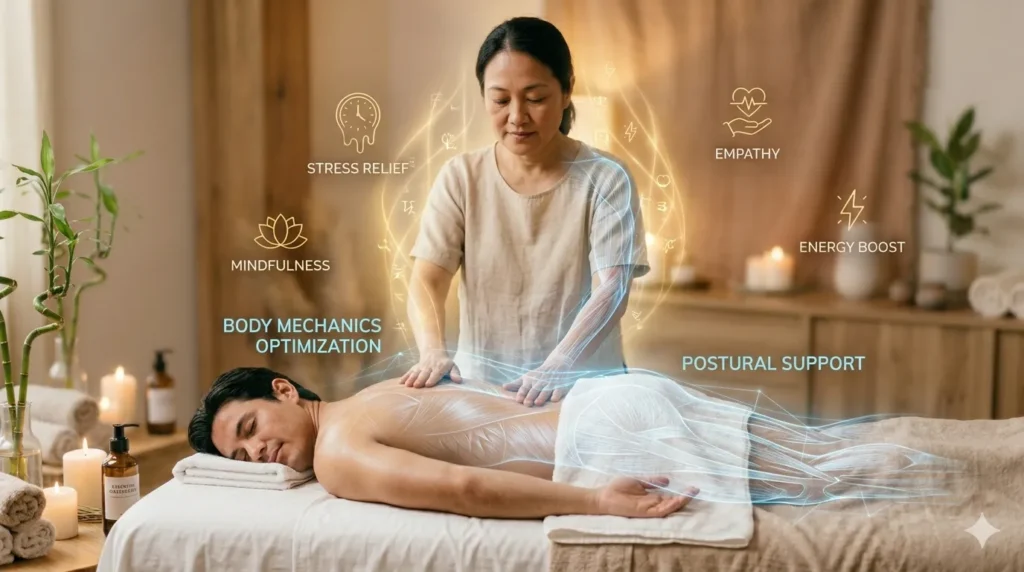
Learning how to give a massage can help both you and the other person.
Massage Can Help With:
- Stress relief
- Muscle pain
- Better sleep
- Relaxation
- Anxiety reduction
- Improved blood circulation
- Headache relief
A gentle massage can also help people feel cared for and emotionally relaxed.
According to the Mayo Clinic, massage may help reduce stress and muscle tension.
You can learn more here: Mayo Clinic Massage Benefits
Things You Need Before Starting
You do not need expensive tools to give a massage.
Basic Massage Supplies
- Massage oil or lotion
- Clean towels
- Soft pillow
- Comfortable bed or mat
- Calm music (optional)
Best Oils for Massage
Some good massage oils include:
- Coconut oil
- Almond oil
- Olive oil
- Lavender massage oil
Always ask if the person has allergies before using oils.
Related: Different Kinds Of Womens
How to Prepare the Room
The room should feel calm and relaxing.
Simple Setup Tips
- Lower bright lights
- Keep the room warm
- Play soft music
- Turn off loud devices
- Use clean sheets or towels
A peaceful room helps muscles relax faster.
Basic Massage Rules for Beginners
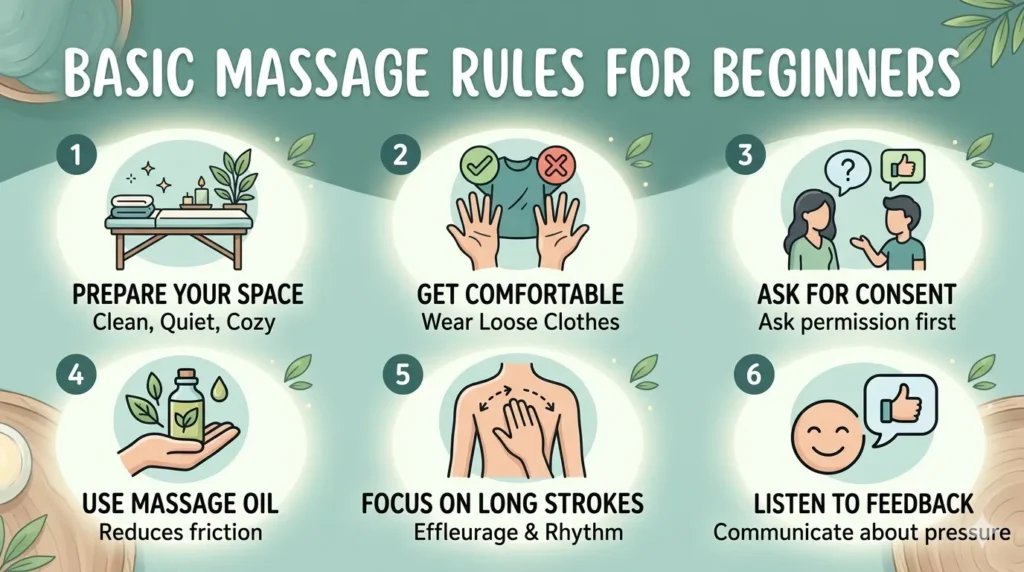
Before you start, remember these important rules.
1. Wash Your Hands
Clean hands feel safer and more comfortable.
2. Warm Your Hands
Cold hands can make muscles tighten.
Rub your hands together before touching the person.
3. Use Gentle Pressure
Start soft. You can always press harder later if the person likes it.
4. Ask Questions
Communication is important.
Ask things like:
- “Is this pressure okay?”
- “Does this area hurt?”
- “Do you want softer or stronger pressure?”
5. Never Massage Injuries
Avoid:
- Open cuts
- Bruises
- Broken bones
- Swollen areas
If someone has serious pain, they should see a doctor first.
You can read more massage safety advice from the American Massage Therapy Association here:
Massage Safety Tips
How to Give a Massage Step by Step
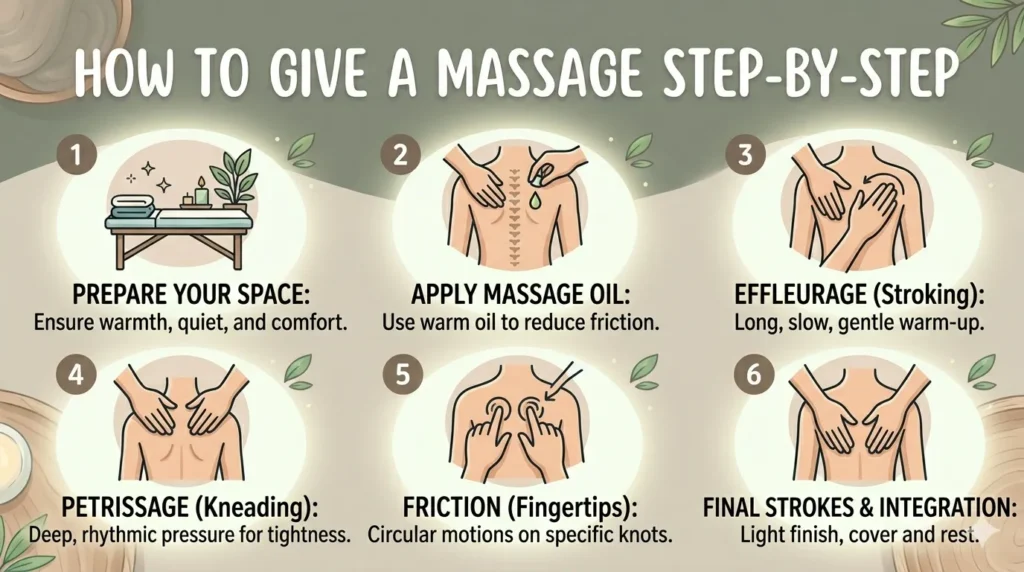
Now let’s learn the actual massage process.
Step 1: Help the Person Get Comfortable
Ask the person to lie down on their stomach for a back massage.
Place:
- A pillow under the head
- A towel over parts not being massaged
Comfort matters a lot.
Step 2: Apply Massage Oil
Pour a small amount of oil into your hands first.
Rub your hands together to warm the oil.
Do not pour cold oil directly on the skin.
Step 3: Start With Gentle Strokes
This is called “effleurage” in massage therapy.
Use long, smooth strokes across the back.
Move slowly from:
- Lower back upward
- Shoulders downward
This helps muscles relax.
Related: what does ASL mean in text
Beginner Tip
Always move gently at first. Strong pressure too early can hurt.
Step 4: Use Circular Motions
Use your thumbs or palms to make small circles on tight muscles.
Good places include:
- Shoulders
- Upper back
- Neck sides
Do not press directly on the spine.
Step 5: Knead the Muscles
Kneading means softly squeezing muscles.
It looks similar to kneading bread dough.
Use your hands to:
- Lift muscles gently
- Squeeze slowly
- Release softly
This technique works well for:
- Shoulder tension
- Tight upper back muscles
Step 6: Focus on Problem Areas
Ask where the person feels stress or pain.
Many people hold stress in:
- Neck
- Shoulders
- Lower back
Spend more time there using gentle pressure.
Step 7: Finish Slowly
Do not stop suddenly.
End the massage with:
- Light strokes
- Slow hand movements
- Gentle pressure
This helps the body stay relaxed.
Back Massage Techniques
A back massage is one of the easiest massages for beginners.
Simple Back Massage Routine
1. Long Palm Strokes
Use both palms and move upward slowly.
2. Thumb Circles
Make circles near the shoulders.
3. Gentle Kneading
Squeeze muscles softly.
4. Side-to-Side Movements
Move hands across the back carefully.
Important Warning
Never press hard on:
- Spine
- Bones
- Kidneys
Stay focused on muscles only.
Shoulder and Neck Massage
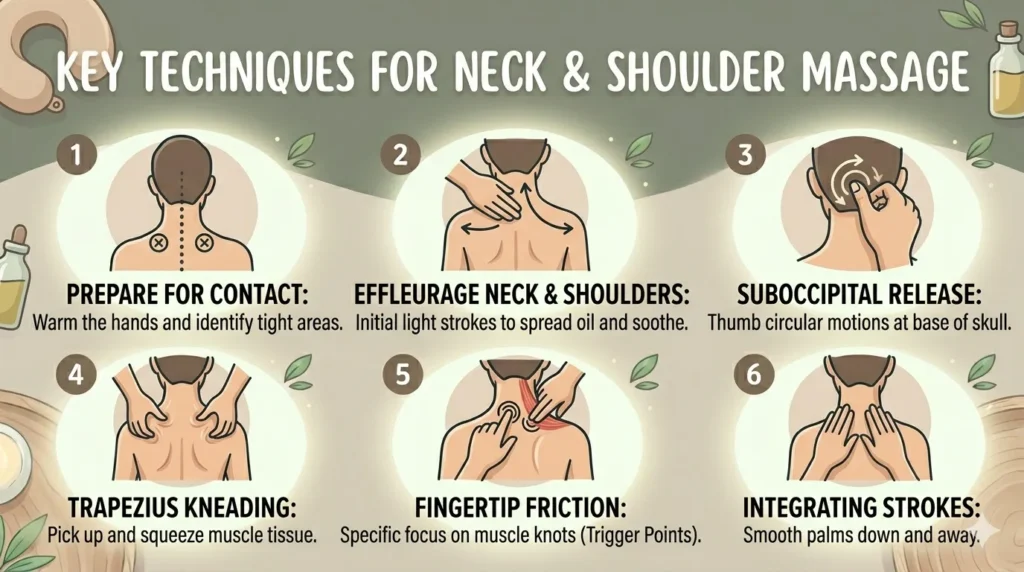
Many people have neck pain because of:
- Phones
- Computers
- Stress
- Poor posture
A neck massage can feel amazing when done carefully.
How to Massage the Neck
Step 1
Place hands on both shoulders.
Step 2
Use thumbs to make slow circles.
Step 3
Gently squeeze shoulder muscles.
Step 4
Massage the base of the neck softly.
Tip
The neck is sensitive.
Use lighter pressure than the back.
Hand Massage Guide
A hand massage is simple and relaxing.
Steps
- Hold the hand gently
- Rub lotion or oil on the hand
- Massage the palm using circles
- Pull each finger softly
- Rub around the wrist
This works well for people who type a lot.
Foot Massage Guide
Foot massages help tired feet feel better after a long day.
How to Massage Feet
Step 1
Wash or clean the feet first.
Step 2
Apply a small amount of oil or lotion.
Step 3
Use thumbs to press the bottom of the foot.
Step 4
Massage the heel and toes.
Step 5
Rotate the ankle gently.
Real-Life Example
If someone stands all day at work, a 10-minute foot massage can help reduce soreness and stress.
The Cleveland Clinic explains that massage may help relaxation and circulation.
Learn more here: Cleveland Clinic Massage Therapy Guide
Best Massage Techniques for Beginners
Here are the easiest massage methods to learn.
Effleurage
Long smooth strokes.
Best for:
- Relaxation
- Starting and ending massage
Kneading
Soft squeezing movements.
Best for:
- Tight muscles
- Shoulder tension
Circular Motions
Small circles using thumbs.
Best for:
- Knots
- Stress points
Tapping
Light tapping with fingers.
Best for:
- Energy
- Stimulating muscles
Do not tap too hard.
Common Mistakes to Avoid
Beginners often make small mistakes during massage.
1. Pressing Too Hard
More pressure does not always mean better massage.
Too much force can hurt muscles.
2. Moving Too Fast
Massage should feel calm and slow.
Fast movements can feel uncomfortable.
3. Ignoring Feedback
Always listen if the person says:
- “Too hard”
- “That hurts”
- “Softer please”
4. Using Too Much Oil
Too much oil makes hands slide too much.
Use small amounts first.
5. Massaging Injuries
Never massage:
- Swollen joints
- Burns
- Broken skin
- Serious injuries
Pro Tips for a Better Massage
These small tips can make a huge difference.
Keep Your Body Relaxed
Do not strain your own hands or back.
Use your body weight instead of only finger strength.
Breathe Slowly
Calm breathing helps create a relaxing feeling.
Use Warm Towels
A warm towel on the back feels very comforting.
Learn the Person’s Preferences
Some people like:
- Gentle massage
- Medium pressure
- Quiet environment
- Music during massage
Everyone is different.
Practice Often
The more massages you give, the better your technique becomes.
Safety Warnings
Massage is usually safe, but there are times when you should avoid it.
Do Not Give Massage If Someone Has:
- Fever
- Serious injury
- Skin infection
- Blood clots
- Severe pain
- Recent surgery
Pregnant people should also talk to a doctor before deep massage.
How Long Should a Massage Last?
For beginners:
- 10–15 minutes is enough
For a full body massage:
- 30–60 minutes works well
You do not need a very long session to help someone relax.
How to Make a Massage Feel Professional
You can make your massage experience better with simple details.
Create a Relaxing Mood
Try:
- Soft music
- Dim lights
- Clean towels
- Warm room
Stay Calm and Focused
A relaxed attitude helps the other person relax too.
FAQs About How to Give a Massage
1. How hard should I press during a massage?
Start gently and ask the person if the pressure feels good. Never press hard enough to cause pain.
2. What oil is best for massage?
Coconut oil and almond oil are popular because they feel smooth on the skin.
3. Can I give a massage without oil?
Yes, but oil helps your hands move smoothly and prevents skin pulling.
4. How do I know if I am doing the massage correctly?
The person should feel relaxed, comfortable, and pain-free. Communication helps a lot.
5. Can beginners learn massage at home?
Yes. Simple relaxation massage techniques are easy to learn with practice.
Conclusion
Learning how to give a massage is a useful and caring skill. You do not need special training to help someone relax and feel better. By using gentle pressure, slow movements, and simple techniques, you can give a safe and relaxing massage at home.
Remember these key points:
- Start gently
- Use smooth strokes
- Communicate often
- Focus on comfort
- Avoid injuries and painful areas
Practice regularly, and your confidence will grow over time.
Whether you are helping a friend, partner, or family member, a good massage can reduce stress, ease muscle tension, and make someone feel cared for.