
A food chain is a straight line: grass gets eaten by a rabbit, the rabbit gets eaten by a fox. But nature rarely works in straight lines. A hawk might eat the rabbit, the fox, or a lizard that ate a grasshopper that ate the grass. A food web captures that messy reality — all the feeding relationships in an ecosystem woven together.
Desert food webs are especially fascinating because they run on scarcity. With little water and sparse vegetation, every organism is tightly connected to every other, and the whole system is more fragile than it looks. Here’s how the desert food web works, level by level.
Food Web vs. Food Chain: Why the Web Matters
A food chain shows one path of energy: producer → herbivore → carnivore. It’s a useful simplification, but it’s incomplete. Most animals eat more than one thing, and most get eaten by more than one predator.
A food web maps all of those connections at once. Why does this matter? Because it reveals resilience and vulnerability. If one prey species declines, a food web shows which predators have backup options and which don’t. In deserts — where populations boom and crash with the rains — that backup matters enormously. The web view is how ecologists actually understand who’s depending on whom.
Level 1: The Producers
Every food web starts with organisms that make their own food. In the desert, producers are plants that photosynthesize despite brutal heat and minimal water:
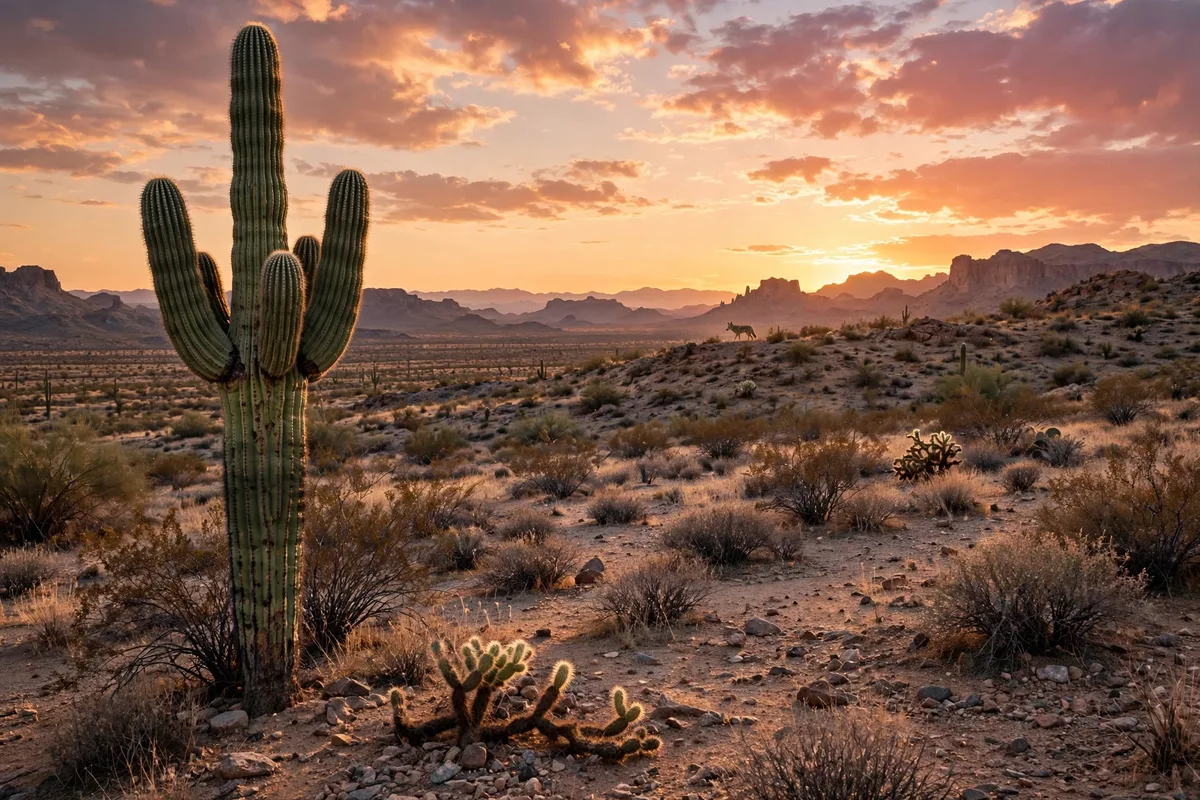
- Cacti (like saguaro and prickly pear): store water in fleshy stems, use waxy coatings to reduce evaporation, and provide food, moisture, and shelter for desert animals.
- Shrubs (like creosote bush and sagebrush): supply leaves, seeds, and plant material; creosote is one of the most widespread desert shrubs in North America.
- Desert grasses and wildflowers: grow quickly after rare rains, feeding insects and rodents in brief seasonal bursts.
- Trees (like mesquite, palo verde, and desert willow): provide shade, beans, and nesting sites.
Desert plants are masters of water economy — deep roots, tiny or waxy leaves, and the ability to go dormant for months. Without them, nothing else in the web exists.
Level 2: Primary Consumers (Herbivores)
These animals eat producers directly, converting plant energy into animal energy:
- Kangaroo rats: seed-eating rodents famous for surviving without ever drinking water — they extract all their moisture from the seeds they eat.
- Desert tortoises: slow-moving grazers that feed on grasses and wildflowers.
- Grasshoppers, beetles, and ants: insects that feed on plants and become the foundation prey for much of the web.
- Desert cottontails and jackrabbits: herbivores that feed larger predators.
- Quail and other seed-eating birds: connect plant production to the bird community.
Desert herbivores share common survival tricks: nocturnal activity to avoid daytime heat, burrowing to escape temperature extremes, and extreme water conservation.
Level 3: Secondary Consumers (Carnivores and Omnivores)
These animals eat the herbivores:
- Lizards (like collared lizards and whiptails): hunt insects and smaller lizards.
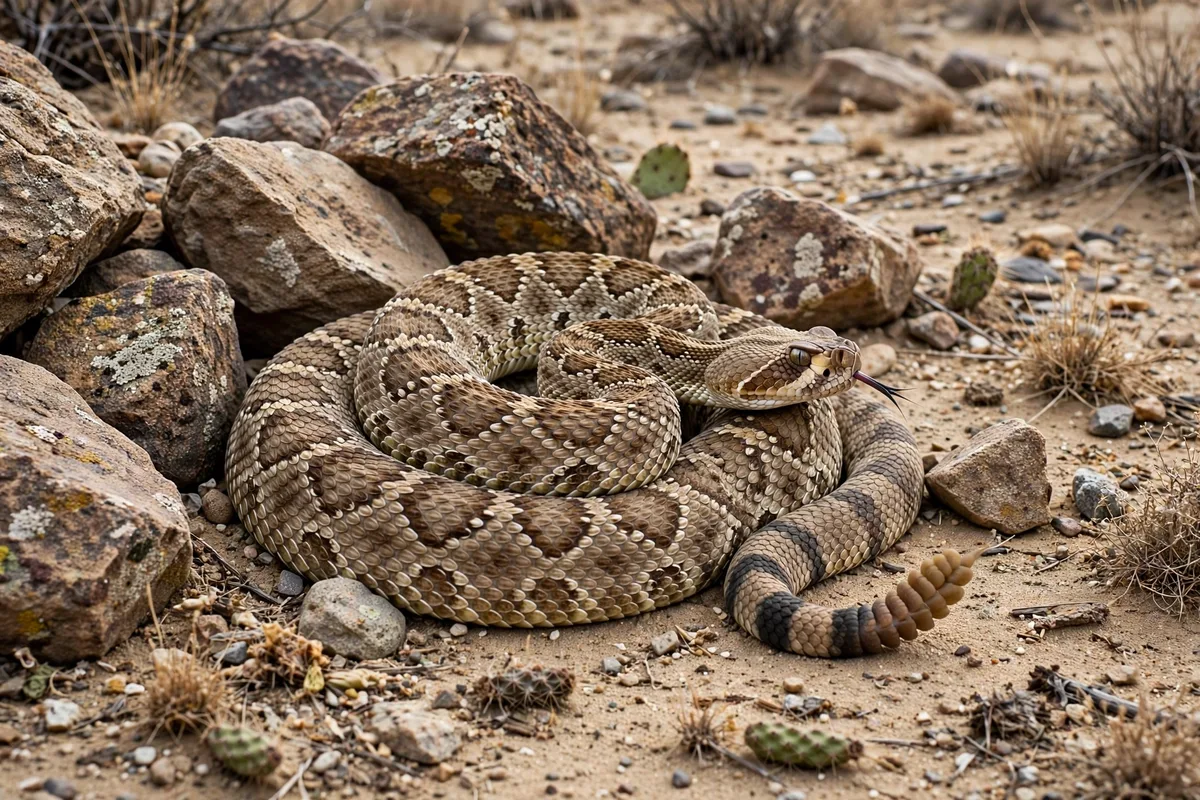
- Snakes (like the sidewinder rattlesnake): ambush rodents and lizards, using heat-sensing abilities to hunt in the dark.
- Scorpions: nocturnal predators that feed on insects and other small arthropods.
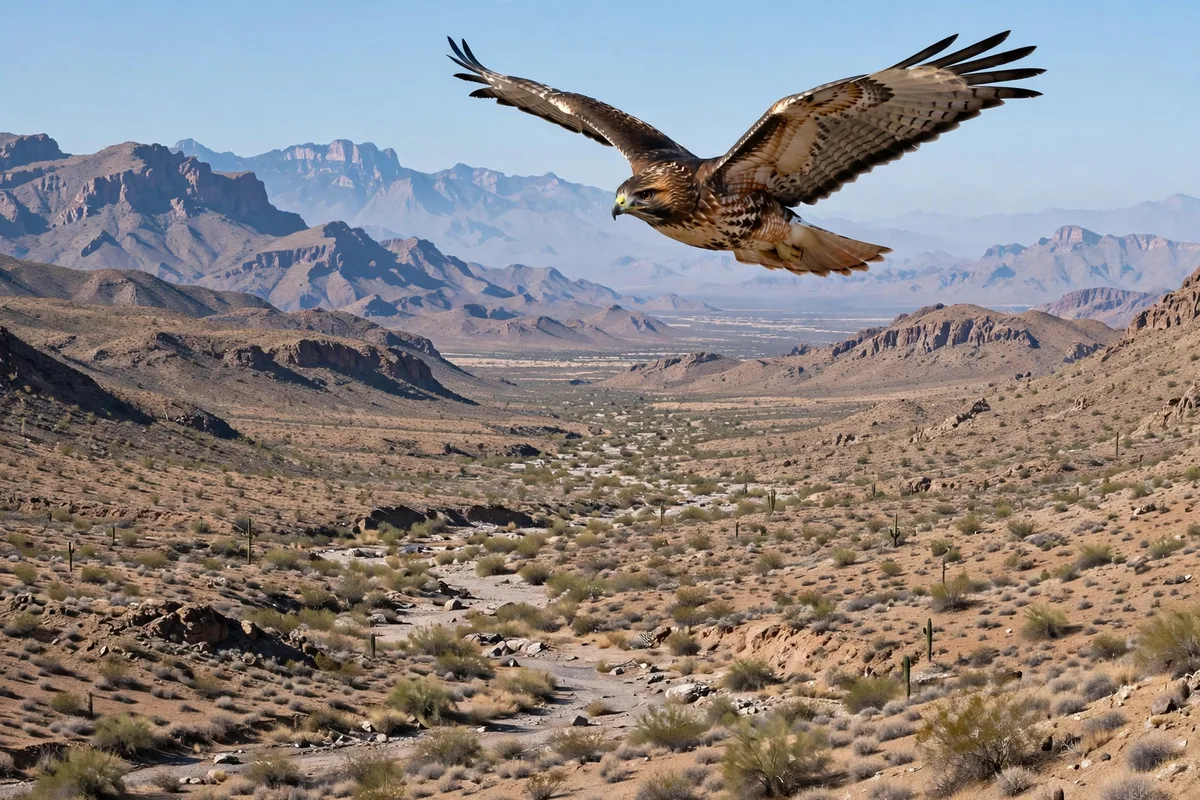
- Owls and hawks: birds of prey that hunt rodents, reptiles, and large insects — often at night (owls) to avoid the heat.
- Coyotes: opportunistic omnivores that eat rodents, rabbits, lizards, insects, and even cactus fruit — a perfect example of why the “web” beats the “chain.”
Many desert predators are nocturnal, which shifts the whole rhythm of energy flow to the cooler night hours — a distinctive feature of desert ecology.
Level 4: Tertiary Consumers (Top Predators)
At the top of the desert web sit the animals with few or no natural predators:
- Hawks and eagles: apex avian predators that can take snakes, lizards, and small mammals.
- Coyotes: function as both mid-level and top predators depending on the local web.
- Mountain lions: in desert-mountain regions, the ultimate apex predator.
- Foxes (kit fox, gray fox): smaller top predators in some desert systems.
Because deserts produce limited total energy, food webs here typically have fewer trophic levels than lush ecosystems — there simply isn’t enough energy to support many layers of predators. Energy transfer between levels follows the rough “10% rule”: only about a tenth of the energy at one level makes it to the next, with the rest lost as heat and used for the organism’s own life processes.
The Unsung Heroes: Decomposers and Detritivores
No food web is complete without the cleanup crew. Bacteria, fungi, termites, and dung beetles break down dead plants and animals, returning nutrients like nitrogen and phosphorus to the poor desert soil. In an environment where decomposition is slowed by dryness, these organisms are critical — without them, nutrients would stay locked in dead matter and producers couldn’t grow.
Termites deserve special mention: in arid regions they break down woody material that almost nothing else can digest, making them keystone nutrient recyclers.
A Desert Food Web in Action: Two Examples
Example 1: Cactus → desert grasshopper → lizard → hawk. The cactus photosynthesizes; the grasshopper eats cactus pads; the lizard eats the grasshopper; the hawk eats the lizard. But the web view adds: the hawk also eats the grasshopper-eating kangaroo rat’s predator, the snake — and the grasshopper also gets eaten by the scorpion.
Example 2: Creosote bush → kangaroo rat → sidewinder rattlesnake → coyote. The web view adds: the coyote also eats lizards, insects, and cactus fruit directly; the kangaroo rat is also hunted by owls; the rattlesnake competes with the owl for the same rats.
See how quickly straight lines turn into a net? That net is the point.
Why Desert Food Webs Are Fragile
Desert webs run on thin margins, which makes them vulnerable to disruption:
- Water is the master switch. A drought year can crash plant production, which ripples up through every level. A wet year causes population explosions that reshape the web just as dramatically.
- Invasive species hit hard. Non-native plants or animals can outcompete natives that have no evolutionary experience with them, rewiring the web.
- Small changes cascade. Because the web has fewer alternative pathways than a rainforest’s, losing one key species — a major pollinator, a keystone rodent — can collapse sections of the whole structure.
- Human pressures like habitat fragmentation, off-road vehicles, and groundwater pumping stress the producers everything else depends on.
Understanding the web isn’t just academic — it’s the foundation of desert conservation. You can’t protect the hawk without protecting the grasshopper’s food.
Frequently Asked Questions
What is a desert food web in simple terms?
It’s a diagram of who eats whom in a desert ecosystem — showing all the feeding connections between desert plants, herbivores, carnivores, and decomposers, not just single straight-line food chains.
What are the producers in a desert food web?
Cacti, shrubs (like creosote bush), desert grasses, wildflowers, and desert trees like mesquite. They convert sunlight into energy through photosynthesis despite extreme aridity.
What animal is at the top of the desert food web?
It depends on the desert, but common apex predators include hawks, eagles, coyotes, and mountain lions (in desert-mountain areas).
How is a food web different from a food chain?
A food chain shows one linear path of energy (grass → rabbit → fox). A food web shows all the interconnected feeding relationships at once — the rabbit also gets eaten by the hawk, the fox also eats lizards, and so on.
Why are desert food webs fragile?
Limited water and energy mean fewer species, fewer backup food sources, and tighter dependencies. Droughts, invasive species, or the loss of one key species can ripple through the entire system.
Do decomposers matter in the desert?
Enormously. Bacteria, fungi, termites, and dung beetles recycle nutrients back into poor desert soils. Without them, dead matter would lock up nutrients and producers couldn’t grow.
If you’re curious about other surprising biology, how do clams reproduce dives into an equally strange life cycle underwater, and punnett square blood types is a great next step for genetics homework.