
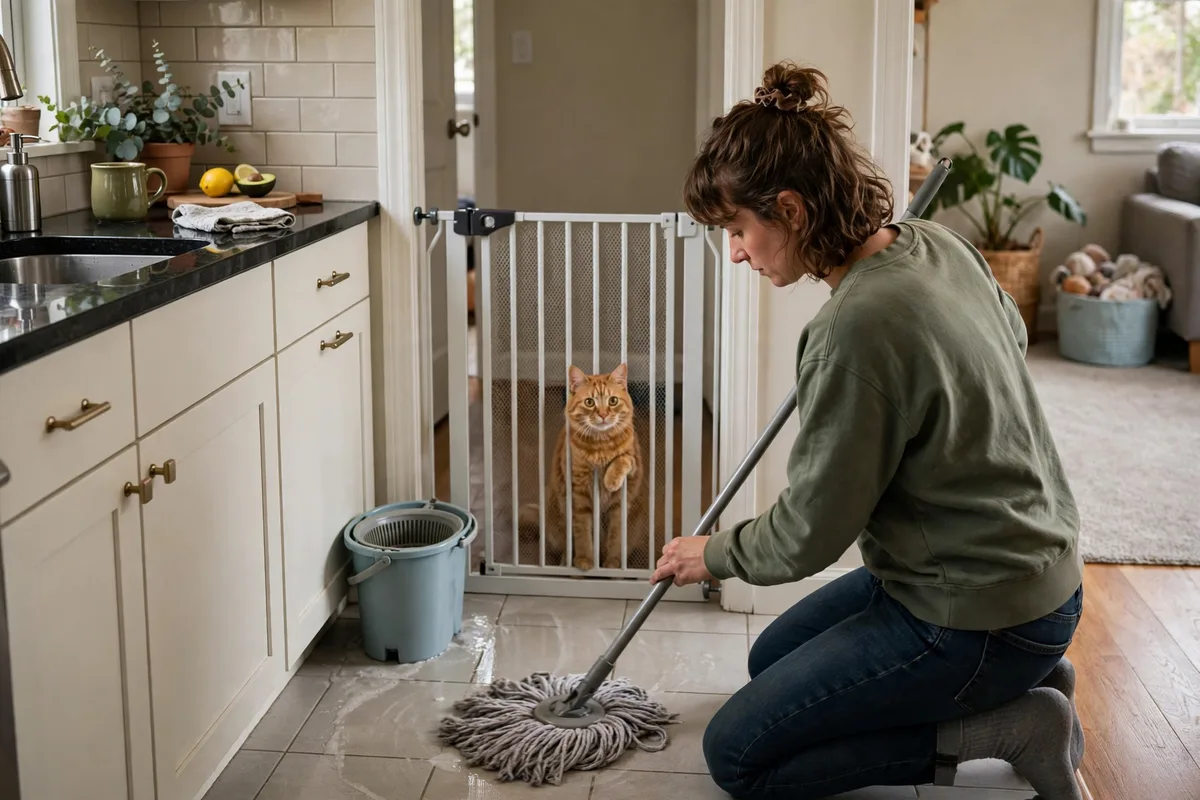
Your dog licks the kitchen floor. Your cat walks across the freshly mopped bathroom tile, then washes her paws — with her tongue. Pets don’t just live in our homes; they taste them. That changes the rules of cleaning, because a product that’s fine for your countertops can be a problem for the animal who licks them.
The good news: cleaning pet-safely isn’t about buying a whole new arsenal of specialty products. It’s mostly about habits — what you reach for, how you use it, and what you do while the floors are still wet. Here’s how to build a cleaning routine that keeps the house genuinely clean without putting your pets at risk.
Why Pets Need Different Cleaning Rules
Pets are exposed to cleaning products in ways people aren’t. Dogs and cats walk barefoot across every surface, then groom themselves. Cats in particular ingest whatever lands on their fur. Small animals like birds and rabbits are sensitive to fumes at concentrations humans barely notice. Puppies and kittens explore the world mouth-first, and curious pets of any age will investigate an open bucket or an unlocked cabinet.
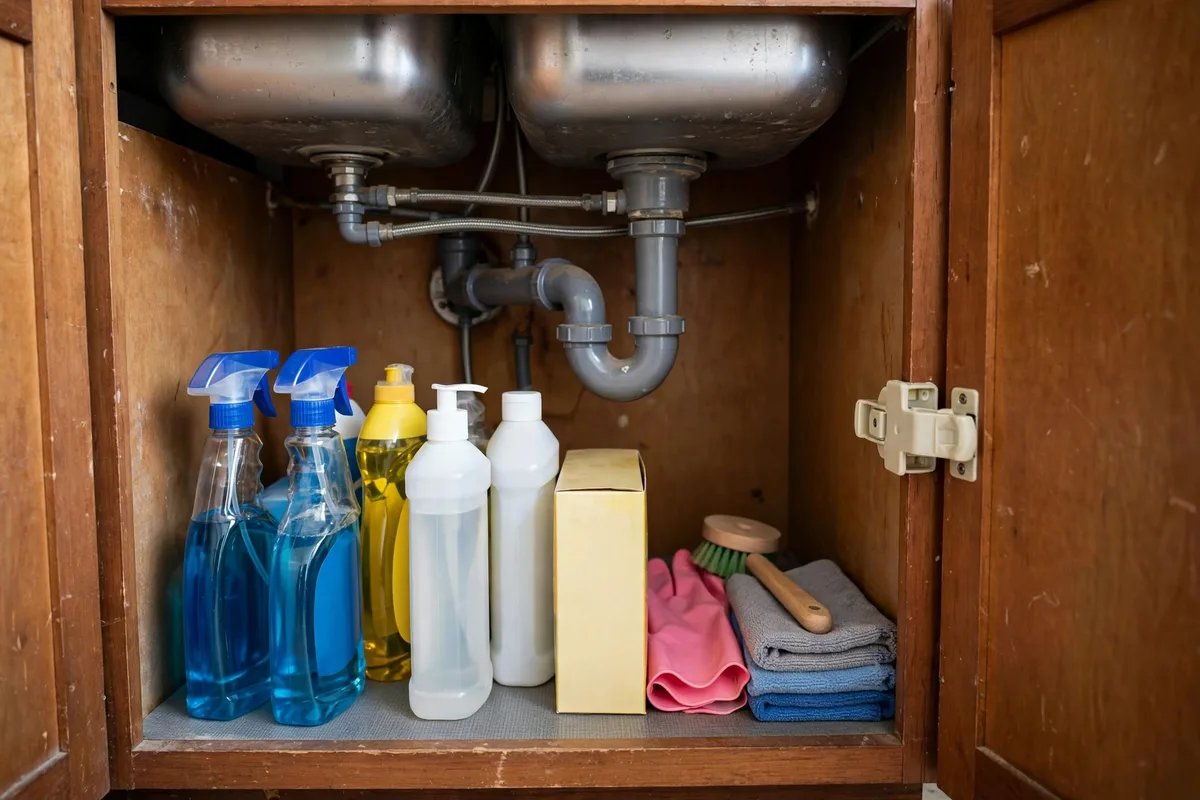
The core principle is simple: assume your pet will touch, lick, and breathe whatever you put down, and clean accordingly. That one assumption drives every habit below.
Step 1: Audit What You’re Already Using
Before buying anything, look at what you have. Pull out your cleaners — floor cleaner, bathroom spray, all-purpose spray, laundry detergent, carpet cleaner, air fresheners — and read the labels with fresh eyes:
- Look for hazard warnings: corrosive, toxic, “keep out of reach of children.” If it’s harsh for kids, treat it as harsh for pets.
- Note the products with strong fumes — bleach-based and ammonia-based cleaners, oven cleaners, and concentrated disinfectants deserve extra caution.
- Check where they’re stored. Anything under an open sink or on a low shelf is within reach of a determined dog or a clever cat.
You don’t need to throw everything out today. You need a map of what’s in your house so you can upgrade your habits around the riskiest items first. This kind of whole-home sweep pairs well with childproofing common household hazards — the locked-cabinet habit protects kids and pets at the same time.
Step 2: Build a Pet-Safe Cleaning Kit
You need fewer products than you think. A solid pet-household kit covers most jobs:
- White vinegar diluted with water for glass, hard floors, and general wipe-downs. (Skip it on natural stone like marble and granite — acids can etch them.)
- Baking soda for deodorizing carpets, upholstery, and litter-adjacent areas. Sprinkle, wait 15–30 minutes, vacuum thoroughly.
- A mild, unscented dish soap for spot-cleaning floors and surfaces.
- An enzyme-based cleaner labeled for pet messes for urine, vomit, and other organic accidents. Enzyme cleaners break down the proteins that cause lingering odor, which matters because leftover scent invites repeat accidents in the same spot.
- Microfiber cloths and a microfiber mop, which clean effectively with just water on many surfaces — less product means less residue.
- An unscented, pet-conscious laundry detergent for pet bedding and throws.
Notice what’s missing: heavy fragrances, strong disinfectants for everyday use, and aerosol air fresheners. For daily cleaning, simple and unscented beats powerful and perfumed. And when you do need a stronger product for a specific job, your vet is a good sounding board — a quick call beats a guess.
Step 3: Change How You Clean, Not Just What You Use
Products matter less than habits. These five habits do most of the safety work:
- Move pets out of the room while you clean. Put them in another room with the door closed until surfaces are dry. This one habit eliminates the biggest risks: walking through wet cleaner, licking drips, and breathing concentrated fumes.
- Ventilate. Open windows or run the exhaust fan while cleaning and for a while after, even with mild products.
- Let surfaces dry completely before pets walk on them. Wet paws pick up residue; dry surfaces are dramatically safer.
- Rinse when in doubt. After using anything stronger than your everyday kit — especially on floors and food-area surfaces — go over it once more with plain water.
- Dilute properly and never mix. Follow label dilutions exactly, and never mix cleaning products. Mixing is dangerous for everyone in the house, pets included.
Step 4: Lock Down Storage
Curious pets open cabinets, chew bottles, and knock things off low shelves. Treat cleaning products like medications:
- Store everything in a latched cabinet, a high shelf, or a locked closet — somewhere paws and noses genuinely can’t reach.
- Use childproof latches on under-sink cabinets. They’re cheap, and they work on dogs and cats too.
- Never leave buckets, spray bottles, or open containers unattended, even “just for a minute.” A minute is all it takes.
- Keep products in their original labeled containers. Decanting into unmarked bottles removes the warnings and the first-aid instructions you might need in a hurry.
Step 5: Handle the High-Risk Zones
Some areas need their own rules:
- The litter box area. Scoop daily and do a full litter change on schedule. Clean the box itself with mild soap and water — skip harsh disinfectants inside the box, since cats are in direct contact with the surface. A washable mat underneath catches tracked litter; see our guide to keeping a litter box area clean for the full routine.
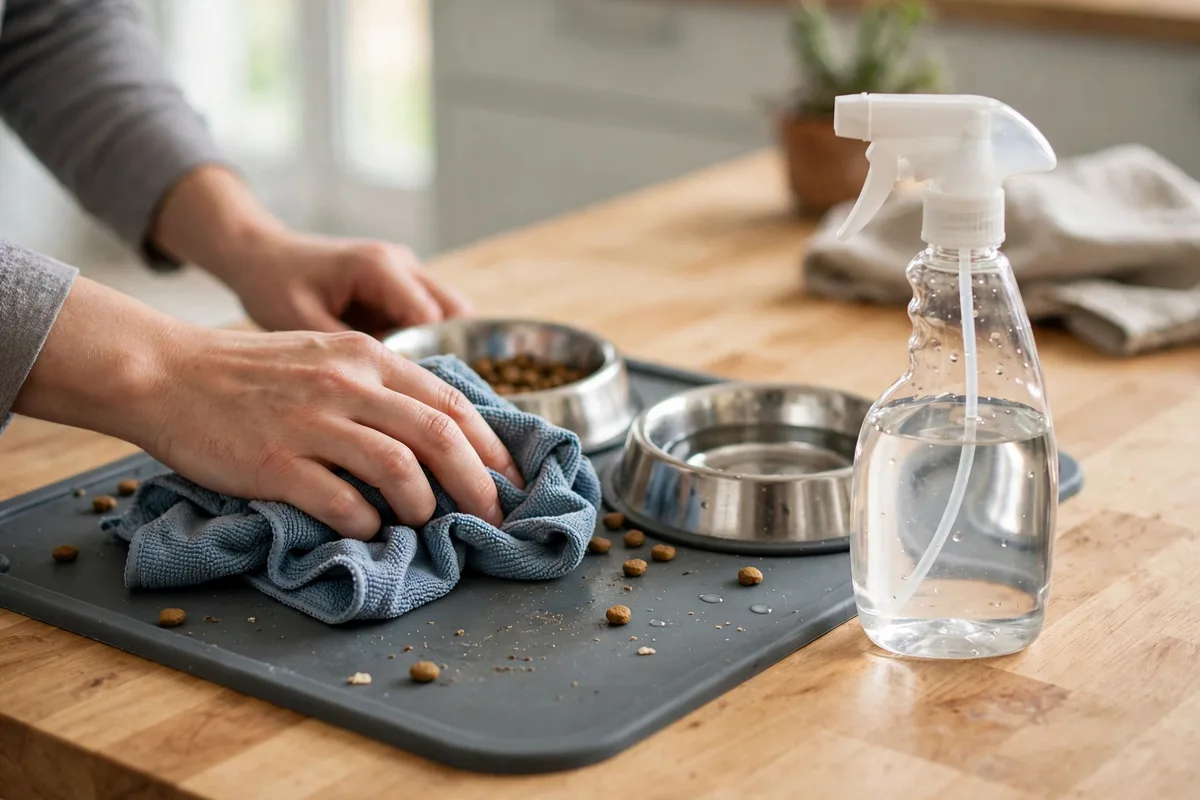
- Food and water stations. Wash bowls daily with hot water and mild dish soap, rinse well, and dry. A washable mat under the bowls catches spills and is easier to sanitize than the floor itself.
- Accident cleanup. Blot fresh messes immediately — don’t rub, which pushes stains deeper. Apply your enzyme cleaner, give it the contact time the label specifies, then blot dry. For odors in soft furnishings, baking soda before vacuuming helps between deep cleans.
- Entryways. Keep pet wipes or a damp towel by the door for muddy paws. Cleaning paws at the door means less floor-cleaning later — and less of the outdoors tracked onto surfaces your pet will lick.
Step 6: Rethink Fragrance
Plug-ins, scented sprays, and strongly fragranced cleaners are designed to fill the air your pets breathe all day. Birds and small mammals are especially sensitive to airborne chemicals, and scented products can irritate any animal’s airways. You don’t have to live with pet odor — but address the source (grooming, bedding washes, litter routine) rather than masking it. If you want scent, open windows and let fresh air do the work.
Troubleshooting Cleaning Mishaps
| Situation | What to do |
|---|---|
| Pet walked across a wet floor | Rinse paws with plain water and dry them; watch for licking or irritation. |
| Pet chewed or licked a cleaning product | Remove the product, note exactly what it was, and call your vet or the ASPCA Animal Poison Control Center right away — don’t wait for symptoms. |
| Strong fumes during cleaning | Move pets to fresh air immediately, ventilate the room, and switch to milder products next time. |
| Cat avoiding the litter box after cleaning | You may have used something too strong or too scented — rewash with mild soap and water only. |
| Lingering odor after accident cleanup | Re-treat with the enzyme cleaner for the full label contact time; if the smell persists in carpet padding, that section may need professional attention. |
Keep your vet’s number and the poison control number posted where anyone in the household — including a pet sitter — can find them in seconds.
Frequently Asked Questions
Is vinegar actually safe to use around pets?
Diluted white vinegar is one of the most commonly used DIY cleaners in pet households, and it’s fine for most hard surfaces once dry. Keep pets out of the room while you work, let surfaces dry, and avoid using it on natural stone. As with any cleaner, the habits — ventilation, drying time, rinsing — matter as much as the product.
What about essential oils?
Many essential oils can be harmful to pets, and cats are especially sensitive. Diffusers fill the air your pet breathes constantly, and oils on surfaces end up on paws and fur. If you love scent, talk to your vet before diffusing anything around your animals — or skip oils entirely and ventilate instead.
Can I use bleach if I rinse well?
Bleach is effective but harsh, and its fumes are hard on small or sensitive animals. For everyday pet-household cleaning you don’t need it — soap, water, vinegar, and enzyme cleaners handle routine jobs. If a specific situation calls for disinfection, follow the product directions exactly, rinse thoroughly, ventilate well, and keep pets away until everything is completely dry.
How do I know a product is actually pet-safe?
Read the full label, not just the front. Look for clear usage directions, hazard warnings, and first-aid instructions. Be skeptical of vague “natural” or “pet-friendly” marketing with no specifics. When in doubt, choose the simplest product that does the job, use the habits in this guide, and ask your vet about anything you’re unsure of.
Clean House, Safe Pets
You don’t need a chemistry degree or a specialty store — you need the right defaults. Move the pets out, ventilate, let things dry, rinse when unsure, and lock the cabinet. Build those five habits and the products almost take care of themselves. A clean home and a safe pet were never opposites; they just needed the same routine.