
You have probably taken a quiz like this in school or at a team workshop: “List as many uses for a brick as you can in two minutes.” That exercise is a tiny version of a creative ability test — an assessment that claims to measure your capacity for creative thinking. The short answer up front: these tests measure a specific slice of creativity called divergent thinking — your ability to generate many varied, original ideas — not your overall creative genius, and certainly not your creative achievements.
What This Test Claims to Measure
A creative ability test claims to measure how creatively you think, usually broken into four components identified by creativity researchers:
- Fluency — how many ideas you can produce in a set time
- Flexibility — how many different categories your ideas span
- Originality — how unusual your ideas are compared to what most people say
- Elaboration — how much detail you add to your ideas
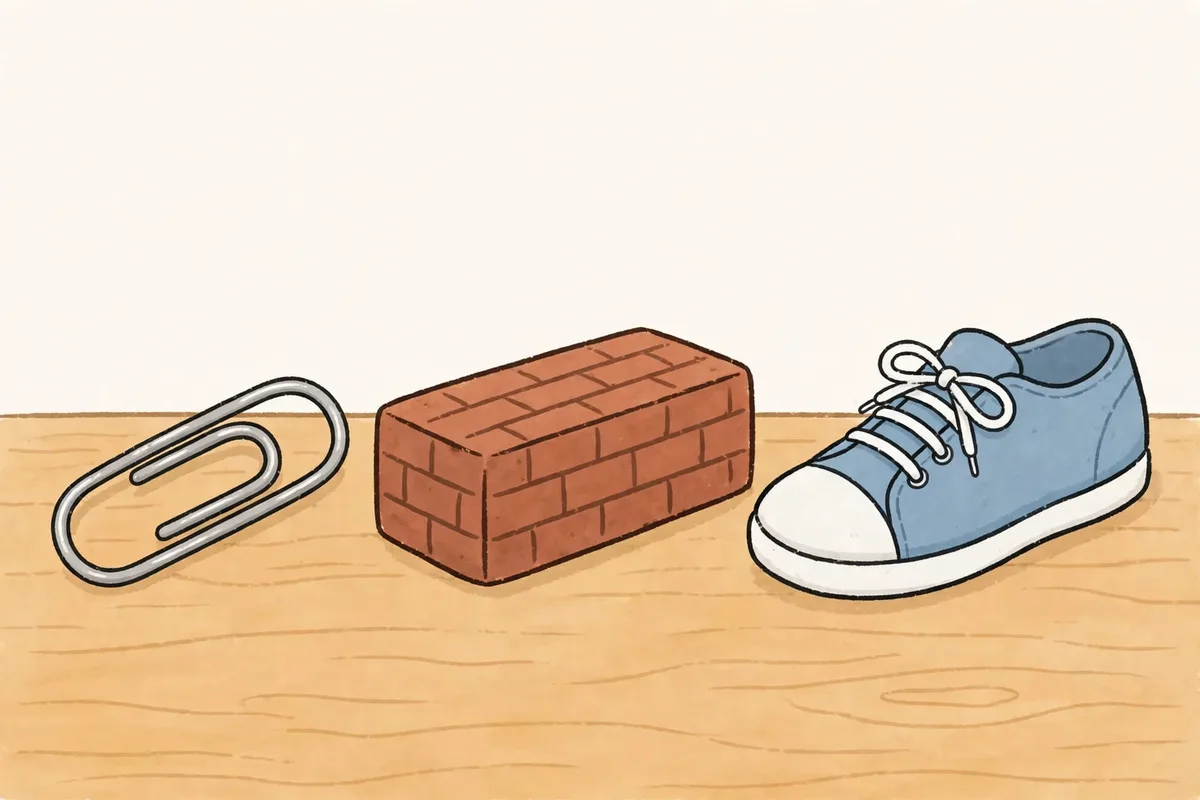
The most famous versions are the Torrance Tests of Creative Thinking (TTCT), developed by psychologist E. Paul Torrance, which include both verbal tasks (brainstorming, imagining consequences) and figural tasks (completing drawings, improving a product design). Another classic is the Alternate Uses Test, developed by J.P. Guilford in 1967, which asks you to list as many unconventional uses as possible for an everyday object like a paperclip, brick, or shoe. Newer quick versions include the Divergent Association Task, where you simply name ten words that are as different from each other as possible.
Why These Tests Exist
Divergent thinking tests are widely used in schools, hiring, and innovation workshops because they are cheap, quick, and easy to score. Teachers use them to spot students who might benefit from creative enrichment. Companies use them in brainstorming training and team-building exercises. Researchers use them to study how creativity works — for example, whether “be creative” instructions raise scores, or how creativity relates to intelligence.
The underlying idea, from Guilford’s work in the 1950s and 60s, is that creative thinking involves breaking past “functional fixedness” — the tendency to see objects only in terms of their normal use. Generating many varied uses for a brick, the theory goes, reveals the same mental flexibility that produces novel solutions in real life.
Sample Questions: What a Typical Test Asks
Here are seven original sample tasks in the style of these tests. Set a timer — most are meant to be done in two to five minutes.
1. Alternate uses for a brick. List as many uses as you can for an ordinary brick, excluding its normal use in building walls. Aim for quantity, then variety, then strangeness.
2. Improve a paperclip. Suggest ways to improve an ordinary paperclip — change its shape, material, or function. Sketches and details count.
3. Unusual uses for a shoe. Name as many unconventional uses for a single sneaker as possible in three minutes. (Paperweight is common; a plant pot is better; a makeshift telephone is more original.)
4. What if? “What would happen if people could read each other’s minds for one hour every day?” List as many consequences as you can — practical, social, and absurd.
5. Incomplete figure. Imagine a page with a single squiggle in the middle. Complete it into as many different drawings as you can, giving each a title. One person might see a snake; another sees a river, a ribbon, and a question mark.
6. Ten different words. Write down ten words that are as different from each other as possible — like “cat” and “book,” not “cat” and “dog.” (This mirrors the Divergent Association Task.)
7. Story titles. “A postman discovers an envelope that isn’t addressed to anyone and can’t be opened.” List as many possible titles for this story as you can.
How the Scoring Works
Divergent thinking tests are scored on the four components, usually by trained raters comparing your answers against norms:
- Fluency is the simplest: count the number of valid responses. More ideas equals higher fluency.
- Flexibility counts the number of distinct categories your answers fall into. For the brick, “doorstop, paperweight, bookend” is one category (holding things down); “crush into powder for art” is another.
- Originality is judged by rarity — answers given by very few other test-takers score highest. In practice, raters compare your list against published frequency tables.
- Elaboration rewards detail: “a doorstop” scores less than “a doorstop with felt pads so it doesn’t scratch the floor.”
Online versions simplify this drastically — they may count your ideas, ask you to self-rate, or compare your count to averages. These simplifications make online scores rough estimates at best.
What Your Result Means
High across the board. You generate lots of ideas, across varied categories, with uncommon and well-detailed ones. Tests interpret this as strong divergent-thinking ability — a genuine creative strength.
High fluency, lower originality. You produce many ideas but they cluster in familiar territory. This is common and trainable — pushing yourself to keep going past the obvious answers usually raises originality, since the first ideas are the conventional ones.
Lower fluency, some original gems. You think carefully and produce few but unusual ideas. Some researchers argue this reflects a different creative style rather than a deficit.
Low across the board. The test suggests weaker divergent thinking — but before accepting that, consider context: fatigue, unfamiliarity with the format, and test anxiety all depress scores dramatically.
Honest Limitations You Should Know
Creative ability tests are real research tools, but they have real limits, and honesty about them matters.
First, they measure creative potential, not creative achievement. Research suggests divergent thinking explains under half of the variance in adult creative potential — and creative achievement (writing a novel, founding a company, composing a song) depends on motivation, domain knowledge, persistence, and opportunity at least as much as on idea fluency. A low score doesn’t mean you’re not creative; a high score doesn’t mean you’ll produce anything.
Second, scores are noisy. Sleep, mood, motivation, and even whether you like timed tasks shift results. Practice effects are real — the second time you take one, you do better.
Third, online versions are rough approximations. The real TTCT takes substantial time and is scored by trained raters against norms. A free five-minute web quiz that counts your ideas is entertainment-flavored self-assessment, not a psychological evaluation.
Finally, creativity is broader than divergent thinking. Convergent thinking (finding the one right solution), aesthetic judgment, emotional depth, and craft all matter — and none are captured by “list uses for a brick.”
How to Actually Improve Your Creative Thinking
The good news: the components these tests measure are trainable. Brainstorming research consistently supports a few habits: generate many ideas before judging any of them, deliberately push past the first ten obvious answers, expose yourself to unfamiliar domains (museums, other fields’ journals, new hobbies), and sleep on problems — incubation genuinely helps. Keep a running idea notebook; fluency is partly a habit of capturing thoughts before they evaporate.
For more self-assessment tools, check out the photographic memory test and the chivalry test.
FAQ
Is the creative ability test the same as an IQ test? No. IQ tests emphasize convergent thinking — finding correct answers. Creative ability tests emphasize divergent thinking — generating many possible answers. They measure different things.
What is the Torrance test? The Torrance Tests of Creative Thinking (TTCT), developed by E. Paul Torrance, are the most widely used standardized creativity assessments, with verbal and figural sections scored for fluency, flexibility, originality, and elaboration.
Can I improve my creativity score? Yes — probably more than with most tests. Practice with brainstorming, “be creative” self-instructions, and exposure to new ideas reliably raises divergent-thinking scores.
Do these tests predict creative success? Only weakly. They predict creative potential better than creative achievement. Real-world creative success depends heavily on motivation, knowledge, and persistence.
Are online creative ability tests accurate? They’re rough estimates. Real divergent-thinking tests require trained scoring against norms. Online quizzes give you a fun approximation — useful for reflection, not diagnosis.