
If every homework session requires you hovering, reminding, and rescuing, your child isn’t really learning how to learn — they’re learning how to wait for you. Independent homework habits don’t appear on their own; they’re built gradually through routine, environment, and a parent who coaches instead of takes over.
Here’s a step-by-step approach to help your child do homework on their own — willingly and well.
Step 1: Understand Why They Resist
Before fixing the behavior, understand it. Children resist homework for reasons that are rarely about laziness:
- They’re tired. A full school day drains focus; some kids need to decompress before they can think again.
- They’re overwhelmed. A pile of assignments feels impossible, so they avoid starting.
- They fear getting it wrong. Perfectionist kids would rather not try than try and fail.
- They’ve learned to wait. If help always arrives before they struggle, why struggle?
Respond with empathy, not pressure. A child who feels understood cooperates far more than one who feels criticized. That said, if homework regularly causes serious distress or your child consistently can’t keep up, talk to their teacher — it may signal something beyond habit.
Step 2: Build a Consistent Homework Routine
Children thrive on predictability. A routine removes the daily negotiation of “when will you start?” and turns homework into a normal part of the day, like dinner.
- Pick a consistent time. Some kids focus best right after school; others need a snack and outdoor play first. Watch your child’s energy and choose the window that works — then protect it.
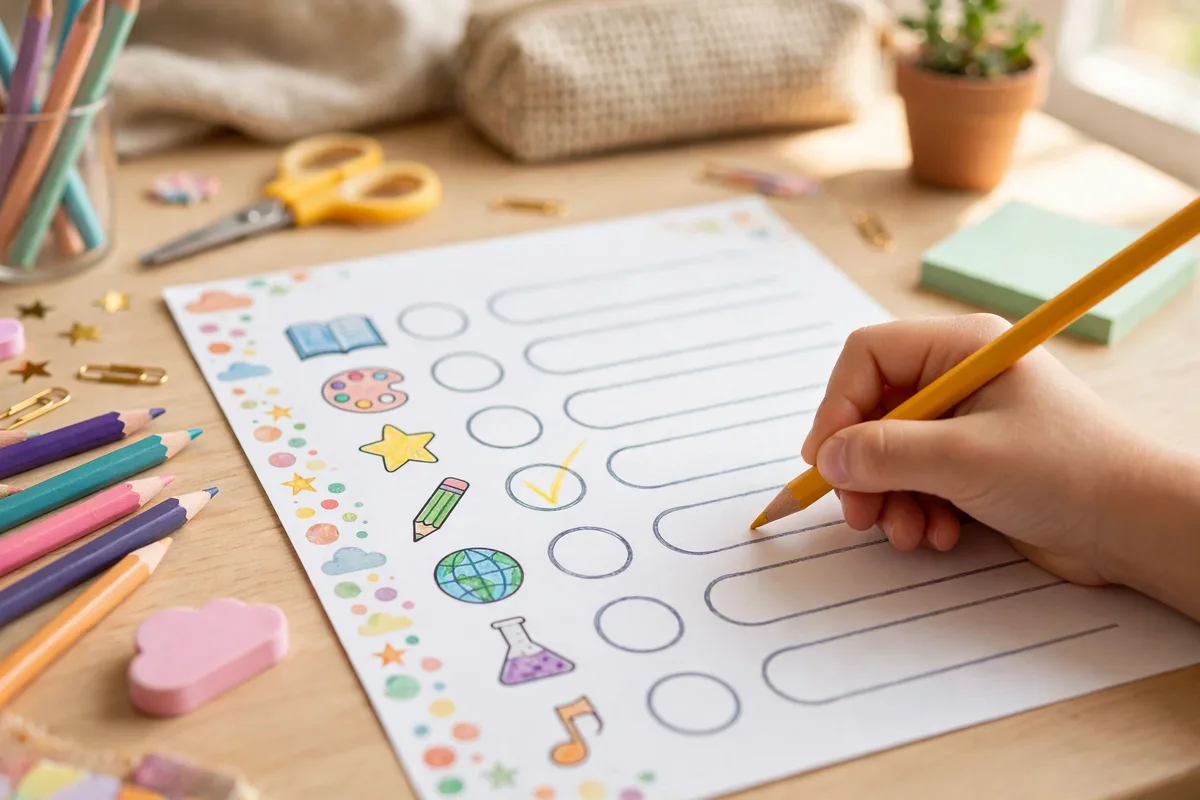
- Keep the order predictable. For example: snack, homework, free time. A visual schedule or simple checklist lets younger kids follow the flow without asking.
- Make starting the routine the expectation, not each assignment. “It’s homework time” is easier to enforce than “do your math now.”
- Separate homework from bedtime. Late-night homework is a sign the routine needs adjusting, not that the child needs lecturing.
A calm after-school flow makes everything easier; our guide to handling busy after-school schedules can help you fit homework between activities without chaos.
Step 3: Set Up a Distraction-Free Homework Zone
Environment shapes behavior. You don’t need a dedicated study room — a quiet, well-lit corner of the kitchen table works fine — but you do need to remove competition for your child’s attention.
- Keep supplies ready: pencils, paper, erasers, and any device they need. Hunting for supplies breaks focus.
- Silence phones and turn off the TV during homework time — for everyone, not just the child.
- For younger kids, stay nearby doing your own quiet work. Your presence provides security without hovering.
- For older kids, a closed door and privacy signal trust.
Step 4: Teach Them to Plan, Not Just to Start
Independence means managing the work, not just doing it. Most children who “can’t work alone” actually can’t plan alone. Teach planning explicitly:
- Use a planner or checklist. Help your child list each assignment, then check items off. Checking things off builds a sense of accomplishment and teaches time management.
- Let them choose the order. Deciding whether to start with math or reading is a small choice that builds ownership.
- Break big tasks down. “Write the essay” is overwhelming; “write the first paragraph” is doable. Model breaking tasks into steps until they can do it themselves.
- Estimate time together. Ask “how long do you think this will take?” then compare with reality. This builds the time awareness that independent learners need.
Keeping assignments and papers organized is part of this skill — see our guide to organizing school paperwork for a system that prevents lost worksheets.
Step 5: Coach Instead of Rescue
This is the hardest step, and the most important. When your child gets stuck, your job is to guide their thinking, not supply answers.
Instead of this: “The answer is 42.”
Try this:
– “What have you tried so far?”
– “What does the question actually ask?”
– “Where could you look that up?”
– “Can you show me what you did first?”
If they’re truly stuck after trying, help them write down a specific question to ask their teacher. That reframes “I don’t get it” into a skill: asking for help is part of independent learning.
And resist the urge to correct every error before it goes back to school. Homework is the teacher’s feedback tool — perfect homework produced by a parent teaches the child nothing.
Step 6: Use Timers and Work Sprints
Focus is a muscle, and timers make it visible. For younger children, 10–15 minutes of focused work followed by a short break works well. Older kids can build up to 20–25 minutes. A simple kitchen timer is enough.
The rules that make sprints work:
- The timer, not the parent, says when to start and stop. This removes you from the enforcer role.
- Breaks are earned by focusing, not by finishing everything. This keeps motivation going on long assignments.
- If they’re in a groove when the timer rings, let them keep going. Momentum is precious.
Step 7: Praise Effort and Strategy, Not Just Results
What you praise shapes what your child values. “You’re so smart” teaches them to protect the appearance of being smart — which means avoiding hard things. Instead, praise what they can control:
- “You stuck with that even when it was tricky.”
- “I noticed you checked your work before turning it in.”
- “You planned your time really well tonight.”
Recognizing effort and strategy builds the internal motivation that makes independence possible. A child who believes effort works will try; a child who believes only talent counts will wait for help.
This matters especially for reading, which is often the biggest homework battle. For strategies specific to books, see our guide to helping children build reading habits.
Step 8: Let Natural Consequences Teach
If your child forgets an assignment or doesn’t finish, let the consequence happen at school. A missed recess or a note from the teacher teaches responsibility faster than any lecture at home — and it shifts accountability where it belongs: between the child and the teacher.
Your role at home is empathy plus problem-solving: “That must have been frustrating. What could help you remember tomorrow?” Pair natural consequences with better systems, and the lesson sticks.
Adjusting by Age
| Age | What independence looks like | Your role |
|---|---|---|
| Ages 5–7 | Following the routine, starting without being asked twice | Sit nearby; guide every step |
| Ages 8–10 | Using a checklist, attempting work before asking for help | Available but not hovering; teach planning |
| Ages 11–13 | Managing their own planner, breaking down projects | Coach from the sidelines; review plans |
| Ages 14+ | Owning their schedule, seeking help independently | Consultant on request |
Expect uneven progress. Independence grows in spurts, and a bad week doesn’t mean the system failed.
Frequently Asked Questions
How long should I sit with my child during homework?
As little as they need, fading over time. Start nearby for young children, then gradually move to checking in at the start and reviewing at the end. The goal is a child who can start, work, and finish with you available but not required.
What if my child says they have no homework?
Suggest checking the school portal together or reviewing class notes. If “no homework” is a pattern, a quick check-in with the teacher can clarify what’s expected — our guide to preparing for a parent-teacher meeting can help you make that conversation productive.
Should I reward homework completion?
Intrinsic motivation beats prizes in the long run, but small, occasional recognition for genuine effort is fine. If you use rewards, tie them to the process (starting on time all week) rather than grades, and phase them out as the habit solidifies.
Conclusion
Independent homework habits are built, not born. Establish a consistent routine, create a focused space, teach planning explicitly, coach instead of rescue, and praise the effort and strategies that make independence work. Step back gradually — and trust that the struggle your child works through today becomes the self-reliance they’ll carry for years.