Pet food goes stale, loses nutrients, and grows things you don’t want — and unlike your own leftovers, your pet can’t tell you the kibble tastes off. They’ll just eat it anyway. Where and how you store pet food decides whether that expensive bag stays fresh to the last scoop or quietly degrades into a pantry-pest buffet.
The rules are straightforward, and most of them come down to three enemies: air, heat, and moisture. Beat those three and you’re most of the way there. Here’s the full system, from the day the bag comes home to the last scoop.
Why Storage Matters More for Pet Food Than You’d Think
Dry pet food is coated in fats and oils — that’s part of what makes it tasty and nutritious. Those fats go rancid when exposed to air, heat, and light, and rancid food loses nutritional value and can upset your pet’s stomach. Moisture invites mold, and an open bag invites pantry moths and mice. Wet food, once opened, is as perishable as any meat you’d eat yourself.
Then there’s the recall factor: if a food is ever recalled, you’ll need the lot number and expiration date. Store the food right and that information stays with the bag instead of in the trash. The FDA’s pet food safety guidance covers the same fundamentals — cool, dry, sealed, and refrigerated where appropriate — and it’s worth a read alongside this guide: Tips for Safe Handling of Pet Food and Treats.
Step 1: Start at the Store
Good storage begins before you get home:
- Check the packaging. Skip bags with tears, holes, or crushed seals, and cans that are dented, bulging, or rusted. Damaged packaging means air and moisture are already inside.
- Check the dates. Look for the “best by” or expiration date and buy the freshest bag available. Note how long the bag will realistically last your pet — a giant bag that takes four months to finish may not stay fresh to the end.
- Buy the right size. The fresher rule of thumb: an opened bag of dry food is best used within about six weeks. Match the bag size to your pet’s appetite so you’re not storing an open bag for months.
Step 2: Keep Dry Food in Its Original Bag
This surprises people, but manufacturers design the bag itself as part of the preservation system — the lining is a fat and oxygen barrier. The standard best practice:
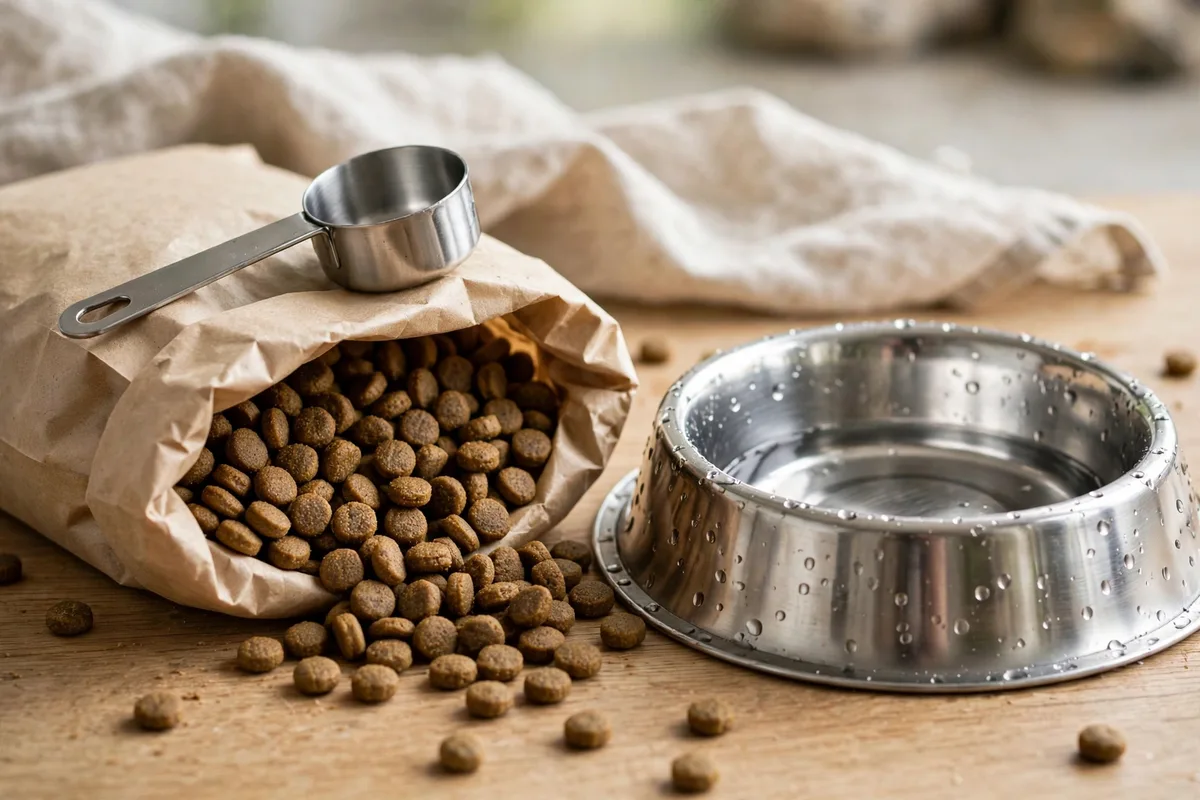
- Keep the kibble in the original bag. Don’t pour it loose into a bin.
- Roll the top of the bag down tightly after every use and clip it shut. Squeeze out excess air first.
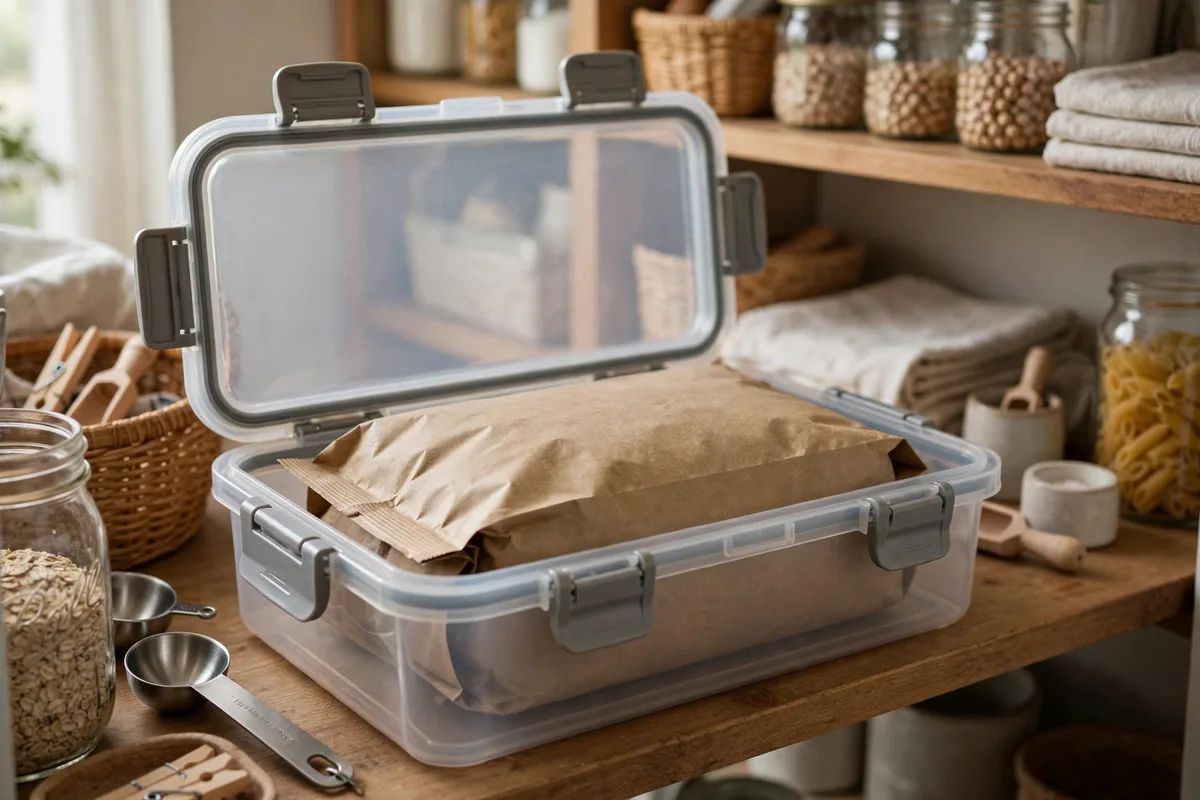
- Place the whole sealed bag inside an airtight container for the best of both worlds: the bag’s protective lining plus a rigid, pest-proof shell.
- Keep the bag’s label information accessible. Lot number, expiration date, and feeding guidelines stay with the food — critical if there’s ever a recall.
If you absolutely prefer decanting into a container, wash and fully dry the container first, never mix old kibble with a new bag, and save the bag’s label info (a photo of it works) until the food is gone.
Step 3: Choose the Right Spot
Heat and humidity are the enemies. The ideal storage spot is:
- Cool: consistently below 80°F. A kitchen pantry or interior closet is ideal.
- Dry: low humidity, away from steam and damp.
- Dark: out of direct sunlight, which degrades fats and vitamins fast.
Avoid the garage, outdoor sheds, damp basements, and the laundry room — temperatures swing, humidity runs high, and pests find them first. Keep bags off bare concrete floors (moisture wicks up); a shelf or a pallet works. And store food in a secure spot your pet can’t break into — a determined dog can demolish a “hidden” bag in minutes, and overeating a whole supply at once can mean an emergency vet visit. Your feeding routine and your storage spot should work together; our guide to making a pet feeding schedule covers the routine side.
Step 4: Handle Wet and Canned Food Correctly
Wet food plays by stricter rules:
- Unopened cans and pouches: store in a cool, dry place like dry food. Don’t freeze canned food unless the manufacturer says to — freezing can change the texture.
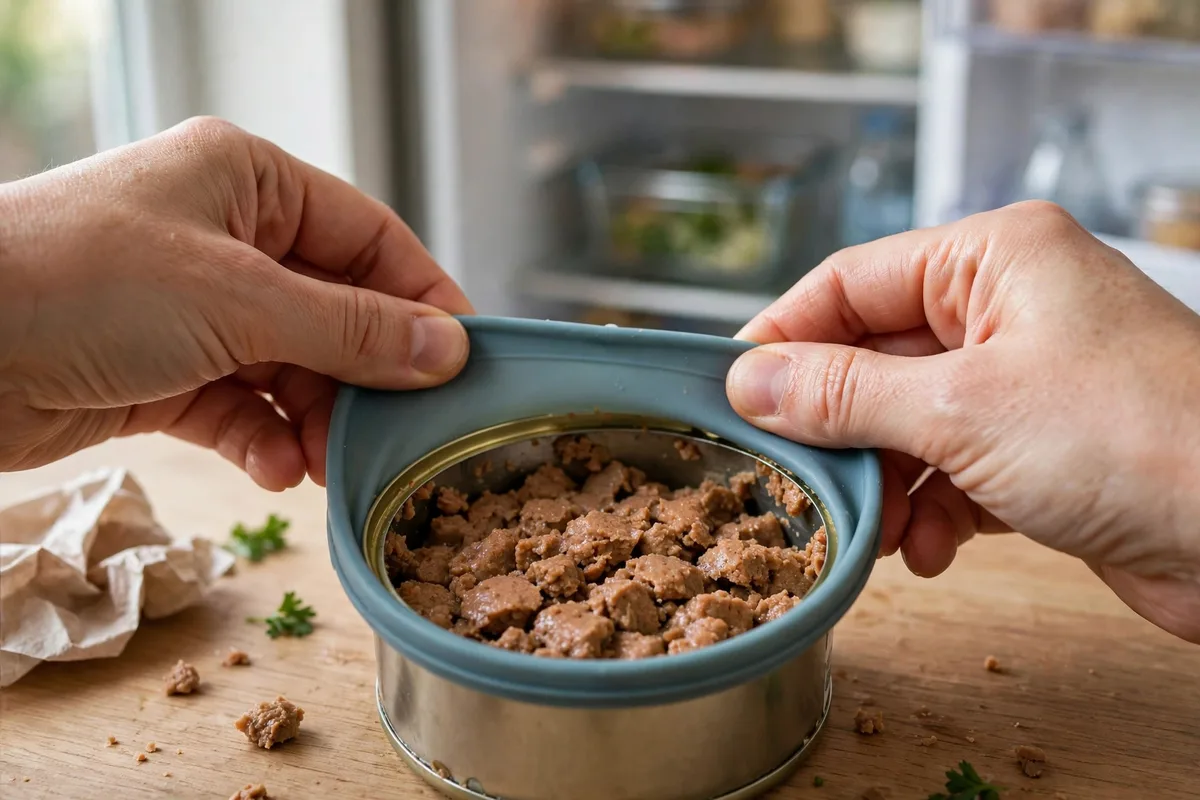
- Once opened: refrigerate immediately. Cover the can with a reusable pet-food lid or transfer the food to a sealed container — don’t store it open in the fridge.
- Use refrigerated wet food within three to five days. When in doubt, throw it out.
- Don’t leave wet food in the bowl for hours, especially in warm weather. Serve it, give your pet a reasonable mealtime window (around 30 minutes is a common guideline), then refrigerate or discard the rest.
- Serve refrigerated food at a comfortable temperature. Cold food straight from the fridge is unappealing to many pets; a short rest at room temperature or a splash of warm water helps.
Step 5: Keep the Scoop — and Everything It Touches — Clean
Contamination usually comes from our hands and tools, not the food itself:
- Wash your hands with soap and warm water before and after handling pet food.
- Use a dedicated scoop, cup, or spoon — and use it only for pet food. Don’t scoop with the pet’s bowl.
- Wash the scoop and the food bowl with soap and hot water after each use, and let them dry fully.
- Wash storage containers between bags. Old crumbs and fat residue at the bottom of a bin go rancid and contaminate the fresh food on top.
- Discard spoiled food safely: tie it in a plastic bag and put it in a covered trash can, so pets and wildlife can’t get into it.
Step 6: Manage Treats and Specialty Foods the Same Way
Treats follow the same rules as kibble: original packaging, sealed, cool, dry, and within their dates. Soft treats dry out fast once opened — reseal carefully. For freeze-dried raw, dehydrated, or refrigerated fresh foods, follow the manufacturer’s storage instructions exactly; these products have less margin for error than conventional kibble. If you travel with pet food, portion it into sealed bags or containers and keep it as cool as you reasonably can.
Troubleshooting Storage Problems
| Problem | Fix |
|---|---|
| Kibble smells stale or “off” | Don’t serve it. Rancid fats aren’t just unappetizing — discard the bag and check your storage spot for heat or air leaks. |
| Pantry moths or weevils in the food | Throw out the infested food, vacuum and wash the storage area and container, and inspect unopened bags before restocking. |
| Bag has been open for months | Replace it. Opened dry food past its prime loses nutrition and palatability — buy a smaller bag next time. |
| Pet broke into the food supply | Secure the storage spot (latch, high shelf, closed room) and watch for signs of overeating — call your vet if your pet ate a large amount. |
| Recalled food and you tossed the bag | This is why you keep lot numbers. Photograph labels when you open each bag so the info survives even if the bag doesn’t. |
Frequently Asked Questions
Can I just pour kibble directly into a storage bin?
You can, but keeping the food in its original bag inside the bin is better. The bag’s lining protects against air and fat oxidation, and it keeps the lot number and expiration date with the food. If you decant, wash and dry the bin between bags and never top off old kibble with new.
How long does opened dry pet food stay fresh?
Aim to finish an opened bag within about six weeks, stored sealed in a cool, dry place. After that, fats oxidize and nutrients degrade even if the food looks fine. Buying the right bag size for your pet’s consumption is the easiest way to stay inside that window.
Can I freeze dry pet food to make it last longer?
Freezing isn’t generally recommended for dry kibble — moisture from thawing can cause mold, and repeated freeze-thaw cycles do more harm than good. The better strategy is buying a smaller bag and storing it properly at room temperature.
Does pet food really need to be refrigerated after opening?
Wet and canned food, absolutely — treat it like any perishable meat: refrigerate at 40°F or below and use within a few days. Unopened dry food and treats just need the cool, dry, sealed treatment.
Fresh In, Fresh Out
The whole system fits on an index card: buy intact packaging in the right size, keep dry food in its original bag inside a sealed container, store it cool/dark/dry below 80°F, refrigerate opened wet food and use it within days, and keep scoops and bowls clean. Do that, and every scoop is as fresh and safe as the manufacturer intended.