
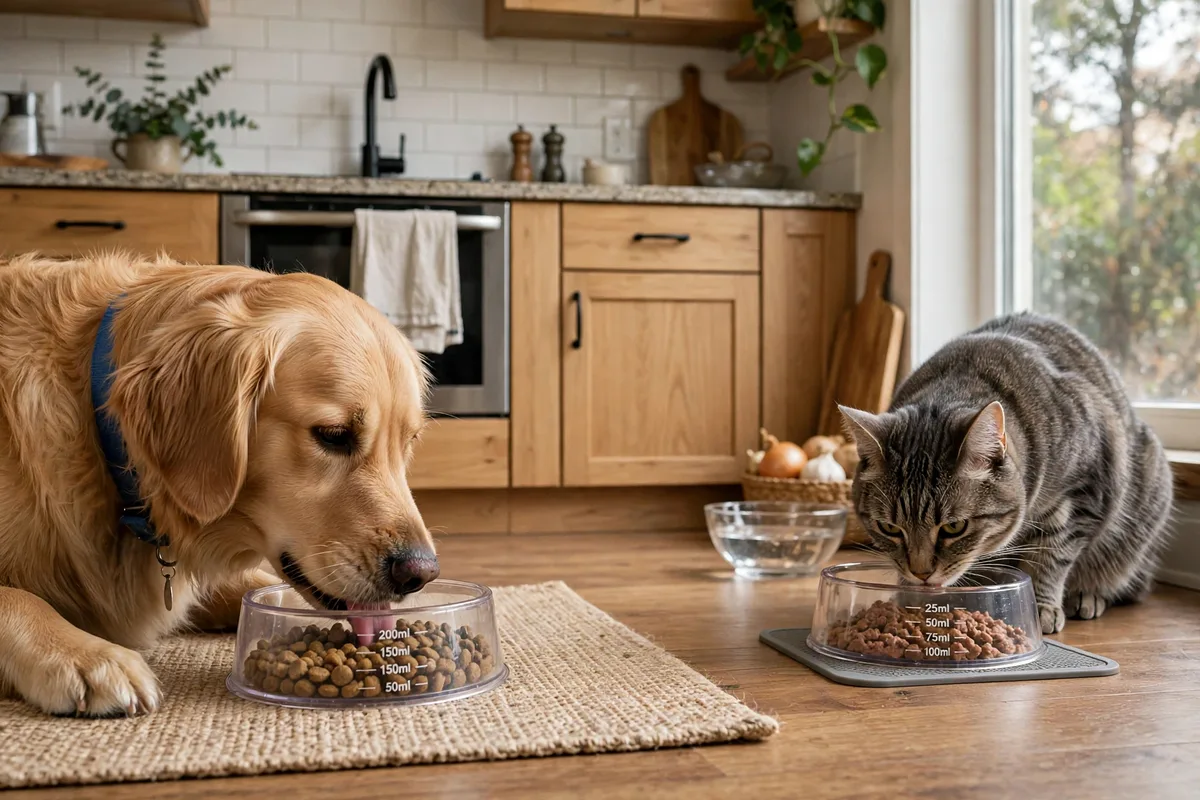
Most pet feeding problems — begging, weight gain, upset stomachs, food stealing — don’t come from the wrong food. They come from the wrong routine: meals at random times, eyeballed portions, and treats that quietly double the daily calories. A feeding schedule fixes all of that with almost no effort. It takes one planning session and about a week of consistency, and it pays off in a healthier pet and a calmer household. Here’s how to build one for dogs and cats at any life stage.
Why a Schedule Beats Free-Feeding
A predictable routine does more than keep meals on time:
- Steadier digestion. The body learns when food is coming and ramps up digestive enzymes accordingly. Pets on a schedule tend to have more regular, firmer stools.
- Easier weight control. Measured meals make portions visible. Free-feeding hides how much a pet actually eats — and obesity in pets creeps up the same way it does in people.
- Calmer behavior. Predictable meals reduce food anxiety, begging, and guarding, especially in multi-pet homes where competition is real.
- Earlier health warnings. A pet that skips a scheduled meal is telling you something. With free-feeding, you might not notice a fading appetite for days.
- Easier house training. For dogs, consistent meals mean predictable bathroom trips — a genuine advantage with puppies.
Step 1: Match the Schedule to Your Pet’s Life Stage
Frequency matters more than exact times at this stage:
Dogs
– Puppies (8–16 weeks): 4 small meals a day. Tiny stomachs, fast metabolisms.
– Puppies (4–6 months): 3 meals a day.
– Adults: 2 meals a day, roughly 12 hours apart.
– Seniors: 2 smaller meals a day; some do better on 3 lighter ones if appetite fades.
Cats
– Kittens (under 6 months): 3–4 meals a day to fuel rapid growth.
– Adults: 2–3 scheduled, measured meals a day.
– Seniors: 2–3 smaller meals a day, or 2 if appetite is steady.
Large-breed puppies often stay on 3 meals longer — ask your vet at a checkup. And “life stage” isn’t just age: pregnant, nursing, very active, or recovering pets have different needs. When in doubt, your vet’s recommendation beats any chart.
Step 2: Pick Meal Times That Fit Your Life
Consistency matters more than the specific hours. Anchor meals to parts of your day that don’t move:
| Schedule | Example times | Works for |
|---|---|---|
| 2 meals | 7:00 AM / 6:30 PM | Adult dogs and cats, working owners |
| 3 meals | 7:00 AM / 12:30 PM / 6:30 PM | Puppies, kittens, seniors |
| 4 meals | 7:00 AM / 11:00 AM / 3:00 PM / 7:00 PM | Very young puppies and kittens |
Feed the evening meal at least a couple of hours before bedtime so digestion doesn’t disrupt sleep (yours or the pet’s). Keep weekend times within about an hour of weekday times — pets don’t know it’s Saturday, and their stomachs keep the schedule.
Step 3: Measure Portions — Don’t Eyeball Them
This is where most feeding schedules quietly fail:
- Start with the feeding guide on your pet’s food bag — it’s a reasonable starting point based on weight, not a prescription.
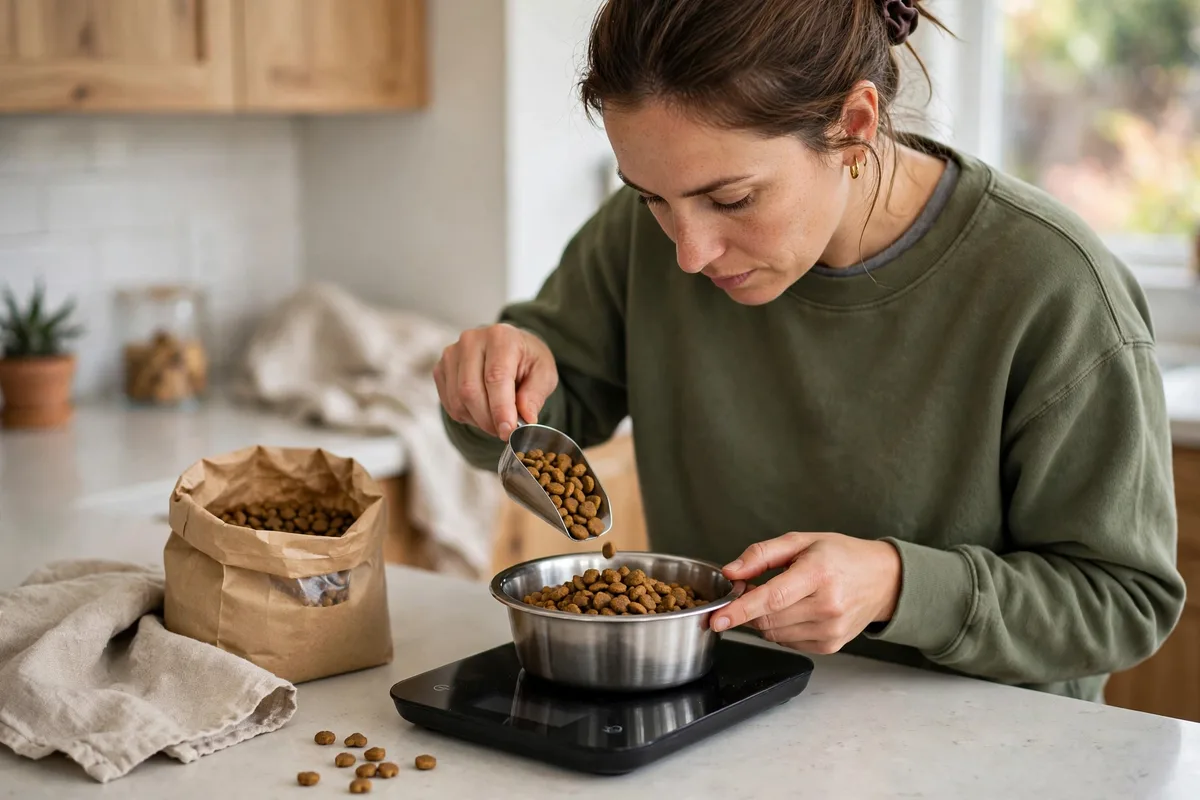
- Use an actual measuring cup or a kitchen scale. Scoops and “about this much” drift upward over time. A scale is the most accurate for dry food.
- Adjust by body condition, not just the chart. You should be able to feel (not see) your pet’s ribs, and there should be a visible waist when viewed from above. If weight creeps up, trim the portion 10% and recheck in a month.
- Account for treats. Treats, table scraps, and dental chews count toward daily calories. A widely used guideline is keeping extras under 10% of daily intake — a handful of training treats adds up fast.
Store dry food properly so portions stay fresh and measurable — sealed, cool, and dry. Our tips on keeping pet food stored properly cover containers and shelf life.
Step 4: Transition and Stick to the Routine
If your pet currently free-feeds, don’t switch cold turkey:
- Move to timed meals over 5–7 days. Put food down for 20–30 minutes, then pick it up — even if the pet walks away. Most pets learn the rhythm within a week.
- Feed in the same spot every time. A consistent location becomes a cue that settles the pet.
- Keep fresh water available at all times, regardless of the food schedule. Water is never restricted.
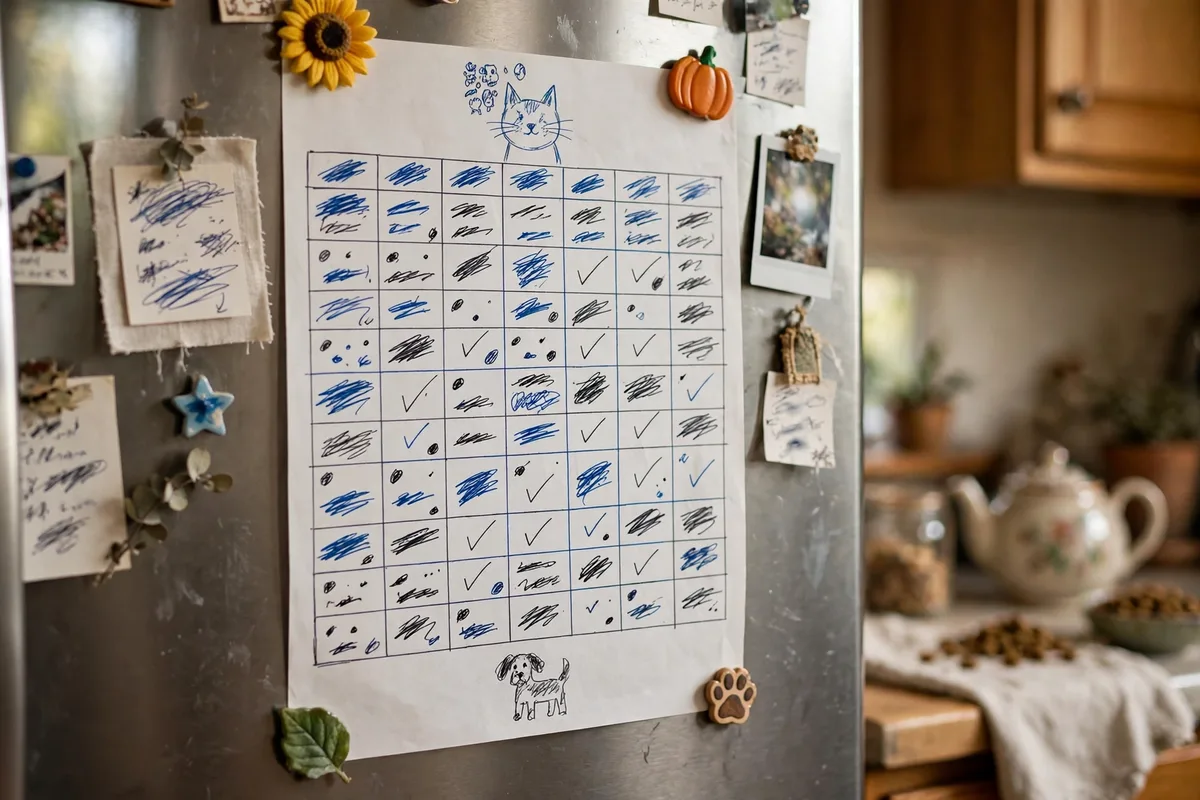
- Write the schedule down — times, portions, and who feeds. This matters the moment someone else feeds your pet, which is exactly why a pet sitter guide should include the feeding chart.
Step 5: Manage Multi-Pet Households
More pets, more rules — feeding time is where household peace is won or lost:
- Feed in separate spots. Different rooms, opposite corners, or a baby gate between them. Separate feeding prevents stealing and bullying, and it lets you monitor exactly who ate what.
- Pick up bowls between meals. Leaving food down invites grazing by the wrong pet — and dog food and cat food are formulated differently, so cross-eating matters.
- Stagger by speed. Fast eaters finish first and raid the slow eater’s bowl. A slow-feeder bowl for the gulper buys the other pet time.
- Cats up high, dogs down low. If the dog raids the cat’s bowl, feed the cat on a counter or cat tree the dog can’t reach.
Sample Schedules by Life Stage
Puppy (3 meals)
- 7:00 AM — Breakfast, measured portion of puppy food
- 12:30 PM — Lunch
- 6:00 PM — Dinner, with bathroom break after each meal
- Fresh water all day; training treats counted toward the daily total
Adult dog (2 meals)
- 7:00 AM — Morning meal before or after the walk (pick one and stay consistent)
- 6:30 PM — Evening meal
- A long-lasting chew in the afternoon for enrichment, not calories
Kitten (4 meals)
- 7:00 AM / 12:00 PM / 5:00 PM / 9:00 PM — small measured meals of kitten food
- Kittens burn through calories; don’t let a kitten go more than about 8 waking hours without food
Adult cat (2–3 meals)
- 7:30 AM — Morning meal
- 6:30 PM — Evening meal
- Optional small midday meal or puzzle feeder for enrichment
Senior pets
- 2–3 smaller meals at consistent times, with food formulated for seniors if your vet recommends it. Watch appetite closely — fading interest in food is worth a vet visit.
Troubleshooting Common Problems
| Problem | Likely cause | Fix |
|---|---|---|
| Begging between meals | Schedule still new, or portions too small | Wait out the adjustment week; verify portions with your vet |
| Skips meals | Stress, heat, spoiled food, or illness | One skipped meal: watch. Two in a row: call the vet |
| One pet steals another’s food | Feeding too close together | Separate rooms; pick up bowls after 20–30 minutes |
| Vomiting after eating fast | Gulping | Slow-feeder bowl; split the meal into two smaller servings |
| Weight gain on measured portions | Treats uncounted, or portions too generous | Log everything for a week, including treats; trim 10% |
| Puppy has accidents after meals | Normal — digestion is fast | Bathroom break 10–15 minutes after every meal |
Keep a simple log — food, portions, appetite, stool quality — especially when adjusting. It makes vet visits far more productive; see our guide to keeping pet records organized for a simple system.
Frequently Asked Questions
Should I feed my dog before or after a walk?
Either works — the key is consistency. Many owners walk first, then feed, so the dog settles afterward. Avoid vigorous exercise immediately after a large meal, especially in deep-chested breeds.
Is it okay to feed my cat once a day?
Most cats do better on 2–3 smaller meals. One large daily meal can cause vomiting in cats that gorge, and it doesn’t suit their natural pattern of several small hunts per day.
Can I mix wet and dry food in the schedule?
Yes — many owners do half and half. Just make sure the combined daily total matches your pet’s calorie needs, not the full portion of each. Adjust the dry portion down when you add wet food.
What if my work schedule changes?
Shift meal times gradually (15–30 minutes per day) rather than all at once. For midday meals you can’t be home for, an automatic feeder with a timer keeps the schedule intact.
My pet grazes and never finishes a meal. What now?
Put the food down for 20–30 minutes, then remove it until the next meal. Healthy pets adjust quickly. If appetite stays low for more than a day or two, check in with your vet.
A Schedule Is a Gift to Your Future Self
The whole system fits on an index card: times, portions, and who feeds. Once it’s running, feeding stops being a daily decision and becomes a background habit — one that keeps weight in check, digestion steady, and multi-pet peace intact. Build it this week, and your pet’s stomach will thank you every day after.


Pingback: Indoor Cat Enrichment: 6 Steps to a Happier, Calmer Cat
Pingback: Store Pet Food Right: Keep Kibble Fresh & Safe