

When a pet crosses into its senior years — roughly seven and up for most dogs, ten and up for most cats — the house that worked perfectly for a young animal starts to feel like an obstacle course. Stairs get harder, hard floors get slippery, and the bed they once leapt onto becomes a mountain. Preparing your home for a senior pet isn’t about renovating; it’s about small, thoughtful changes that let an aging animal move, rest, eat, and feel safe with dignity.
What Changes as Pets Age
Aging pets aren’t just slower versions of their younger selves. A few common shifts are worth understanding before you rearrange anything:
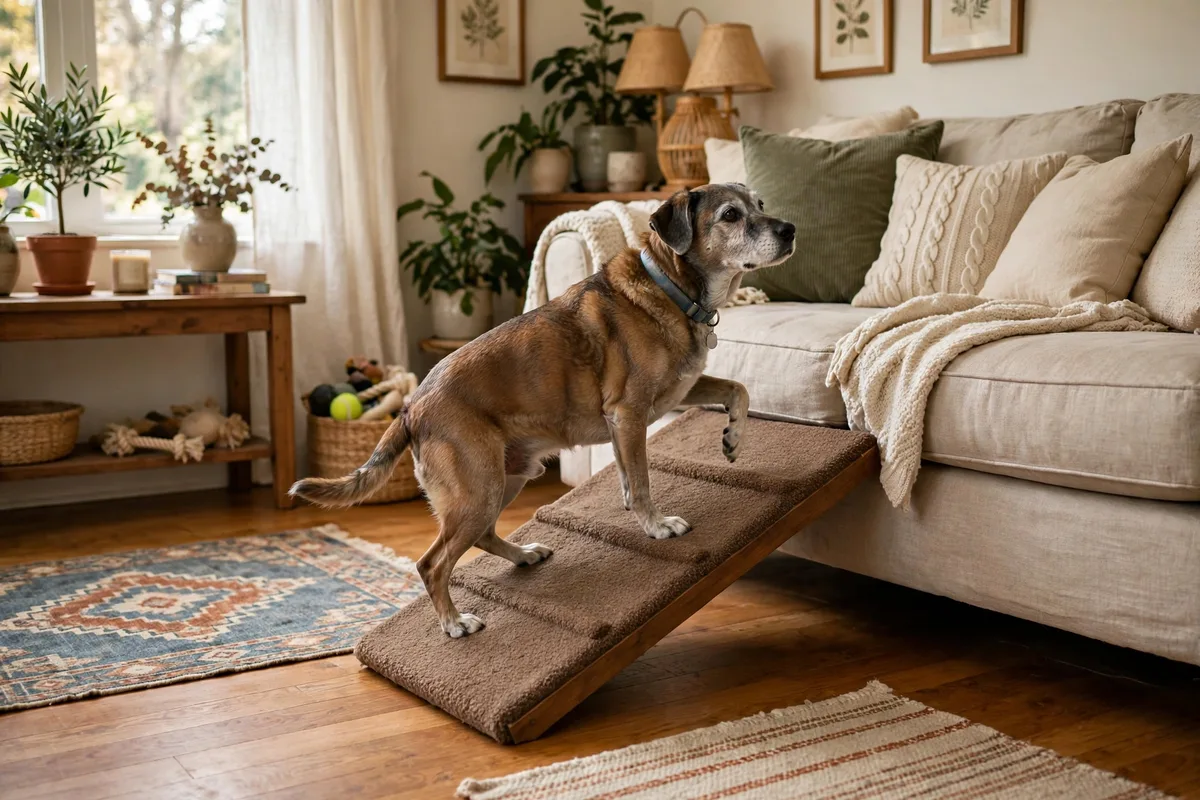
- Mobility declines. Arthritis and stiff joints make jumping, climbing stairs, and standing on slick floors painful. You’ll notice hesitation before stairs, slipping on hardwood, or trouble rising after naps.
- Senses dull. Hearing and vision fade gradually. A pet that startles easily or seems confused in familiar rooms may simply not be seeing or hearing what it used to.
- Temperature sensitivity increases. Older pets feel the cold more and may seek warm spots. Drafty floors that never bothered them before become uncomfortable.
- Routine becomes sacred. Senior pets handle change poorly. Keeping furniture layout, feeding spots, and daily rhythms consistent reduces anxiety and confusion.
If any change seems sudden — a pet that stops eating, limps overnight, or has accidents out of nowhere — that’s a vet conversation, not a home-decor problem. Our guide to recognizing when a pet needs veterinary care helps you tell the difference between normal aging and a warning sign.
Step 1: Make Floors Safe and Navigable
Slippery floors are the number-one home hazard for senior pets. A young dog slides and recovers; a senior dog slides and injures a hip.
- Add rugs and runners. Cover the main paths your pet walks daily — from bed to food bowl, from door to yard. Non-slip rug pads underneath are essential; a sliding rug is worse than no rug.
- Limit access to the slickest rooms. Use baby gates to keep your pet out of tiled laundry rooms or polished hallways when you’re not home to supervise.
- Keep nails trimmed and paw fur tidy. Long nails reduce traction, and the fur between a dog’s paw pads acts like socks on a gym floor. Regular grooming is a mobility aid. For a calm approach, see our guide to trimming dog nails with professional guidance.
- Clear the walkways. Senior pets with fading vision navigate by memory. Keep hallways and their daily routes free of clutter, and don’t rearrange furniture without a good reason.
Step 2: Upgrade the Sleeping Setup
Senior pets sleep more — often 16 to 18 hours a day — so the bed is the most important piece of furniture in their life.
- Invest in an orthopedic bed. Memory-foam beds that distribute weight take pressure off arthritic joints. Choose one with a washable cover; older pets have more accidents.
- Place the bed in a warm, quiet spot. Away from drafts, exterior doors, and heavy foot traffic. A corner where the pet can see the room without being in the middle of it is ideal.
- Add warmth. A self-warming pad or a blanket over the bed helps with stiffness, especially in winter. Avoid electric heating pads unless they’re pet-specific with automatic shutoff — unsupervised heat sources can burn.
- Keep one bed on each floor you use. If the pet follows you around the house, a bed on both levels means it never has to choose between company and comfort.
Step 3: Solve the Stairs and High Places
This is where most senior-pet injuries happen — the pet tries to do what it always did, and the body can’t deliver anymore.
- Block or assist with stairs. For dogs that must use stairs, a sturdy ramp is the gold standard. For furniture, pet stairs or a small ramp next to the couch and bed let them keep their favorite spots without jumping.
- Lift when it’s safer. Small and medium dogs can simply be carried up and down stairs or into the car. It isn’t spoiling them — it’s joint preservation.
- Use a car ramp. Getting in and out of an SUV is one of the hardest things for an arthritic dog. A lightweight folding ramp pays for itself the first week.
- For cats, bring life down to floor level. Move food, water, and a litter box to the floor your cat spends the most time on. Add a sturdy step or low platform if the cat still wants the window perch.
Step 4: Adjust Feeding and Water Stations
Eating shouldn’t be a workout. Small adjustments at mealtimes add up:
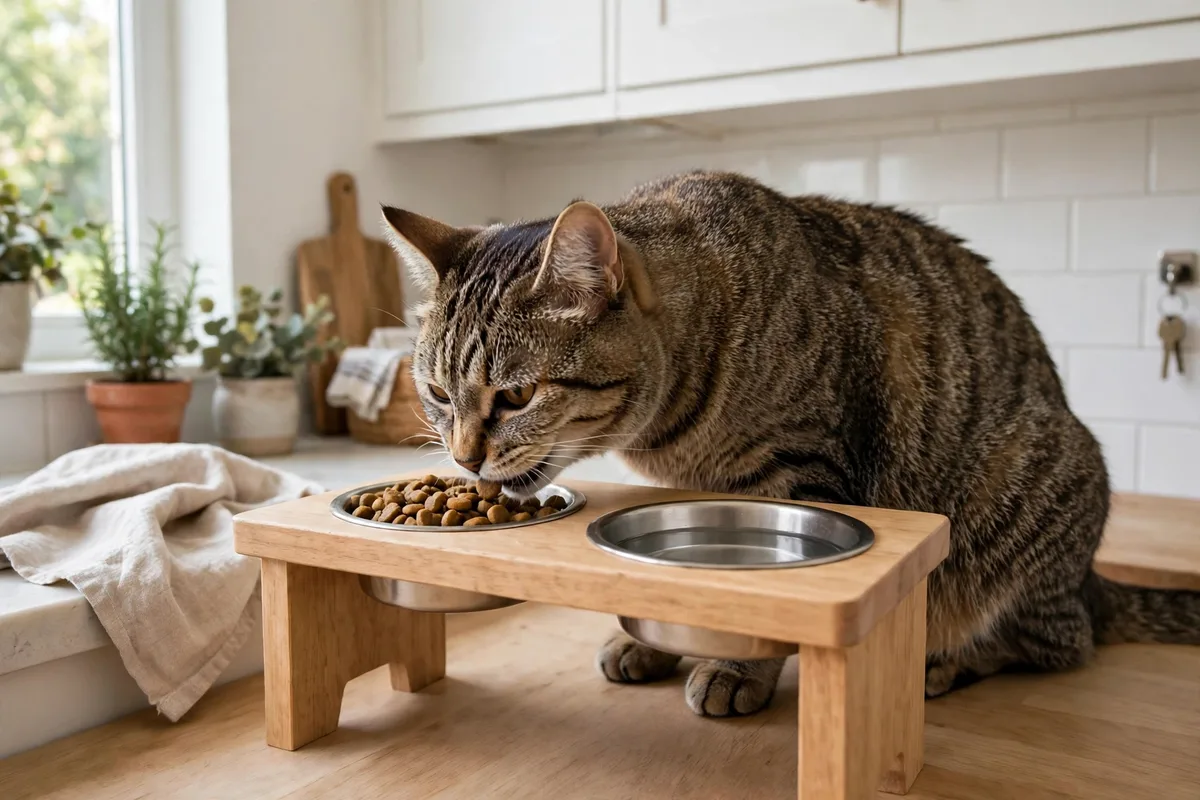
- Elevate food and water bowls. Raising bowls to shoulder height means the pet doesn’t have to bend a stiff neck or splay painful front legs. Adjustable stands work well since you can tune the height.
- Refresh water often. Some senior pets — especially those with kidney issues — drink more and are fussier about stale water. Wash the bowl and refill it at least twice a day.
- Add a second water station. If the house is big, one bowl upstairs and one downstairs means the pet never has to trek for a drink.
- Check the diet with your vet. Senior pets often need fewer calories but more digestible protein, plus joint-supporting nutrients. Don’t guess — a senior wellness visit is the time to review nutrition.
Step 5: Rethink Bathroom Access
Bathroom urgency and frequency increase with age, and mobility problems make every trip harder.
- For dogs: add a nearby outdoor option. If the yard is far from the door, consider a closer potty area for nighttime. Indoor potty stations with washable pee pads are a legitimate backup for seniors with incontinence — not a training failure, just aging.
- For cats: lower the litter box sides. High-sided boxes that worked for years become barriers for arthritic cats. Switch to a low-entry box, and keep at least one on every floor the cat uses.
- Clean up calmly. Accidents will happen. Enzyme cleaners remove the odor, and a washable waterproof pad under the bed saves the mattress. Never scold — the pet is already distressed about it.
Step 6: Support Fading Senses and Confidence
A pet that can’t hear you call or see the doorway needs the environment to do more of the work.
- Use touch and vibration. Approach from where the pet can see you, and use a gentle touch on the shoulder — not the head — to announce your presence.
- Add nightlights. Dim hallways and dark rooms become confusing with fading vision. A few plug-in nightlights along the pet’s routes make nighttime navigation safer.
- Keep the layout consistent. This is the single most important rule for a pet losing its sight. Once the pet has mapped the house, don’t move the furniture.
- Use scent markers. A dab of a consistent, pet-safe scent near the food bowl or bed can help a vision-impaired pet orient itself.
- Protect from startling. Warn visitors that the pet may not hear them coming. A startled senior dog can snap out of fear, not aggression.
Variations: Senior Dogs vs. Senior Cats
Senior dogs
Dogs feel aging most in their joints and their bladder. Prioritize ramps, non-slip flooring, orthopedic bedding, and easy outdoor access. Keep walks shorter but regular — gentle, consistent movement keeps joints looser than total rest. Watch weight carefully; extra pounds on arthritic joints compound the problem, so confirm portions with your vet.
Senior cats
Cats hide decline, so watch for subtle signs: jumping less, sleeping in new low spots, missing the litter box, or eating less because bending to the bowl hurts. Prioritize low-entry litter boxes, floor-level resources, warm sleeping spots, and easy access to water. Cats are also prone to kidney issues and thyroid changes with age, so twice-yearly vet checkups matter more than ever.
Troubleshooting Common Senior-Pet Problems
| Problem | What to try |
|---|---|
| Slipping on hard floors | Add runners on daily paths with non-slip pads; trim nails and paw-pad fur; gate off the slickest rooms |
| Won’t use the stairs | Install a ramp or pet stairs; carry small dogs; move essentials to one floor |
| Having accidents indoors | Add a closer potty option or indoor station; use washable pads; rule out medical causes with the vet |
| Sleeping all day, seems withdrawn | Some increase in rest is normal; sudden withdrawal, appetite loss, or hiding warrants a vet visit |
| Startles or seems confused | Add nightlights; keep layout consistent; approach within sight; mention cognitive changes to the vet |
| Struggles to stand after lying down | Upgrade to an orthopedic bed; add rugs for traction; ask the vet about joint-support options |
Frequently Asked Questions
How do I know if my pet is a “senior”?
It varies by size and species. Large-breed dogs may be seniors by seven, small dogs by ten or eleven, and cats by ten or twelve. Your vet can tell you when to switch to a senior care schedule — usually it means checkups twice a year instead of once.
Should we still exercise a senior pet?
Yes, but adjust the dose. Short, gentle, regular activity keeps joints mobile and weight in check. A ten-minute walk twice a day beats one exhausting weekend hike. Let the pet set the pace and rest when it wants to.
When is it time to talk to the vet about quality of life?
When the bad days start outnumbering the good — the pet stops doing things it loves, struggles with basic movement, or seems in persistent discomfort. It’s one of the hardest conversations in pet ownership, and your vet can guide you honestly through it.
Comfort Is the Whole Point
You can’t stop a pet from aging, but you can make aging easier. Every ramp, rug, and low-sided litter box is a small vote for more good days. Start with the floors and the bed — those two changes help every senior pet — and adjust from there as your companion tells you, in its own quiet way, what it needs next.