
Your dog slipped the leash at the park. The cat darted out the door the delivery driver left open. In that first sickening moment, most people do the worst possible thing: they panic, run in circles, and waste the golden hour. A lost pet action checklist replaces panic with a sequence — what to do in the first hour, the first day, and the days after — so every minute of your effort actually moves the search forward.
Before You Need It: The 20-Minute Prevention Setup
The best lost-pet checklist starts before the pet is lost. If you’re reading this with your pet safe at home, do these now:
- Microchip your pet and register it in your name. A chip is only useful if the registration has your current phone number. Check it once a year — people move, change numbers, and forget.
- Keep a collar with an ID tag on at all times. Tags are still the fastest way home: a neighbor who finds your dog can call you in seconds, no scanner needed.
- Save a clear, recent photo. One head-on shot and one full-body shot, updated yearly. When you’re making flyers at midnight, you don’t want to scroll through three years of blurry puppy pictures.
- Know your microchip number and registry. Store it in your phone and on your pet emergency contact sheet — you’ll need it the moment you report the pet missing.
Prevention doesn’t guarantee anything, but it shortens every search dramatically.
Step 1: The First Hour — Search Close and Fast
Most lost pets — especially cats and small dogs — are closer than you think. Indoor cats that get out typically hide within a few houses, frozen in fear. Act now, act close:
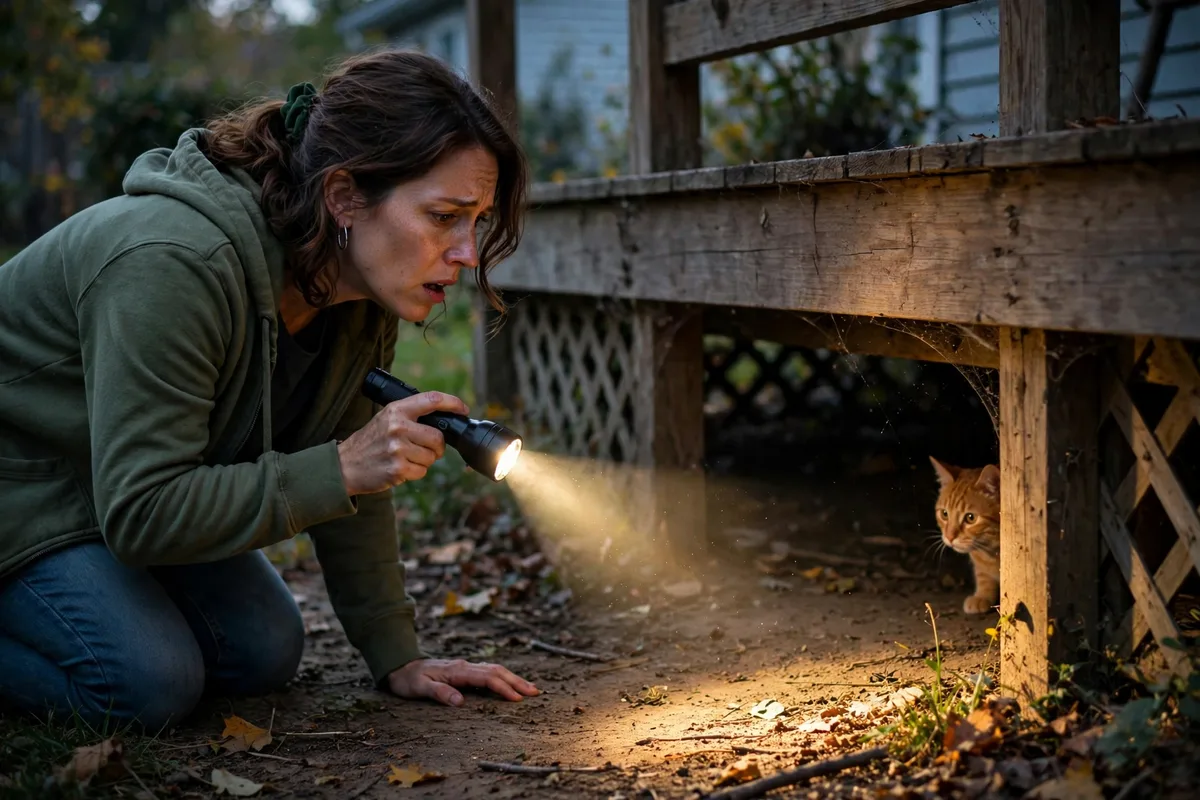
- Search your own property thoroughly. Check every hiding spot: under porches, inside sheds, behind appliances, up in trees, under cars. For cats, check indoors again too — a startled cat can wedge into a spot you’d swear is impossible.
- Grab the essentials and go on foot. Leash, treats, a favorite squeaky toy, your phone, and a flashlight even in daylight (it catches eyeshine under decks and bushes). Don’t chase — a frightened pet runs from pursuit. Crouch, speak calmly, and let the pet come to you.
- Knock on neighbors’ doors immediately. Ask them to check garages, sheds, and backyards — pets get locked in surprisingly often. Leave your number even with people who haven’t seen anything.
- Leave the way home open. Prop the door or gate the pet escaped from, put the pet’s bedding and a worn piece of your clothing outside, and set out food and water nearby. Familiar scent is a powerful lure for a disoriented animal.
- Note the details. Write down the exact time, the location last seen, and the direction of travel. You’ll repeat this fifty times — having it written keeps it consistent.
Step 2: The First Few Hours — Alert the Network
Once the immediate area is covered, widen the net. Speed matters because most pets are found within the first day or two:
- Call your microchip registry. Report the pet as lost and confirm your contact details are current. Some registries send alerts to nearby shelters and vets.
- Call local shelters and animal control. Describe the pet, give the time and location lost, and leave your number. Then plan to visit in person — descriptions get misheard, breeds get misidentified, and a stressed animal can look different from its photo.
- Call nearby vet clinics. Good Samaritans bring found pets to vets for microchip scans. Give every clinic within a few miles your pet’s description and your number.
- Post online immediately. Local lost-and-found Facebook groups, neighborhood apps like Nextdoor, and lost-pet sites like PawBoost reach thousands of eyes fast. Include: a clear photo, “LOST” with the date, breed/species, color, size, distinguishing marks, exact area last seen, and your phone number. Keep the post public and shareable.
- Change your voicemail. Record a message saying you’ve lost your pet and that callers reporting a found animal have the right number. When sightings come in, you don’t want a full mailbox or a confusing greeting.
Step 3: The First 24 Hours — Flyers and Footwork
Physical flyers still find pets that the internet misses — not everyone is in the Facebook group, but everyone drives past intersections.
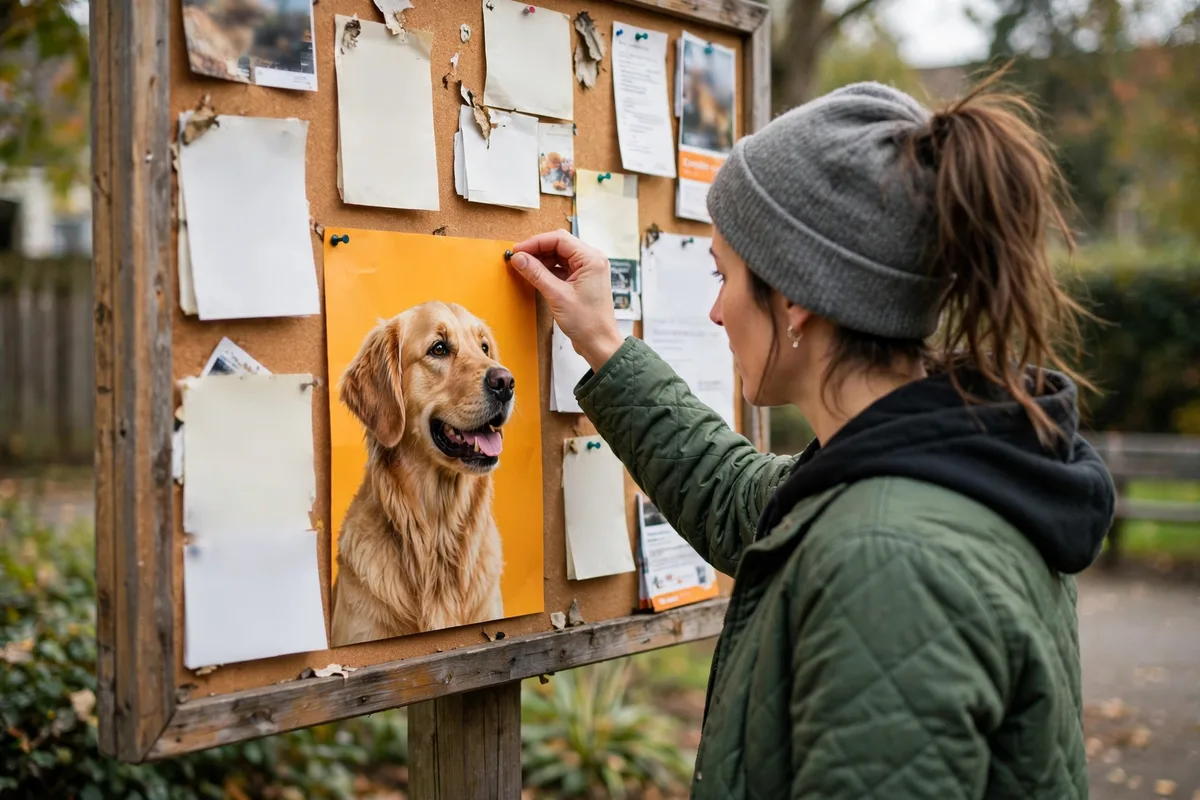
- Make simple, bold flyers. “LOST DOG” or “LOST CAT” in huge letters, one large clear photo, breed, color, size, the date and area lost, and your phone number in the largest type on the page. Drivers read flyers at speed — less text is more.
- Post at intersections and high-traffic spots. Neon poster board with thick black marker gets noticed. Hit major intersections near where the pet was lost, plus grocery stores, gas stations, vet offices, dog parks, and community boards.
- Put a big sign in your own yard. “LOST DOG LIVES HERE” with your number. Finders often drive the neighborhood looking for the owner — make your house the obvious answer.
- Walk the area at dawn and dusk. Lost pets, especially cats, move most at quiet times. Bring the treats, the flashlight, and the calm voice.
- Talk to the regulars. Mail carriers, delivery drivers, joggers, dog walkers — people who cover the neighborhood daily see things. Hand them a flyer.
Step 4: Days 2–7 — Sustain the Search
Searches fade because people run out of energy, not because the trail goes cold. Keep the pressure on:
- Visit shelters in person every couple of days. Stray hold periods vary by jurisdiction — commonly around three to seven days — after which an unclaimed pet can be adopted out or, in the worst case, euthanized. Don’t rely on phone descriptions; go look.
- Refresh and expand flyers. Weather kills flyers. Replace them, and widen the radius — dogs in particular can travel miles.
- Update online posts. Bump them so they stay visible, and add any new sightings with times and locations.
- Set a humane trap for cats. If sightings cluster in one area, your local shelter or rescue may lend you a humane trap. Place it near the sighting area with strong-smelling food, and check it frequently.
- Consider a scent station. For dogs, some owners leave a worn shirt and food at the point of escape. It occasionally works — and it costs nothing to try.
- Keep a sighting log. Every call, every “I think I saw” — date, time, location, description. Patterns emerge from notes that memory misses.
Step 5: Protect Yourself From Scams
A cruel side effect of lost-pet posts: scammers. The moment your phone number is public, be ready:
- Never pay anyone before seeing your pet. Demands for “gas money,” gift cards, or wire transfers before a meeting are scams. Real finders want to return the animal, not negotiate.
- Don’t share verification codes. A common scam: the caller claims they found your pet and asks you to read back a code “to prove you’re the owner.” That code is resetting one of your accounts.
- Meet in public places. If someone claims to have your pet, meet at a public location or a police station parking lot, and bring someone with you.
- Beware the “shelter fee” call. Scammers impersonate shelters demanding payment over the phone. Real shelters don’t operate that way — call the shelter’s published number back to verify.
Variations: Lost Dogs vs. Lost Cats
Lost dogs
Dogs travel farther and faster than owners expect — miles in a day for larger breeds. Widen the search radius quickly, and contact shelters in neighboring towns, not just yours. Leave familiar scent items at the point of escape. If the dog is shy or newly adopted, warn people not to chase; a frightened dog will outrun every well-meaning pursuer.
Lost cats
Cats hide first and travel later. The search is less about distance and more about thoroughness: every shed, garage, crawl space, and dense bush within a few houses. Search at dawn and dusk when cats move. Indoor-only cats are usually within a very small radius for the first days — many are found under their own porch.
Troubleshooting a Stalled Search
| Problem | What to try |
|---|---|
| No sightings at all after 48 hours | Widen the radius significantly; re-check shelters in neighboring areas; confirm the microchip registration is actually in your name |
| Sightings but the pet won’t come to anyone | Stop chasing; set a humane trap or a feeding station at the sighting spot; ask people to report, not pursue |
| Flyers keep disappearing | Use weatherproof sleeves or sheet protectors; switch to neon poster board at intersections, which lasts longer |
| Shelter says the pet isn’t there | Visit in person anyway — visual ID beats phone descriptions; check the “found but not yet processed” areas |
| You’re exhausted and losing hope | Recruit help — friends, family, neighborhood groups; many pets are found days or weeks later; keep the online posts active |
| Conflicting reports of location | Log everything with times; clusters of sightings reveal the real area; ignore single vague reports |
Frequently Asked Questions
How long should we keep searching?
As long as you can sustain it. Pets are regularly reunited after weeks — sometimes months. Keep the microchip registration marked as lost, keep online posts refreshed, and keep checking shelters. Hope with a system beats hope alone.
Should we offer a reward?
It can help, but keep it simple: “REWARD” on the flyer without naming an amount. Never pay before you have the pet in hand, and be aware that rewards can attract the scammers described above.
What if the pet was lost away from home — on a trip or at a sitter’s?
Stay in the area if you possibly can — the first 48 hours matter most. Leave scent items and food at the exact spot, alert local shelters and vets there, and post in that area’s local groups. If you must leave, recruit a local contact to keep the search going, and keep your phone on around the clock.
Hope Is a Plan, Executed Daily
Losing a pet is one of the worst feelings an owner can have — and the antidote isn’t just hope, it’s organized, relentless action. Search close first, alert fast, flyer wide, check shelters in person, and protect yourself from scams along the way. Most lost pets come home because someone refused to stop looking. Be that someone.