

sitter information sheet with emergency contacts, routines, medical details, and house rules. A step-by-step guide for parents.A babysitter information sheet is the single most useful thing you can hand a caregiver before you walk out the door. It is one page — or a short document — that tells your sitter who to call, where things are, what your children need, and what to do in an emergency. Instead of trying to remember everything in a rushed goodbye, you leave a clear, calm reference they can check at any moment.
This guide walks you through making one that actually works: what to include, how to organize it so the urgent information is easy to find, and how to keep it current.
Why You Need One (Even for a Sitter You Trust)
Even the most experienced babysitter does not know your house, your pediatrician, or your child’s routines. An information sheet fills those gaps. It helps the sitter handle meals, naps, and bedtime the way your children expect, and it gives them everything they need — phone numbers, addresses, medical notes — if something goes wrong. Think of it as a safety net for both of you: your sitter feels prepared, and you can relax knowing nothing important is left to memory.
Step 1: Decide on the Format
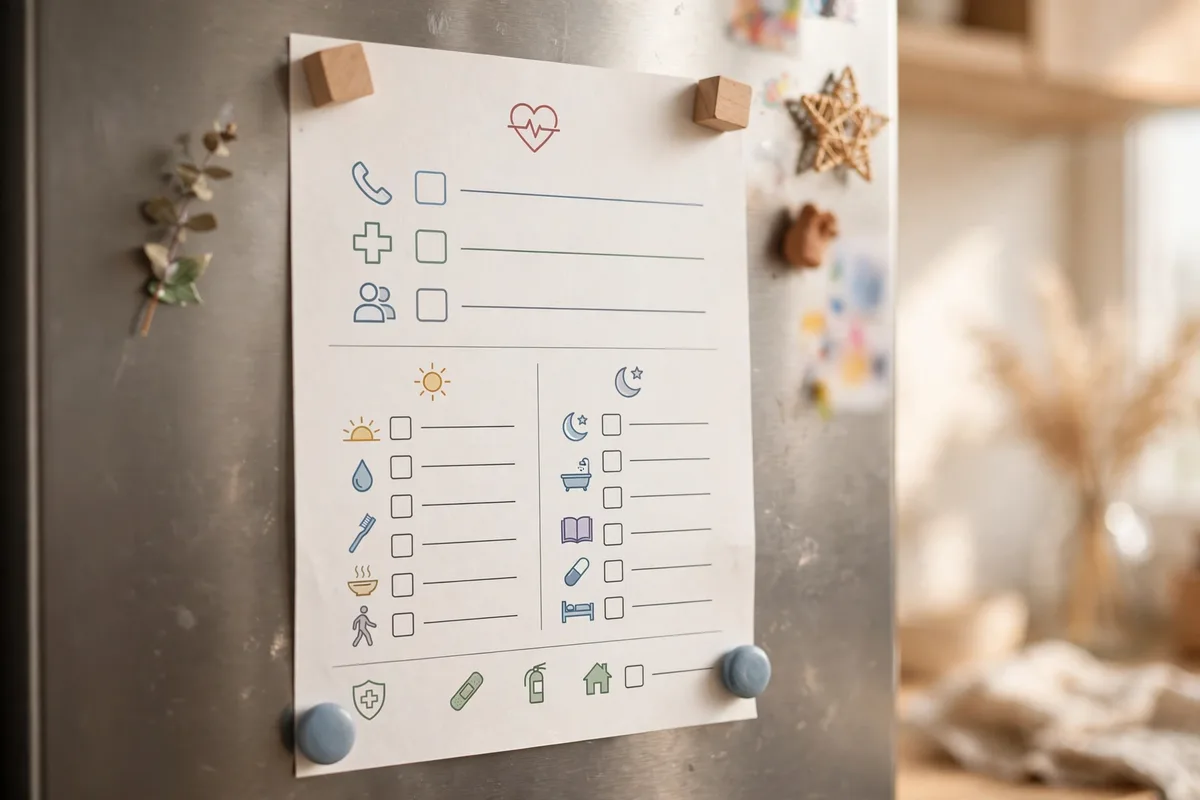
Keep it simple. A one-page document taped to the refrigerator door or taped inside a kitchen cabinet works well because it stays visible. A digital version (a note in your phone’s notes app or a shared document) is a good backup you can update and text to the sitter. Many families do both: a printed sheet on the fridge plus a digital copy for quick changes.
Whichever you choose, organize the page so emergency information sits at the top in large, easy-to-read text. In a real emergency, nobody should have to hunt through paragraphs.
Step 2: Add Your Contact and Emergency Details
This section goes first. Include:
- Your names and cell phone numbers (both parents or guardians, if applicable)
- Where you will be, with the address and phone number of the location
- Your expected return time
- A backup contact — a nearby neighbor, grandparent, or trusted family friend with their phone number
- Emergency numbers: 911, poison control (1-800-222-1222), and your local non-emergency police number
- Your home address, written out in full, so the sitter can read it to a 911 operator without having to search for it
If your sitter may need to reach the pediatrician or dentist, add those names and numbers here too, along with your nearest hospital or urgent care clinic and its address.
Step 3: List Each Child’s Key Information
Create a short profile for every child who will be in the sitter’s care:
- Full name, age, and date of birth
- Allergies — food, medication, insect stings — and what a reaction looks like, plus exactly what to do (for example, where an EpiPen is kept and how it is used)
- Medications, with the name, dose, time, and clear instructions; pre-measure doses when possible
- Health conditions the sitter should know about, such as asthma, eczema, or frequent ear infections
- Any special needs, such as a hearing aid, glasses, or a communication device
Safety note: Never leave medication where children can reach it. Put all medicines, cleaning products, and other hazardous items out of reach before the sitter arrives, and make sure your home is childproofed for common household hazards.
Step 4: Spell Out the Routine
Children cope best when the evening follows the pattern they know. Write down the timeline for the hours the sitter will cover:
- Meal and snack times — what to serve, portion sizes, and any foods to avoid
- Homework or reading time and where school supplies are
- Screen time rules — how much is allowed and which shows or games are approved (this pairs well with a family screen time agreement)
- Nap or quiet time for younger children, including comfort items like a blanket or stuffed animal
- Bedtime routine — bath, teeth, stories, lights-out time, nightlight on or off, door open or closed
- Comfort strategies — what soothes each child when they are upset or afraid, such as a favorite song or blanket
Include where things are kept: diapers and wipes, pajamas, the bedtime books, the first-aid kit, flashlights. Small details like these keep the evening running smoothly.
Step 5: Set Clear House Rules for the Sitter
This part prevents misunderstandings. State your expectations plainly:
- Visitors: no one is allowed inside unless you have approved them by name
- Answering the door or phone: do not open the door for anyone, including deliveries, while you are gone
- Leaving the house: whether the sitter may take the children outside, to a park, or for a walk — and which areas are off-limits indoors
- Phone use: your expectations about the sitter’s own phone and social media while on duty
- Discipline: the strategies you approve of (for example, redirection or time-in) and what is never acceptable
- Security: how to arm or disarm the alarm, where keys are kept, and what to do if the alarm goes off
Walk the sitter through the house when they arrive — point out the entrances and exits, fire extinguisher, smoke detectors, and first-aid supplies — so the sheet is reinforced by a quick tour.
Step 6: Include an Emergency Action Plan
Add a short, simple emergency plan at the bottom of the sheet or as a separate page on the fridge:
- Fire: get the children outside first, then call 911 from a safe place.
- Medical emergency: call 911, then call you and your backup contact.
- Poisoning concern: call poison control at 1-800-222-1222.
- Lockout or break-in concern: leave the house with the children and call you and 911.
Also note your family emergency plan location if you keep one — for example, “Full emergency binder is in the hallway drawer.”
Step 7: Review It Together and Keep It Updated
The sheet only works if the sitter actually reads it. Take five minutes to walk through it when the sitter arrives: confirm the numbers are correct, point out where medicines and first-aid supplies are, and answer questions. Encourage the sitter to call or text you about anything unusual — reassure them that no question is a bother.
Revisit the sheet every few months or whenever something changes: a new allergy, a new medication, a changed bedtime, a new pediatrician. An outdated information sheet is worse than none at all, because it creates false confidence. Update the digital copy and reprint the fridge version in one go so both always match.
A Quick Template You Can Copy
Here is the layout in practice:

| Section | What it covers |
|---|---|
| Emergency contacts | Parents, backup contact, 911, poison control, pediatrician, hospital |
| Children | Name, age, allergies, medications, health conditions |
| Routine | Meals, snacks, homework, screen rules, naps, bedtime, comfort items |
| Where things are | Diapers, medicines, first aid, flashlights, pajamas, keys |
| House rules | Visitors, door policy, phone use, discipline, leaving the house |
| Emergency actions | Fire, medical, poisoning, lockout steps |
| Your location | Where you are, when you will return |
The Bottom Line
A babysitter information sheet takes about twenty minutes to make and can make the difference between a stressful evening and a smooth one. Gather your contacts, write down your children’s needs and routines, set your rules clearly, and keep it updated. Then do a quick walkthrough with the sitter — and enjoy your evening knowing the person caring for your kids has everything they need.
For more on preparing a sitter for emergencies, KidsHealth offers a helpful guide on choosing and instructing a babysitter.


Pingback: Childproofing Your Home: 7 Steps to Fix Common Hazards