

Preparing an easy family meal plan means deciding what your family will eat for the coming week before the week starts — and it only takes about 20 minutes. The direct answer: look at your family’s schedule, pick a handful of dinners (and any breakfasts or lunches you want covered), check what you already have, and make one grocery list from the plan. Families who do this spend fewer weeknights staring into the fridge, waste less food, and eat more balanced meals. The simplest version fits on a single sheet of paper.
Why Meal Planning Pays Off
A plan is worth the small upfront effort for three practical reasons. First, it saves time: having ingredients on hand means fewer emergency store runs, and chopping once for two meals (say, dicing onions for Tuesday’s tacos and Thursday’s soup at the same time) cuts weeknight cooking down. Second, it saves money: planned meals cost less than last-minute takeout, and a list stops impulse buying. Third, it lowers stress — the “what’s for dinner?” question stops looping in your head all afternoon. Home-cooked meals also tend to include more vegetables and fruit than drive-through food, a point family nutrition educators consistently make.
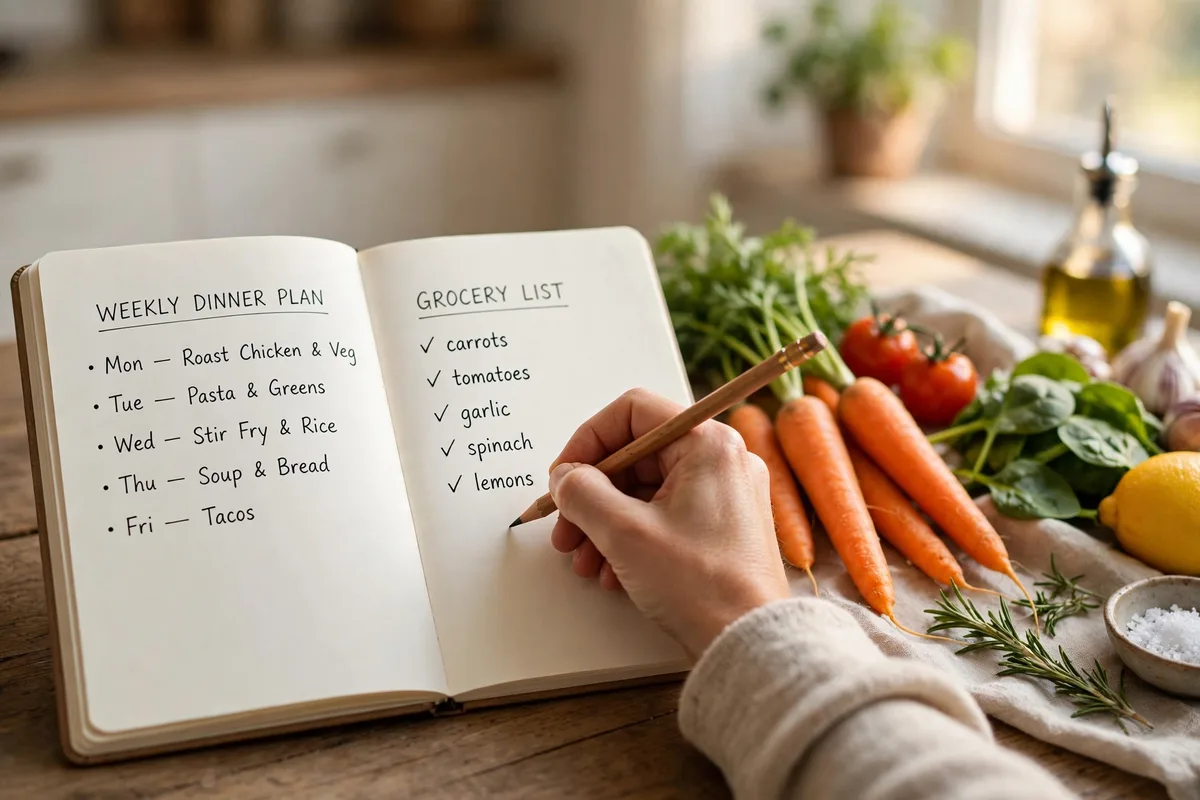
Step 1: Look at Your Week
Before choosing a single meal, open your family calendar. This is the step most planning advice skips, and it’s the reason plans fail. A plan that ignores reality gets abandoned by Wednesday.
Mark the busy nights: late work shifts, after-school activities, sports practice. Busy nights get quick meals (20 minutes or less) or planned leftovers. Free evenings can host the bigger cooks. Also note who will be home each night — cooking for three on a night the teens are out is wasteful, and that night can become a light leftovers night instead. If your schedule is packed with activities, tackling busy after-school schedules first makes meal planning far easier.
Step 2: Build a Small Repertoire of Go-To Meals
Most families already eat a rotation of about 10–15 meals. Write yours down. Include a mix of:
- Fast dinners (15–20 minutes): quesadillas, pasta with jarred sauce, breakfast-for-dinner, stir-fry with frozen vegetables.
- Proper cooks (30–45 minutes): sheet-pan chicken, baked ziti, homemade soup.
- Slow-cooker or passive meals: chili, pulled pork, beef stew — anything that cooks while you do something else.
- Fallback meals: two reliable options for the nights everything goes sideways, like sandwiches and canned soup.
You don’t need a recipe archive to start. That small list is enough to fill a normal week, and it makes grocery shopping easier because the same meals bring back the same staple ingredients — pasta, rice, cheese, tortillas, frozen vegetables, canned beans.
Step 3: Give Each Night a Job
Assigning a loose theme to each night removes most of the decision fatigue. For example:
- Monday: quick and easy (tacos, quesadillas)
- Tuesday: slow cooker (chili, pulled chicken)
- Wednesday: pasta night
- Thursday: leftovers or fridge-cleanout night
- Friday: pizza night (homemade or a fun break)
- Saturday: bigger cook or try something new
- Sunday: breakfast-for-dinner or soup and sandwiches
The themes don’t have to be followed perfectly — they’re a starting point so you never face seven blank evenings. If breakfasts and lunches are your pain point instead, a dedicated weekly lunch plan can run alongside this dinner system.
Step 4: Assign Meals to the Week
With your week mapped and your repertoire ready, fill in the days. Match meals to your schedule: quick meals on busy nights, the bigger cook on the freest evening. Plan intentional leftovers — cook double on Saturday so Thursday becomes a no-cook night.
Sample 7-day family meal plan
| Day | Dinner | Prep time | Notes |
|---|---|---|---|
| Monday | Chicken quesadillas with corn and black beans | 20 min | Quick night; shred extra chicken |
| Tuesday | Slow-cooker chili | 10 min AM | Use leftover chicken for topping or freeze it |
| Wednesday | Spaghetti with meat sauce and garlic bread | 30 min | Double the sauce — freezes well |
| Thursday | Leftover chili baked potatoes | 15 min | Fridge-cleanout night, no new cooking |
| Friday | Homemade pizza (store-bought dough) | 35 min | Kids choose their own toppings |
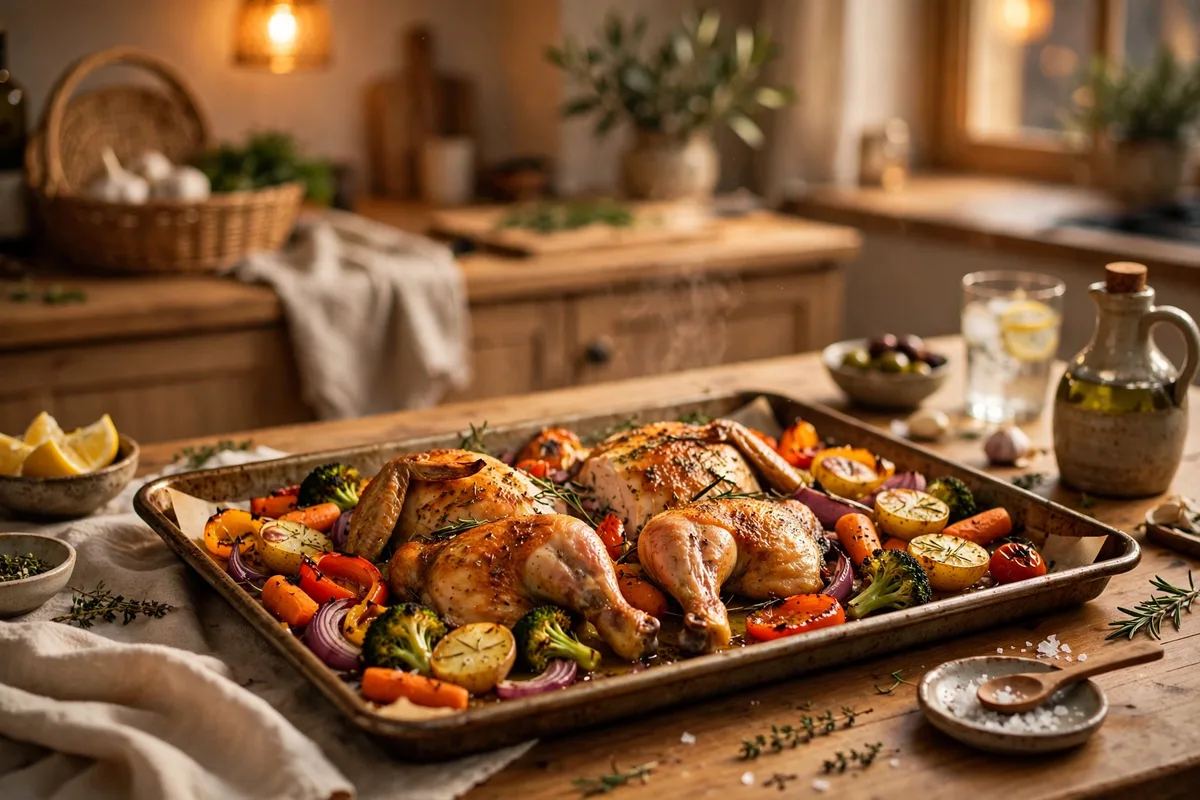
| Saturday | Sheet-pan roasted chicken and vegetables | 45 min | Big cook; roast extra veggies for lunches |
| Sunday | Breakfast-for-dinner: pancakes, eggs, fruit | 25 min | Easy end to the week |
Adapt this to your family’s tastes, budget, and dietary needs — it’s a template, not a prescription. For balance, the USDA’s MyPlate guidance suggests making about half of each day’s plates fruits and vegetables and choosing whole grains for at least half of grain servings; the plate graphic is a handy visual when you’re assigning meals.
Step 5: Check What You Have, Then Make One Grocery List
Open the pantry, fridge, and freezer before you shop. Cross off anything you already have. This single habit is the biggest money-saver in meal planning — it stops duplicate buying and forces older items to get used before they expire.
Then build one grocery list from the plan, grouped by store section (produce, dairy, meat, pantry, frozen). A single, organized list means one efficient trip. Posting the plan on the fridge or a family command board lets everyone see the week ahead — and it means an older child or partner can start dinner, like peeling carrots or washing salad greens, before you get home.
Step 6: Do a Little Prep Ahead
You don’t need a full weekend meal-prep session. A short Sunday prep block — 30 to 60 minutes — transforms the week:
- Wash and chop vegetables for two or three meals.
- Cook a batch of rice or quinoa.
- Brown ground meat for two dinners while the pan is hot.
- Portion snacks for lunchboxes.
Kids can help here: even young children can wash fruit, tear lettuce, or measure ingredients. Handing them real kitchen jobs teaches responsibility, and you can find age-matched ideas in a guide to child-friendly household tasks. If breakfasts are your crunch time, getting ingredients ready the night before keeps early meals calm.
Tips for Picky Eaters and Dietary Needs
Picky eaters don’t have to break the plan. The “build-your-own” format is the best trick: taco bars, burrito bowls, baked potato bars, and pizza night all let everyone assemble their own plate from the same base ingredients — you cooked once, they chose their own toppings.
For dietary needs, plan meals that are naturally flexible: a pasta night where the sauce and protein are separate, or a soup bar where toppings are added at the table. Don’t cook separate meals for each person if you can avoid it; it doubles the work and teaches the kitchen to be a short-order service.
Frequently Asked Questions
How far ahead should I plan?
One week is the sweet spot for most families. Two weeks sounds efficient but groceries for perishables don’t last, and the plan gets stale. If even a week feels like too much, start with planning just dinners — breakfast and lunch can run on simple routines (oatmeal, sandwiches, leftovers) until dinner planning feels natural.
What if a planned meal doesn’t happen?
Life happens. Keep the two fallback meals from Step 2 in mind — they exist precisely for this. Move the missed meal to a free night later in the week, or roll its ingredients into Friday’s flexible slot. A plan is a tool, not a contract.
How do I meal plan on a tight budget?
Build the week around what’s on sale and what you already have, rather than picking meals first. Use cheaper proteins (beans, lentils, eggs, chicken thighs) for several nights, choose one or two produce items in season, and plan deliberate leftover nights. Colorado State University Extension’s guide to meal planning for busy families explains how planning around sales and leftovers cuts food costs in detail.
Should I use a meal planning app?
An app is optional, not essential. A pen and paper — or a printed template on the fridge — does everything a busy family needs. Apps help when you want automatic grocery lists or recipe storage, but the system matters far more than the tool. Start simple; add technology only if you find a real gap.
Conclusion
Easy family meal planning comes down to six steps: map your week, list your go-to meals, give each night a job, assign the meals, shop from one list, and do a little prep ahead. Start with just dinners this week — the habit of planning, not perfection, is what saves time, money, and evening stress over time. Once dinners run smoothly, you can extend the same system to breakfasts and lunches. And when the week goes sideways anyway, that’s exactly what your two fallback meals are for.