
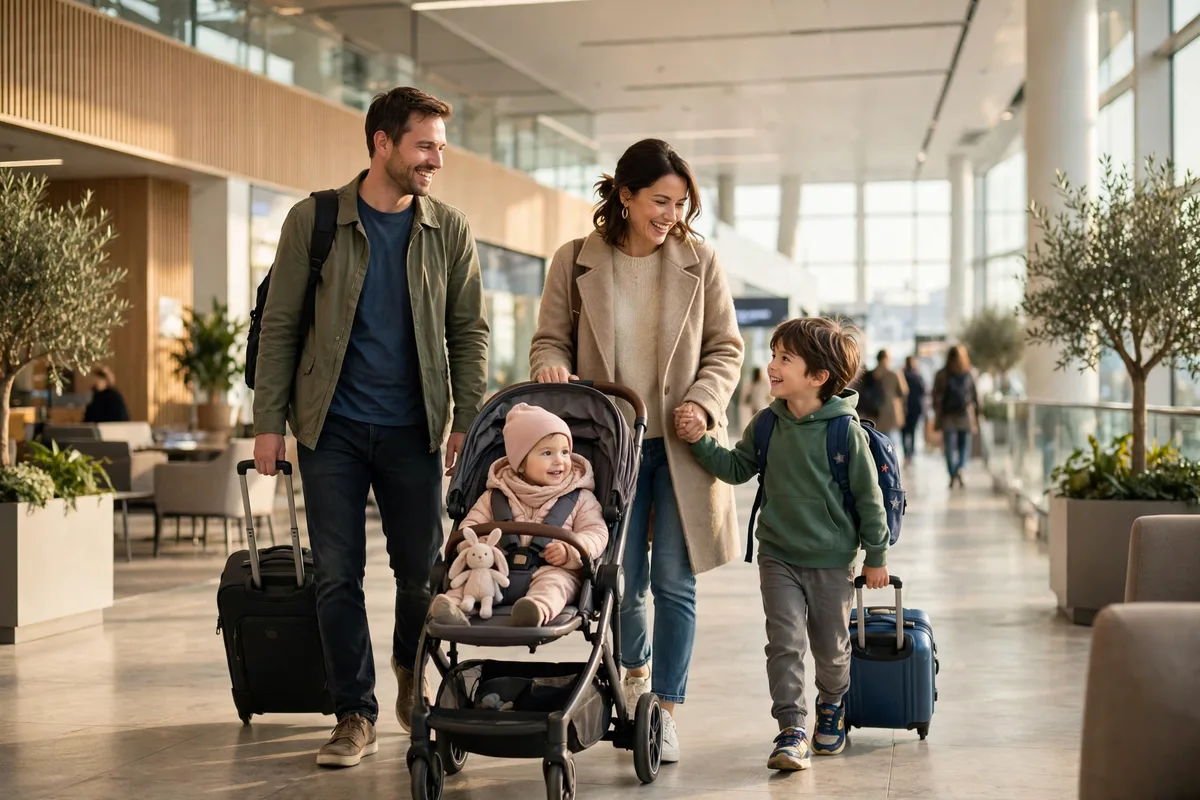
Traveling with young children takes more planning than traveling alone, but it doesn’t have to be stressful. The secret is preparation: the right documents, a well-packed bag, a safety plan, and realistic expectations. This checklist covers the essentials so you can actually enjoy the trip.
Before You Book: Plan Around Your Child
Choose Flights and Timing Wisely
- Book direct flights when possible. Every layover is another takeoff, another landing, and another chance for delays with tired kids.
- Time flights around naps or sleep. Overnight flights work for some families; for others, a mid-morning flight after breakfast is calmer. Pick what matches your child’s rhythm.
- Request bassinets or bulkhead seats for infants well in advance — availability is limited and first-come, first-served.
- Add the trip to your family calendar with milestones: check passports, buy supplies, pack bags. Our guide to managing family calendars has a simple system for this.
Check Documents and Rules
- Passports for every traveler, including infants, for international trips. Domestic travel usually requires no ID for young children, but airlines may ask for proof of age for lap infants.
- Check your airline’s policies on strollers, gate-checking, and using child restraints on board. Policies vary, and surprises at the gate are the worst kind.
- Verify vaccination or health requirements for your destination, and check whether travel insurance makes sense for your trip.
Safety First: Car Seats on the Road and in the Air
This is the section parents most often overlook, and it matters most.
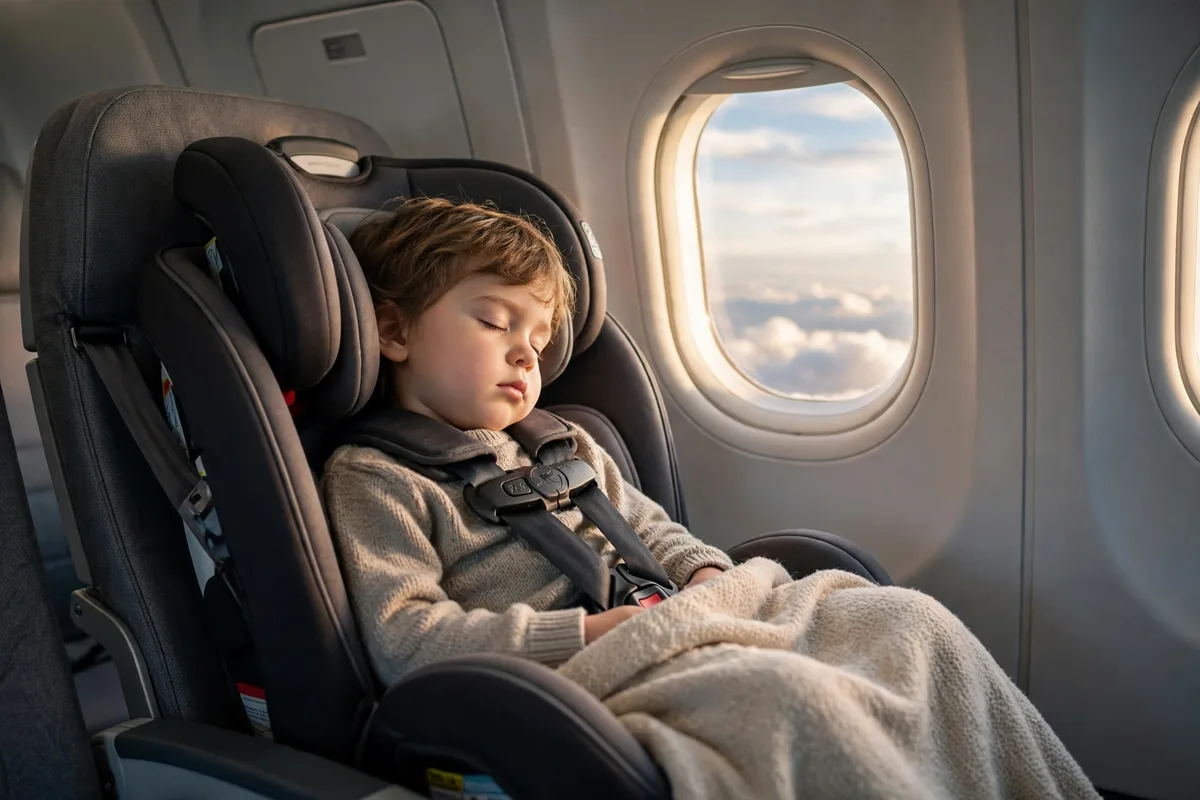
- Use a car seat on the airplane when you can. The FAA and the American Academy of Pediatrics recommend that children under 40 pounds be secured in a certified child restraint during flights — laps are not safe during turbulence. Check that your seat’s label says it’s certified for aircraft use (booster seats and travel vests cannot be used on planes).
- Bring your own car seat. It’s the safest option, and you’ll need it at your destination anyway. Strollers and car seats typically check for free, either at the counter or the gate.
- For taxis and rideshares: Know how to install your seat with both the LATCH system and the vehicle seat belt — one may work better than the other in an unfamiliar car. Message the driver ahead that you’re traveling with a car seat, and consider requesting a larger vehicle for rear-facing seats.
- Children ride in the back seat — in cars and always, until age 13 — and everyone buckles every ride, every time.
For more detail, UC Davis Health’s car seat tips for road trips, taxis and planes covers installation refreshers and rideshare specifics.
The Packing Checklist
Documents and Money
- IDs/passports, boarding passes, hotel confirmations
- Travel insurance details
- A small amount of local currency or a payment card that works at your destination
- Pediatrician’s contact info and a list of any medications or allergies
Carry-On Essentials (Never Check These)
Pack the carry-on as if your checked bag will be lost for 24 hours:
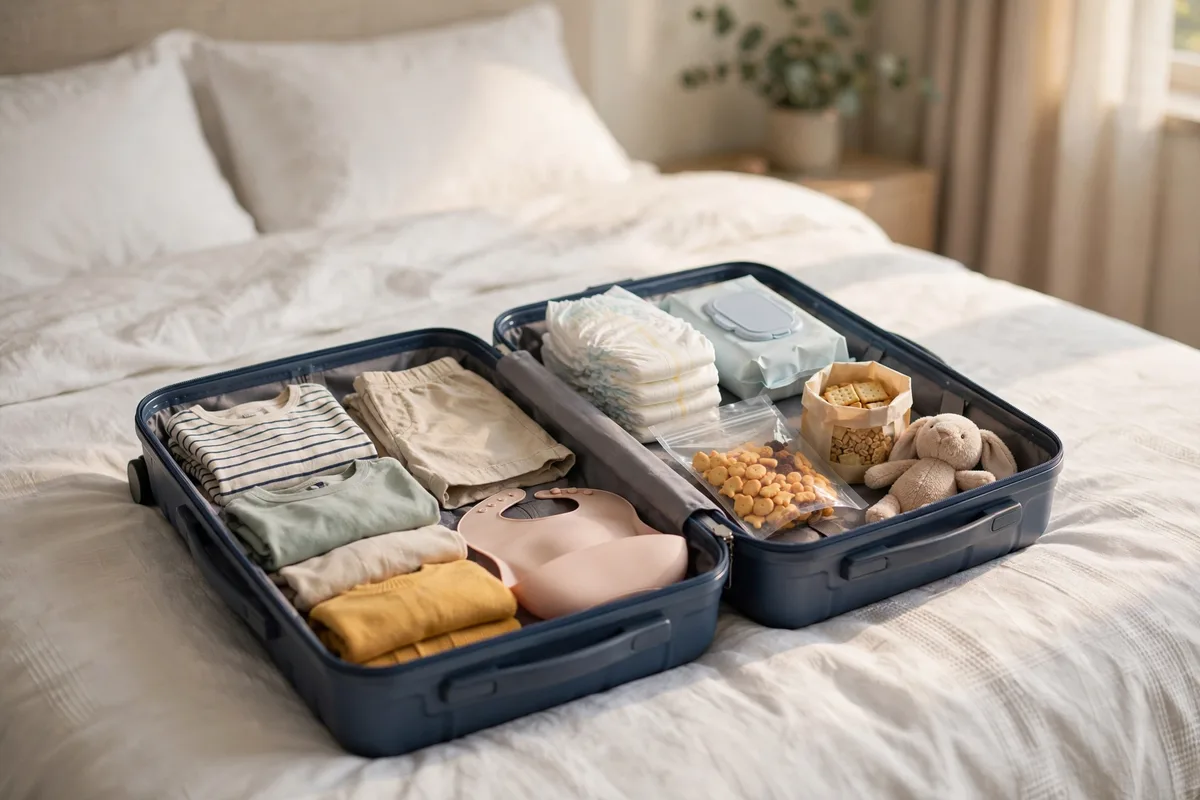
- Diapers or pull-ups (pack more than you think you need), wipes, changing pad
- Full change of clothes for each child and a spare shirt for you
- Snacks: familiar, low-mess options like crackers, cheese cubes, fruit in a hard container
- Empty sippy cup or water bottle (fill after security); formula, breast milk, and baby food are allowed through security in reasonable quantities — declare them to the TSA officer
- Medications, a small first-aid kit, thermometer
- Comfort items: favorite blanket, stuffed toy, pacifier
- Entertainment: coloring supplies, a few small books, one new small toy, tablet with downloaded shows and kid-safe headphones
- Trash bags or zip bags for soiled clothes
For a dedicated baby-gear packing list, see our baby bag checklist.
Checked Bag and Destination Gear
- Clothing: roughly 1.5 outfits per day to cover spills and surprises
- Pajamas, sleep sacks, layers for temperature changes
- Swim gear and sunscreen if applicable
- Laundry detergent packets or strips
- Nightlight, outlet covers, and a few childproofing items for unfamiliar rooms — a quick pass makes any space safer, similar to the principles in childproofing common household hazards
- Pack-and-play or travel crib if your lodging doesn’t provide one (confirm ahead)
Getting Through the Airport
- Arrive early. Everything takes twice as long with small children, and rushing is the enemy.
- Wear your baby or use the stroller through the terminal; gate-check the stroller so it’s waiting when you land.
- Prepare your child for security. Role-play the process at home so the conveyor belt and bins aren’t scary.
- Ear pressure: During takeoff and landing, have babies nurse or take a bottle, and give older kids a snack, a sippy cup, or gum to chew. Swallowing helps equalize pressure.
- Board strategically. Some families board early to settle in; others board last to minimize time stuck in seats. Choose based on your child.
Surviving the Flight (or the Long Drive)
- Feed the schedule, not the clock. Keep meal and nap rhythms as close to normal as possible.
- Introduce new toys slowly. One new item at a time keeps novelty alive longer than dumping out a whole bag at once.
- Walk the aisle when allowed. Movement breaks help everyone, especially on long flights.
- Lower your standards. Screen time limits can relax for travel days. The goal is a calm child, not a perfect parenting record.
- For car trips: plan stops every 2 hours for feeding, diaper changes, and stretching. Choose safe, well-lit stops, and never leave children unattended in a vehicle.
At Your Destination: Safety Check on Arrival
Do a five-minute safety sweep of your room or rental before unpacking:
- Cover outlets and check for dangling cords, especially near cribs and beds.
- Move medicines, cleaning products, and small choking hazards out of reach.
- Check windows, balconies, and locks.
- Confirm the crib or sleeping setup is safe and sturdy.
- Locate the nearest pharmacy and urgent care — save the addresses in your phone.
Then let your child explore one room while you unpack. Familiar bedding and the same bedtime routine help them settle faster in a strange place.
Quick Reference: The Complete Checklist
| Category | Must-haves |
|---|---|
| Documents | Passports/IDs, boarding passes, confirmations, insurance |
| Safety | Car seat (aircraft-certified label), stroller, first-aid kit, medications |
| Feeding | Snacks, empty bottles/cups, formula/baby food, bibs |
| Diapering | Diapers/pull-ups, wipes, changing pad, trash bags |
| Clothing | 1.5 outfits per day, spare change in carry-on, layers, pajamas |
| Sleep | Comfort items, travel crib, nightlight, sleep sacks |
| Entertainment | Books, coloring, small toys, tablet + headphones |
| Destination | Childproofing basics, laundry supplies, sunscreen |
Conclusion
Traveling with young children is a logistics puzzle with a wonderful payoff. Book direct flights, keep a certified car seat in your safety plan, pack the carry-on like your checked bag is missing, and do a quick safety sweep on arrival. Most of all, give yourself grace — the trip won’t be perfect, but with this checklist, it’ll be safe and far more enjoyable.