
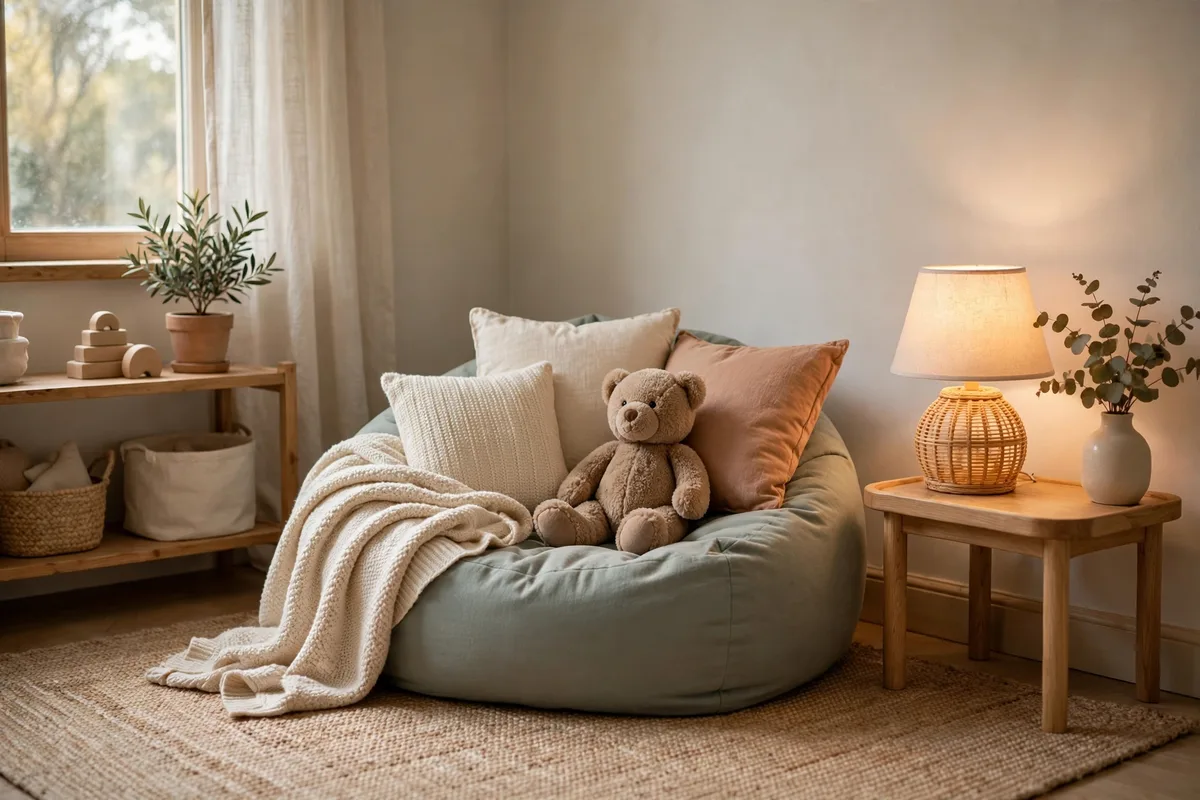
A calm-down corner is a small, quiet space where your child can go when feelings get big. It is not a time-out spot and it is not a punishment — it is a tool for learning emotional regulation, the skill children need to name their feelings, settle their bodies, and return to their day. When set up well and introduced well, many children start visiting it on their own before a meltdown even begins.
You don’t need a big budget or a dedicated room. Follow these steps to build one that your child will actually use.
What a Calm-Down Corner Is (and Isn’t)
A calm-down corner is a planned, positive space for settling strong emotions. It works because the space itself becomes associated with calming down, and because the tools inside make regulating easier than standing in a noisy room.
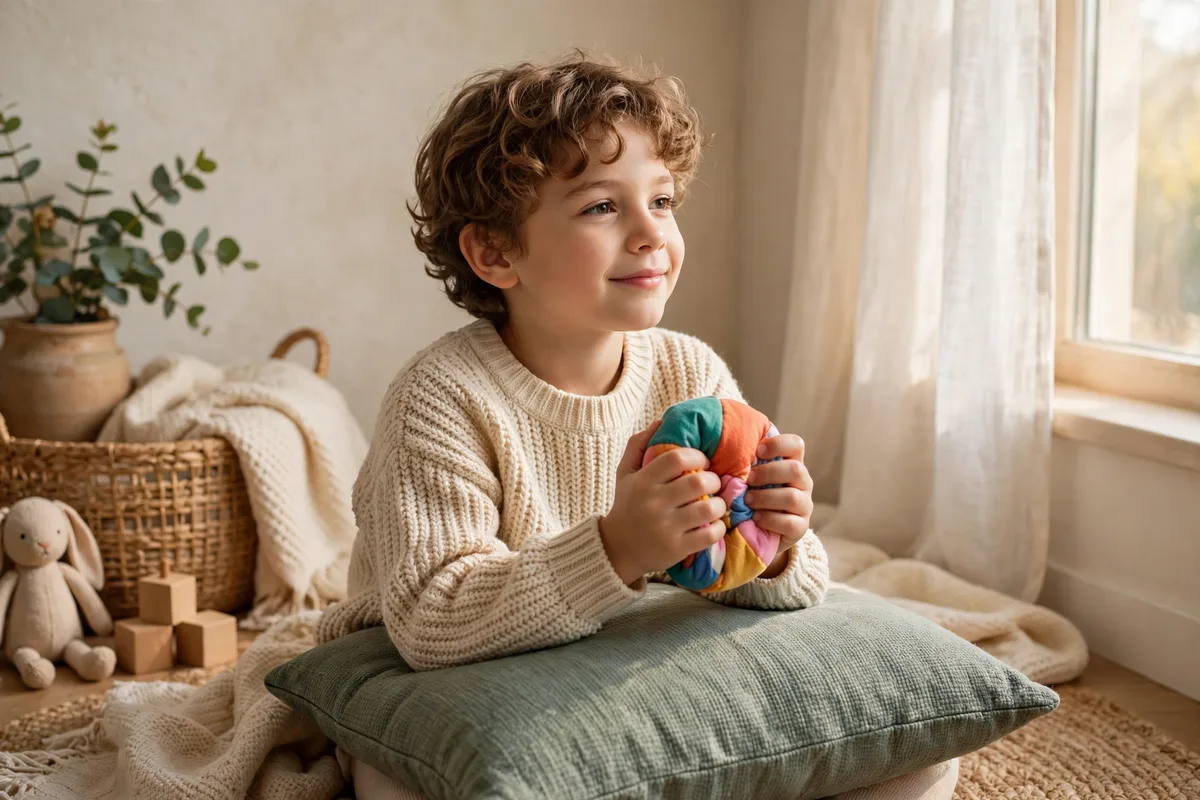
What it isn’t:
- Not a time-out. Time-outs remove the child as a consequence; a calm-down corner offers them a skill.
- Not a reward. It’s available when needed, not something to earn.
- Not isolation. You stay nearby and available — the child regulates with support, not alone.
Step 1: Pick the Right Spot
Look for a location that is:
- Slightly apart from the busiest part of the house, but not cut off — the corner of a bedroom, a quiet stretch of the living room, or a small tent or canopy.
- Visible to you. You should be able to see your child and check in without hovering.
- Reachable by the child on their own. They need to get there without help in the middle of big feelings.
- Away from major sensory triggers — not next to the TV, the front door, or a noisy appliance.
In a small home or apartment, a calm-down corner can be as simple as a labeled basket or cushion by a chair. The tools matter more than the square footage.
Step 2: Make It Comfortable
Softness signals safety. Start with one or two of these:
- A beanbag, large floor cushion, or folded blanket
- A soft rug or mat underfoot
- A favorite stuffed animal or comforting blanket
- Optional: a small tent, canopy, or draped fabric to create a gentle “enclosure” feeling
Keep fabrics washable — this space will get heavy use.
Step 3: Stock It With Calming Tools
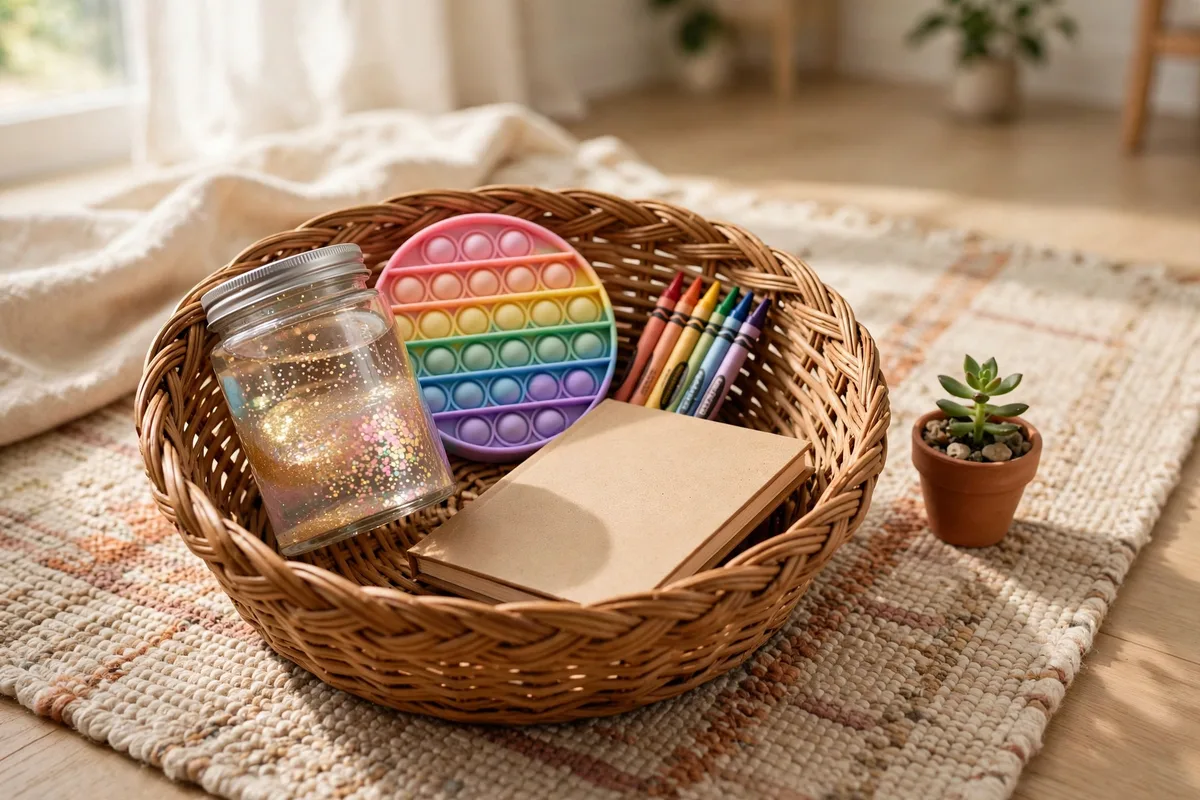
Choose tools that suit your child, not a generic list. Aim for 3–6 items total; too many options feel overwhelming in the middle of strong emotions.
- Squeeze and fidget items: stress ball, sensory putty, or a rubber band
- Breathing helpers: a pinwheel (slow breathing makes it spin gently), bubbles, or a breathing card showing “smell the flower, blow out the candle”
- Visual tools: a feelings chart with faces, picture cards of “calm choices,” or a poster of the calm-down steps
- Quiet activities: a favorite picture book, coloring pages with crayons, or a glitter calm-down jar to shake and watch settle
- Sound reducers: child-safe headphones or ear defenders if your child is noise-sensitive
Ask your child which tools feel helpful during a calm practice session, and swap items out every few weeks to keep the space inviting.
Step 4: Post a Simple Calm-Down Plan
A short, visual plan on the wall removes the need to think during a meltdown. Keep it to four steps at eye level, with pictures for pre-readers:
- Stop. Pause and sit down.
- Name it. “I feel ___.” (Point to the feelings chart if words are hard.)
- Breathe. Three slow breaths — smell the flower, blow out the candle.
- Choose. Pick one calm tool or ask for help.
Practice the steps together during a calm moment so they’re familiar when they’re needed. Nobody learns a new plan in the middle of a meltdown — teach it on a good day, as this calm-down corner guide also emphasizes.
Step 5: Introduce It (Never as Punishment)
How you introduce the corner decides whether your child trusts it:
- Present it during a relaxed moment: “This is your calm corner. When feelings feel too big, you can come here to help your body feel better.”
- Offer it; don’t send them. “Do you want your calm corner?” works far better than “Go to the corner.”
- Model using it yourself. When you’re stressed, narrate your own coping: “I’m feeling overwhelmed, so I’m going to take some calm breaths here.”
- Stay nearby for younger children. Your calm presence helps more than any tool.
If the corner ever gets used as a punishment, children will learn to avoid it — and the tool is lost. Keep it consistently positive.
Step 6: Guide the Return
Calming down is only half the skill. When your child is settled, help them rejoin the day:
- Welcome them back warmly: “Glad you’re feeling better. Let’s get back to it.”
- Briefly acknowledge what happened without relitigating it: “You were frustrated about the game.”
- If there’s a repair needed (an apology, sharing a toy), handle it now, calmly.
- Keep re-entry short — 2–5 minutes in the corner is usually enough for younger children.
This return routine pairs naturally with the conflict-recovery steps in our guide to building positive sibling routines, where cool-off and reconnection are part of the same rhythm.
Calm-Down Corners by Age
| Age | Setup emphasis | Good tools |
|---|---|---|
| Toddlers (2–3) | Safety and softness first; adult stays close | Stuffed animal, soft blanket, simple breathing song |
| Preschool (4–5) | Picture-based plans; short visits | Feelings chart, glitter jar, coloring pages |
| School-age (6–9) | More independence; simple word-based plans | Breathing cards, fidget tools, drawing journal |
| Tweens (10+) | Discreet “cool-down kit” rather than a corner | Headphones, journal, a calm playlist |
Common Mistakes to Avoid
- Stocking too much. A crowded corner is stimulating, not calming. Start minimal.
- Introducing it mid-meltdown. Teach every tool during calm practice sessions first.
- Using it as a threat. “Do you need your corner?!” said sharply teaches avoidance.
- Expecting instant calm. Self-regulation is a skill that builds over months. Early wins look like a child going to the corner — even if they still need your help to settle.
- Skipping the refresh. Rotate books, tools, and coloring pages monthly so the space stays inviting.
When to Get Extra Help
A calm-down corner is a healthy coping tool for typical big feelings. But talk to your pediatrician or your child’s school counselor if:
- Meltdowns are frequent, intense, or last well beyond what seems typical for the age.
- Your child hurts themselves, others, or destroys property during episodes.
- Big feelings consistently interfere with school, friendships, or family life.
Asking for guidance is a sign of good parenting, not failure.
Frequently Asked Questions
How long should my child stay in the calm-down corner?
Let the child decide with gentle guidance. Two to five minutes is typical for younger children. The goal is “until the body feels calm,” not a fixed sentence — a small visual timer can help a child feel in control of the process.
What if my child refuses to use it?
Don’t force it. Practice with the tools during playtime, use the corner yourself, and offer it casually during mildly upset moments first. Many children start going on their own once the space feels safe and theirs.
Can I make a portable calm-down kit?
Yes. A small bag with a fidget, a breathing card, and a favorite book brings the same plan to school, car rides, and family visits. This pairs well with the after-school transition tips in our guide to handling busy after-school schedules.
Is a calm-down corner the same as a time-out?
No. Time-outs are a disciplinary consequence that removes the child from a situation. A calm-down corner is a support: the child chooses (or is offered) a place with tools to settle, and an adult stays available. The child learns a skill rather than serving a sentence.
Start Today
You can build a basic version in under 30 minutes: a cushion in a quiet spot, a feelings chart printed or drawn on paper, one fidget tool, and a four-step plan on the wall. Introduce it at dinner tonight with a quick practice round, and offer it gently the next time feelings run high. Small, consistent, and always offered — that’s how the corner becomes a trusted part of your child’s day.