
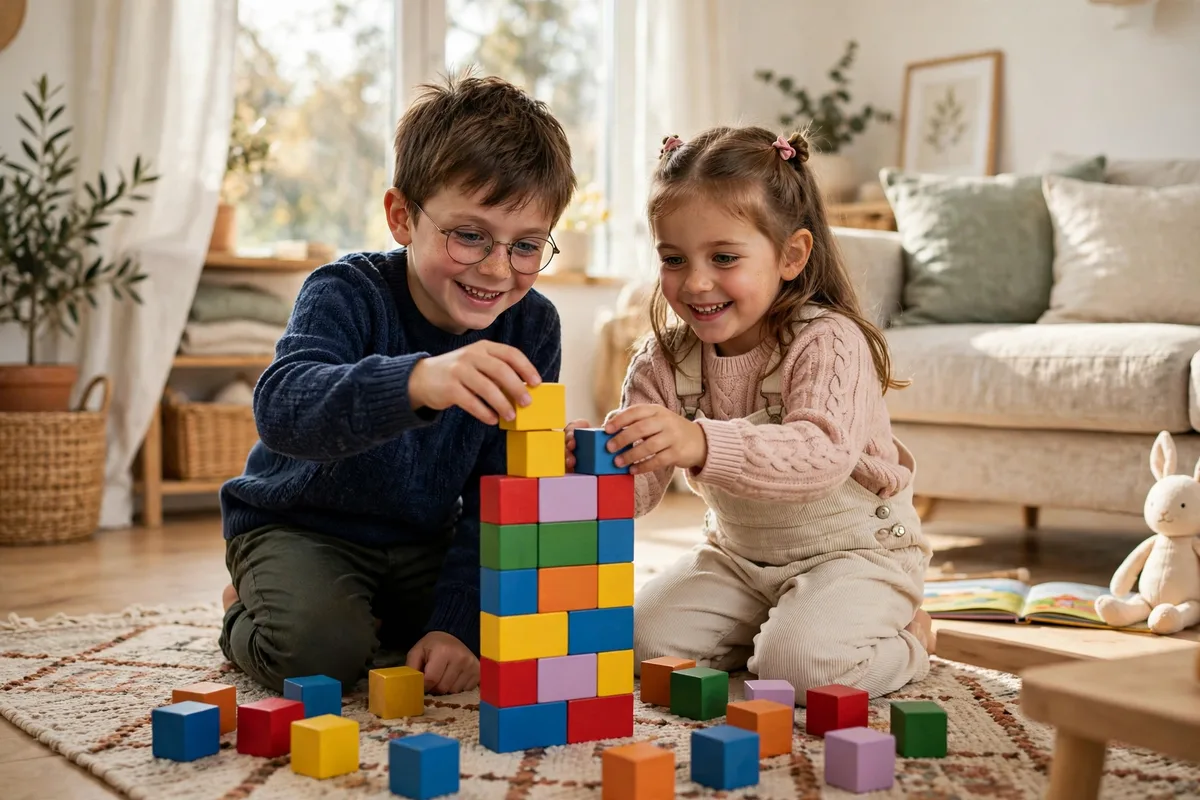
Sibling relationships are among the longest-lasting relationships your children will ever have — but they don’t build themselves. A positive bond grows out of small, repeated moments: a shared morning ritual, a teamwork task at dinner, a calm-down routine that stops fights before they escalate. Turning these moments into predictable routines gives your kids a reliable framework for treating each other well, even on hard days.
Routines work because they remove uncertainty. When children know what comes next and what’s expected of them, there’s less to fight about. Below is a practical plan for building sibling routines that actually stick.
Why Routines Matter for Sibling Relationships
Routines do more than keep your household on time. For siblings, they create:
- Predictability, which reduces the anxiety and competition that fuel rivalry.
- Shared purpose, because many routines require siblings to cooperate rather than compete.
- Built-in connection time, so positive interactions happen daily, not by chance.
- A shared family identity — “this is what our family does” — that strengthens bonds over time.
Before You Start: Lay the Groundwork
A few principles make sibling routines far more effective:
- Aim for fairness, not sameness. A four-year-old and a nine-year-old need different responsibilities. Give each child age-appropriate roles within the same routine, and explain that fair means “everyone gets what they need.”
- Avoid comparisons. Never frame a routine as a race or praise one child in a way that diminishes the other. (“Your brother finished faster” will undo a week’s worth of progress.)
- Get each child’s buy-in. Kids follow routines they helped create. Even young children can vote on small choices, like which song plays during the morning routine.
- Expect conflict — and plan for repair. The goal isn’t zero arguments. It’s giving siblings a repeatable way to resolve them and reconnect.
Step 1: Pick One Daily Touchpoint to Redesign
Don’t overhaul your whole day at once. Choose one moment where sibling friction (or missed connection) is highest. Common candidates:
- Morning get-ready time
- After-school transition
- Dinner
- Bedtime
Start with just one. When it works reliably for two weeks, add another. If you want a structured approach to mornings specifically, you can also build a family morning routine that folds in the sibling rituals below.
Step 2: Design a Ritual of Connection
A ritual is a tiny, repeatable act of togetherness — it takes under two minutes but signals “we’re a team.” Pick one or two from each touchpoint:
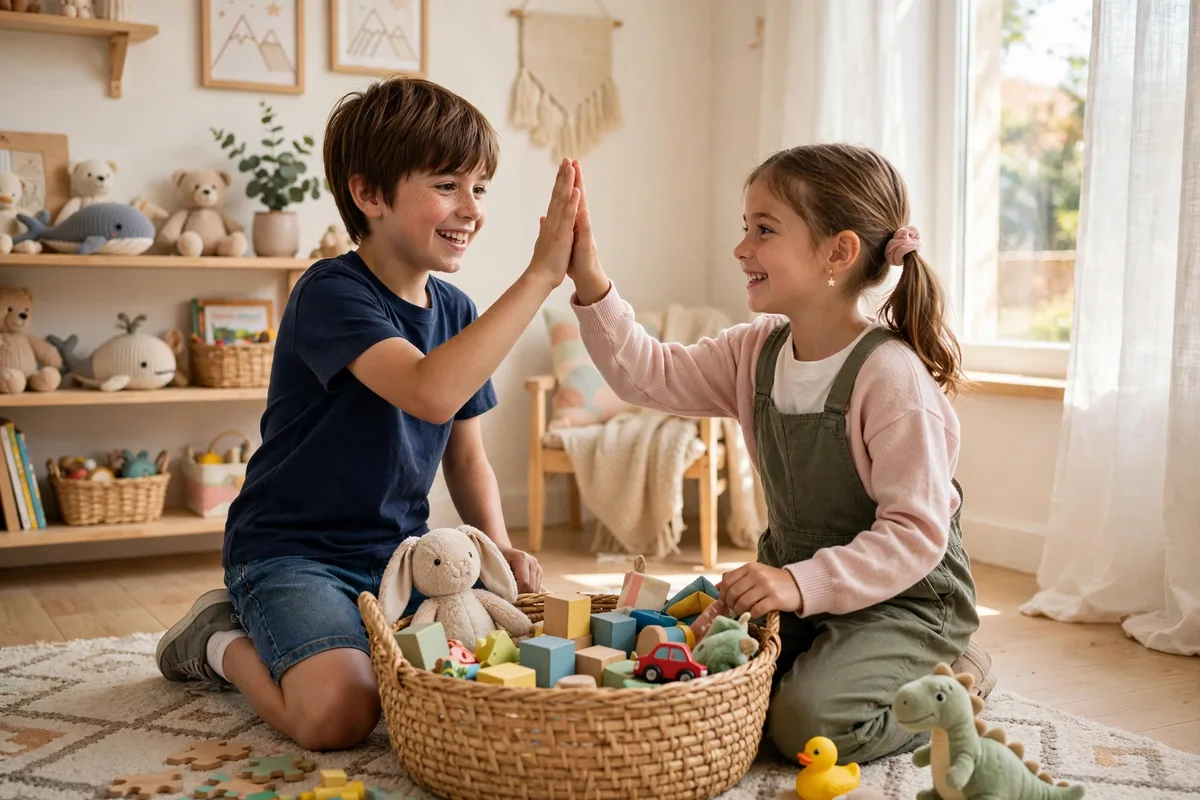
- Morning: A sibling “high-five and good-morning,” or one kind word each child says about the other before school.
- After school: A three-minute “share one thing” check-in where each sibling tells the other one thing from their day.
- Dinner: A “thanks round” — each child names one helpful thing their sibling did today. Small gratitude statements shift attention toward the good.
- Bedtime: A goodnight routine where siblings say goodnight (and a word of encouragement) to each other. If bedtimes differ, a quick goodnight visit still counts. Our guide to creating a bedtime routine for children shows how to weave sibling connection into the wind-down.
Keep rituals short and consistent. The power is in repetition, not in length.
Step 3: Add a Weekly Teamwork Mission
Give siblings one job per week that they can only complete together. Examples:
- Build something (a pillow fort, a LEGO project, a backyard obstacle course).
- Cook a simple meal or snack together (one reads the recipe, the other measures).
- Tackle a household project, like tidying the playroom with a timer.
- Plan and run a “family game night” — siblings choose the game and set it up together.
Rotate roles so the older child isn’t always the leader. For younger kids, consider turning chores into buddy tasks — our guide to making a child-friendly chore chart includes ideas for pairing siblings on shared tasks.
Step 4: Build a Conflict-Recovery Routine
Arguments are normal; unresolved arguments are what damage relationships. Teach your kids a simple, repeatable repair routine:
- Cool off separately. Each child goes to a calm spot (a corner of the room, the porch, a beanbag) for a few minutes until bodies are calm.
- Say what happened. Each child describes what happened from their side, without interrupting. Younger kids can draw it.
- Say how you felt. Use feeling words: “I felt left out,” “I felt angry.”
- Fix it. Ask: “What can we do to make it better?” Aim for one concrete repair — an apology, sharing the toy, or a do-over.
- Reconnect. End with a ritual: a handshake, a hug, or simply starting the next activity together.
Practice this routine when everyone is calm — not mid-meltdown — so kids can actually use it when emotions run high. The American Academy of Pediatrics, via Zero to Three’s sibling guidance, similarly encourages letting children try to work out differences themselves and stepping in only when they need help.
Step 5: Protect One-on-One Time
Counterintuitive but essential: the best way to reduce sibling competition is for each child to feel secure in their own relationship with you. Even 10–15 minutes of dedicated one-on-one time per child per week lowers rivalry noticeably, because neither child has to fight for your attention — it’s already guaranteed.
Step 6: Catch and Name the Good Moments
What gets noticed gets repeated. Make a habit of naming positive sibling behavior out loud:
- “You waited patiently while your sister finished — that was kind.”
- “You two solved that puzzle together. Great teamwork.”
Consider a simple “sibling team wins” jar: drop in a marble or a written note each time the kids cooperate well. When it’s full, they plan a small celebration together.
Routines by Age Group
| Ages | What works best | Watch out for |
|---|---|---|
| Under 4 | Very short rituals (goodnight wave, shared song), parallel play near each other | Limited impulse control — keep expectations tiny |
| 5–8 | Teamwork missions, gratitude rounds, buddy chores | Keeping score — avoid anything framed as a contest |
| 9–12 | Shared projects, mentoring roles, weekly sibling planning | Privacy needs — respect when they want separate time |
| 13+ | Collaborating on family events, teaching each other skills | Busy schedules — keep routines flexible and brief |
Troubleshooting: When Routines Fall Apart
- “One child refuses to participate.” Don’t force it. Let the willing child start the ritual alone for a few days; the other often joins when it looks fun rather than obligatory. Also check whether the routine is truly age-appropriate.
- “They’re fine until they’re tired.” Move connection rituals earlier in the day or make them simpler. Fatigue shortens every fuse.
- “Routines feel forced.” Scale back to the single smallest ritual (even a goodnight wave) and rebuild. Forced togetherness breeds resentment; small and voluntary wins.
- “A big age gap makes it hard.” Give the older child a genuine mentor role rather than a babysitting chore, and find the one activity they both enjoy — even if it’s just watching a show together weekly.
- “Screen time sparks the fights.” Clear, shared rules help more than refereeing. Setting up a family screen-time agreement together can prevent many common arguments.
Frequently Asked Questions
How long does it take for new sibling routines to work?
Expect two to four weeks of consistent practice before a routine feels natural. The first week often feels awkward — that’s normal and not a sign it’s failing.

What if my children have a large age gap?
Focus on rituals that don’t require equal ability: a goodnight wave, a shared “one good thing” at dinner, or the older child reading aloud to the younger. Shared traditions like holiday decorating work across any age range.
Should I intervene in every sibling argument?
No. Step in when someone is being hurt (physically or verbally), when the same conflict repeats without resolution, or when one child consistently loses. Otherwise, let them practice their conflict-recovery routine — that’s where the real learning happens.
A Simple First Week
Day 1–2: Pick your touchpoint and choose one ritual. Tell the kids the plan and let them pick a small detail (the song, the handshake).
Day 3–4: Run the ritual daily. Announce your first teamwork mission for the weekend.
Day 5–7: Introduce the cool-off-and-repair steps during a calm moment. Add the first one-on-one time slots.