
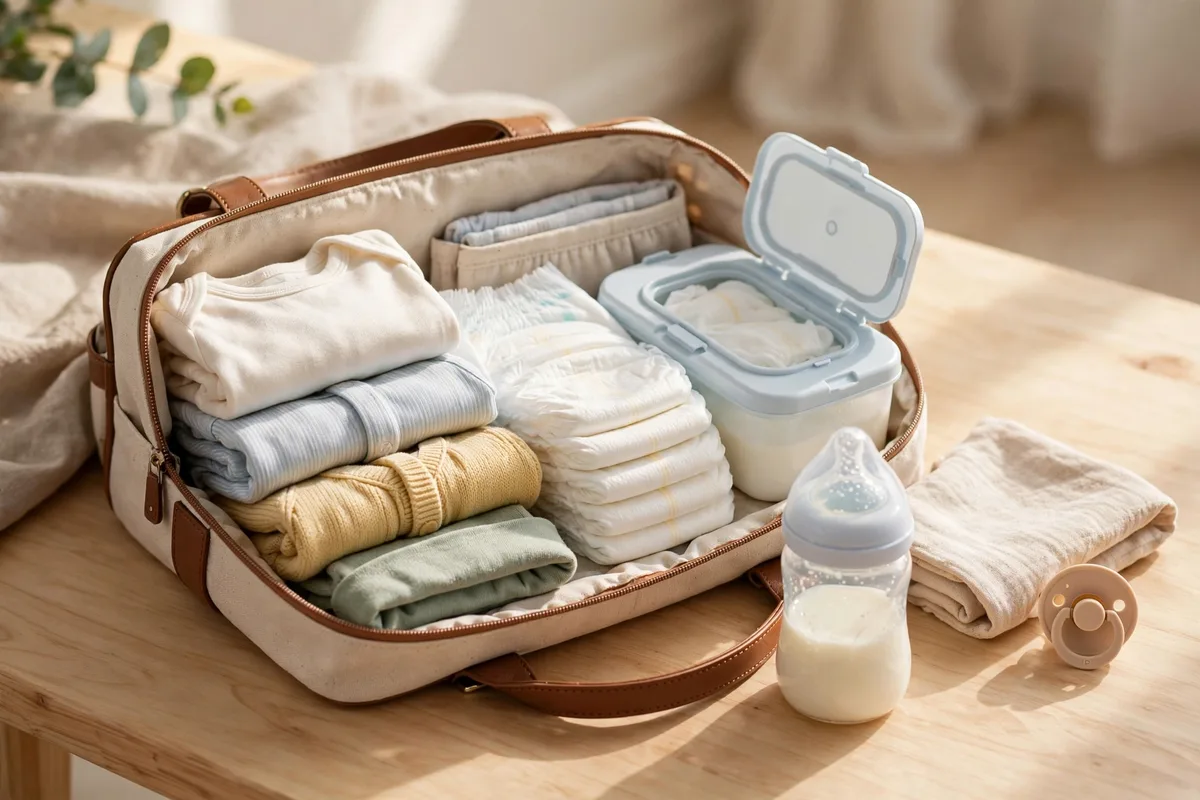
A well-prepared baby bag means you can walk out the door in five minutes without that nagging feeling you’ve forgotten something. The secret isn’t packing more — it’s packing the same essentials, every time, guided by a checklist that fits your baby’s age and your outing. This guide walks you through preparing a baby bag checklist from scratch, including an age-based packing table, a simple packing system, and a restock routine that keeps the bag ready at all times.
Why a Checklist Beats Packing From Memory
Most parents pack in a rush: a few diapers, a bottle, maybe a spare outfit if they remember. Then a blowout happens at the grocery store and there is no change of clothes. A written checklist removes guesswork, makes restocking a two-minute job when you get home, and lets a partner, grandparent, or babysitter pack the bag exactly right without asking you a dozen questions. It also keeps the bag light — you pack what you need, not everything you own.
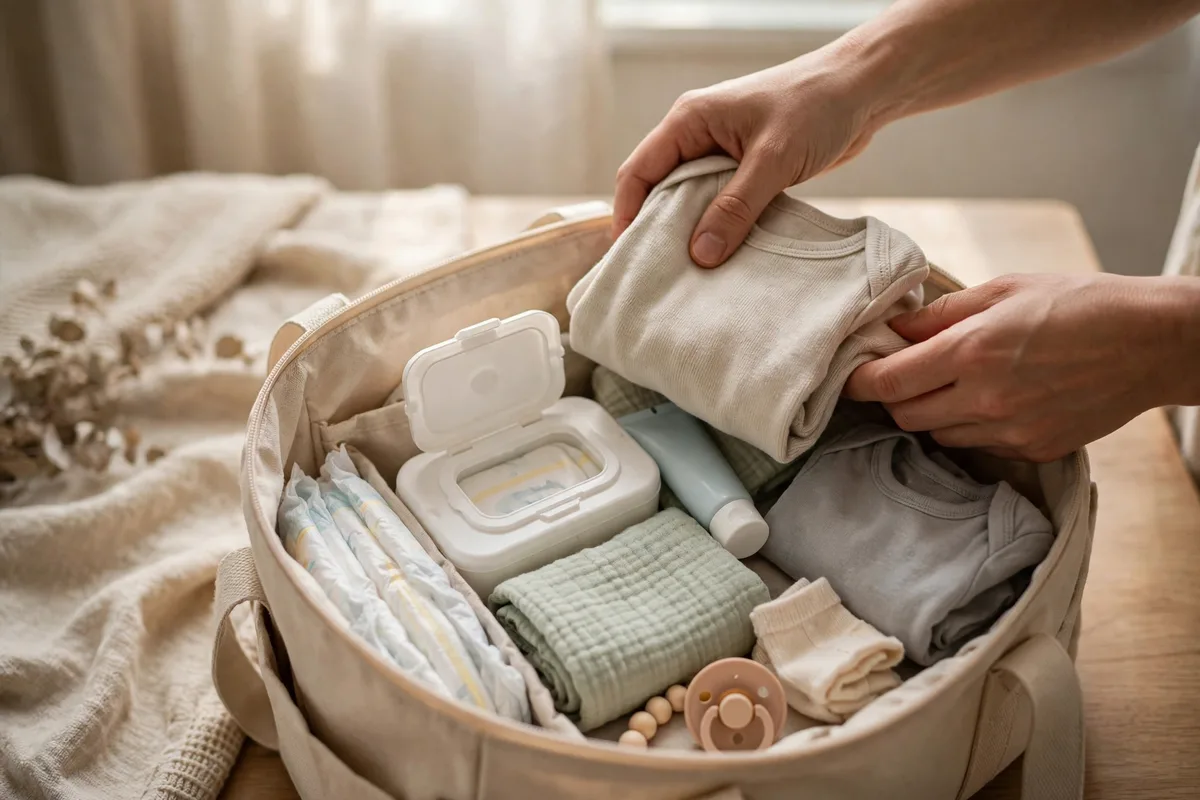
How to Prepare a Baby Bag in 7 Steps
Follow these steps in order the first time you set up your bag. After that, steps 6 and 7 are the only maintenance you’ll need.
1. Choose the right bag
Before packing anything, make sure the bag itself works. Look for a bag with multiple pockets (you’ll want to reach a diaper without emptying everything), a wipeable lining (spills happen), and stroller straps or comfortable backpack straps. Many parents prefer a backpack style because it keeps both hands free. Pack the bag you actually enjoy carrying — the best bag is the one you’ll keep stocked.
2. Gather your changing supplies
Changing gear is the core of any baby bag. Start with a portable changing pad, then add:
- Diapers — about 1 to 2 for every hour you plan to be out, plus one or two extra (WebMD’s diaper bag checklist uses this same rule of thumb)
- A travel pack of baby wipes
- Diaper rash ointment
- A wet bag or two plastic bags for dirty diapers and soiled clothes
- A small bottle of hand sanitizer
3. Add feeding supplies
What you pack here depends on how your baby eats:
- Breastfeeding: a nursing cover if you use one, burp cloths, and a water bottle for yourself
- Bottle feeding: clean bottles, pre-measured formula in a dispenser, and a separate bottle of water — or ready-to-feed formula for short trips
- Solids stage (around 6 months+): bibs, a few shelf-stable snacks, a sippy cup, and a spoon in a clean pouch
Add extra burp cloths if your baby spits up often — they double as emergency cleanup for everything else too.
4. Add clothing, comfort, and weather gear
Pack one full change of baby clothes (onesie, pants, socks), sealed in a bag so it stays clean until needed. A second outfit is wise for newborns and heavy spitters. Add:
- A light blanket or swaddle for warmth, shade, or nursing cover
- A comfort item (pacifier, small lovey) if your baby uses one
- A hat for sun or cold, depending on the weather
- For babies over 6 months: sunscreen, with your pediatrician’s guidance on use for younger babies
5. Pack a few items for yourself
Parents always forget this step. Tuck in your phone, wallet, keys, a water bottle, and a small snack — low blood sugar makes everything harder. If the trip is long, add a change of shirt for you too; babies share their messes generously.
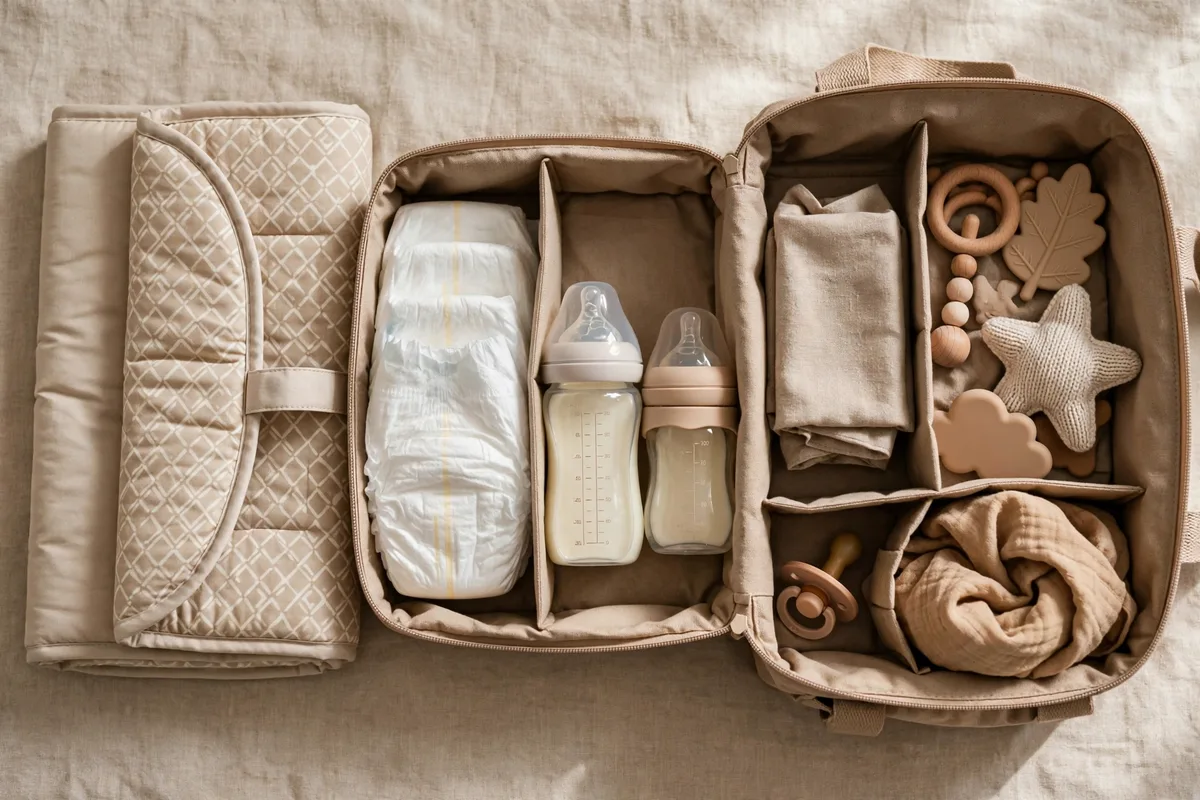
6. Organize the bag into zones
This is the step most checklists skip, and it’s what makes the bag fast to use. Group items into zones:
- Front pocket: the “grab zone” — one diaper, the wipe pack, and a plastic bag for lightning-fast diaper changes
- Middle section: feeding supplies and bottles (upright so nothing leaks)
- Back or side pocket: your personal items and phone
- Zippered pouch: medications, sunscreen, and anything that shouldn’t rattle around loose
When every item has a home, you’ll notice immediately if something is missing.
7. Set up a restock routine
A checklist only works if the bag gets refilled. The simplest system: keep the checklist printed or saved on your phone, and every time you come home, spend two minutes restocking what you used. Replace the diapers you used, top up the wipes, swap out the dirty clothes bag. A bag that is always ready removes the last-minute packing scramble entirely.
Baby Bag Checklist by Age
Adjust quantities to your outing length, but this table gives you a solid baseline:
| Item | Newborn (0–3 mo) | Older baby (6–12 mo) | Toddler (1–2 yrs) |
|---|---|---|---|
| Diapers or pull-ups | 5–8 | 4–6 | 3–5 |
| Wipes (travel pack) | 1 | 1 | 1 |
| Change of clothes | 2 full outfits | 1 full outfit | 1 outfit |
| Burp cloths / bibs | 2–3 burp cloths | 2 bibs | 1 bib + wipes |
| Feeding supplies | Bottles or nursing cover + nursing pads | Bottles, snacks, sippy cup | Sippy cup, snacks, utensils |
| Blanket | 1 light blanket | 1 light blanket | 1 small blanket (optional) |
| Changing pad | 1 portable pad | 1 portable pad | 1 portable pad |
| Wet/dry bags | 2 | 2 | 1 |
| Comfort item | Pacifier (if used) | Favorite toy or teether | Favorite toy or book |
| Parent extras | Water, snack, phone | Water, snack, phone | Water, snack, phone |
For longer trips or day excursions, also check your destination-specific gear against a travel checklist for young children before heading out.
What to Leave Out
Overpacking is the most common baby bag mistake. Leave these at home:
- Bulk supplies — a whole pack of diapers or full-size wipe tubs; travel sizes exist for a reason
- Just-in-case gadgets — you rarely need three types of thermometer on a grocery run
- Valuables — the bag gets tossed on floors and changing tables; keep expensive items separate
- Full outfits for every scenario — one backup outfit covers nearly every mess
Safety Notes
A few safety points worth building into your checklist:
- Sunscreen: keep babies under 6 months out of direct sun as much as possible, and ask your pediatrician about sunscreen use for young infants.
- Medications: carry any medication your baby takes regularly in its original packaging, out of reach, in a zippered pouch — and check expiry dates when you restock.
- Small items: keep coins, loose batteries, and small choking hazards out of the bag’s outer pockets where toddlers can reach.
- Car seats: if you’re driving, remember that bulky winter coats go under car seat straps — put the coat on over the harness, not under it.
If someone else will be carrying the bag, leave them a babysitter information sheet with emergency contacts and feeding instructions so the bag and the instructions match.
The Bottom Line
Preparing a baby bag checklist is a one-time setup job: pick a bag you like, build your age-appropriate checklist, organize into zones, and restock for two minutes after every outing. Once it’s a habit, you’ll leave the house feeling prepared instead of anxious — and if you want to extend that readiness to the whole house, start childproofing the common household hazards your newly mobile baby is about to discover.