
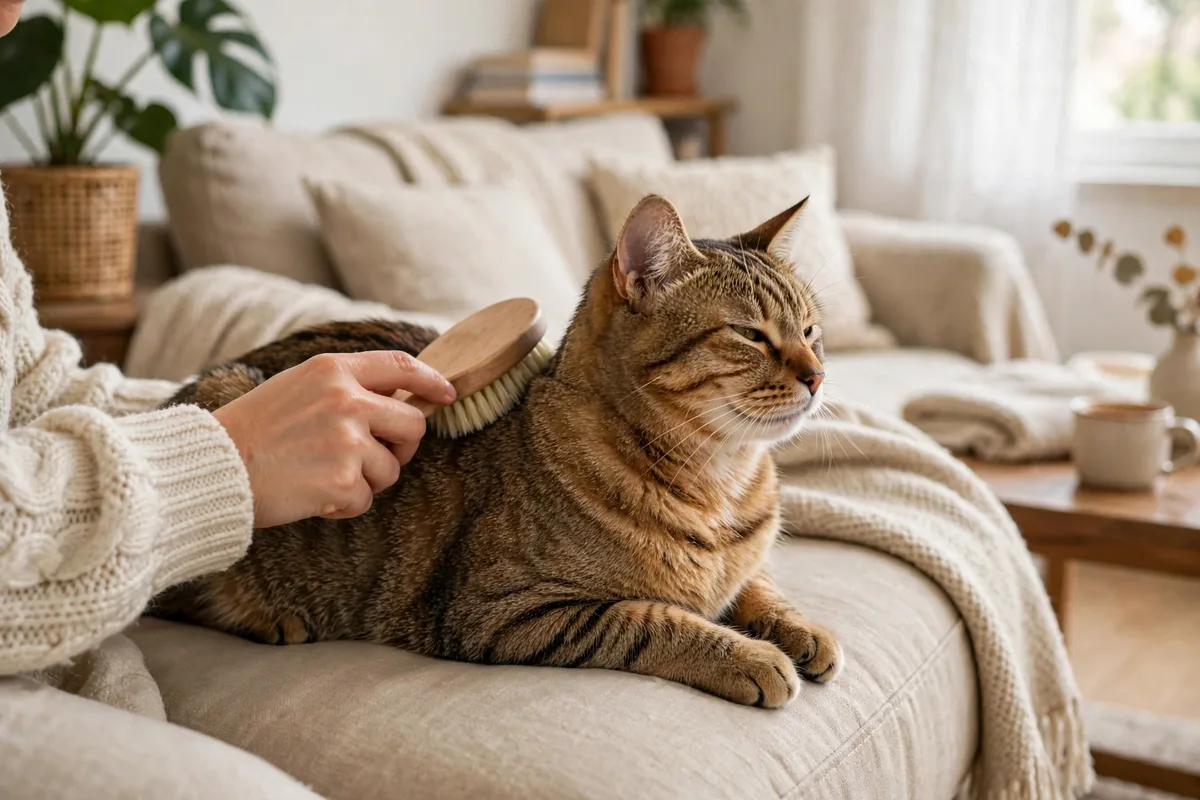
Most cats groom themselves daily, so you might wonder why brushing is even necessary. The truth is that a brush does things a tongue can’t: it clears out the loose undercoat that becomes hairballs, catches mats before they tighten against the skin, and gives you a weekly hands-on check for lumps, ticks, and skin problems. A few calm minutes with the right technique can become one of your cat’s favorite rituals — if you introduce it properly.
Why Brushing Matters (Even for Short-Haired Cats)
- Fewer hairballs. Regular brushing removes the loose fur your cat would otherwise swallow and cough back up.
- No painful mats. Mats form fastest where skin moves a lot — behind the ears, under the armpits, around the collar area. Once a mat tightens to the skin, it pulls constantly and can hide irritation underneath.
- Less shedding around the house. What ends up in the brush doesn’t end up on the sofa. Pairing brushing with a regular pet-hair cleanup routine keeps shedding under control.
- An early health check. While you brush, your fingers learn what your cat’s skin normally feels like. That familiarity is how you notice a new lump, a scab, or a sore spot early — the kind of thing our guide to recognizing when a pet needs veterinary care covers next.
Pick the Right Tool for the Coat
The brush matters more than most people think. The wrong tool turns a pleasant ritual into an argument.
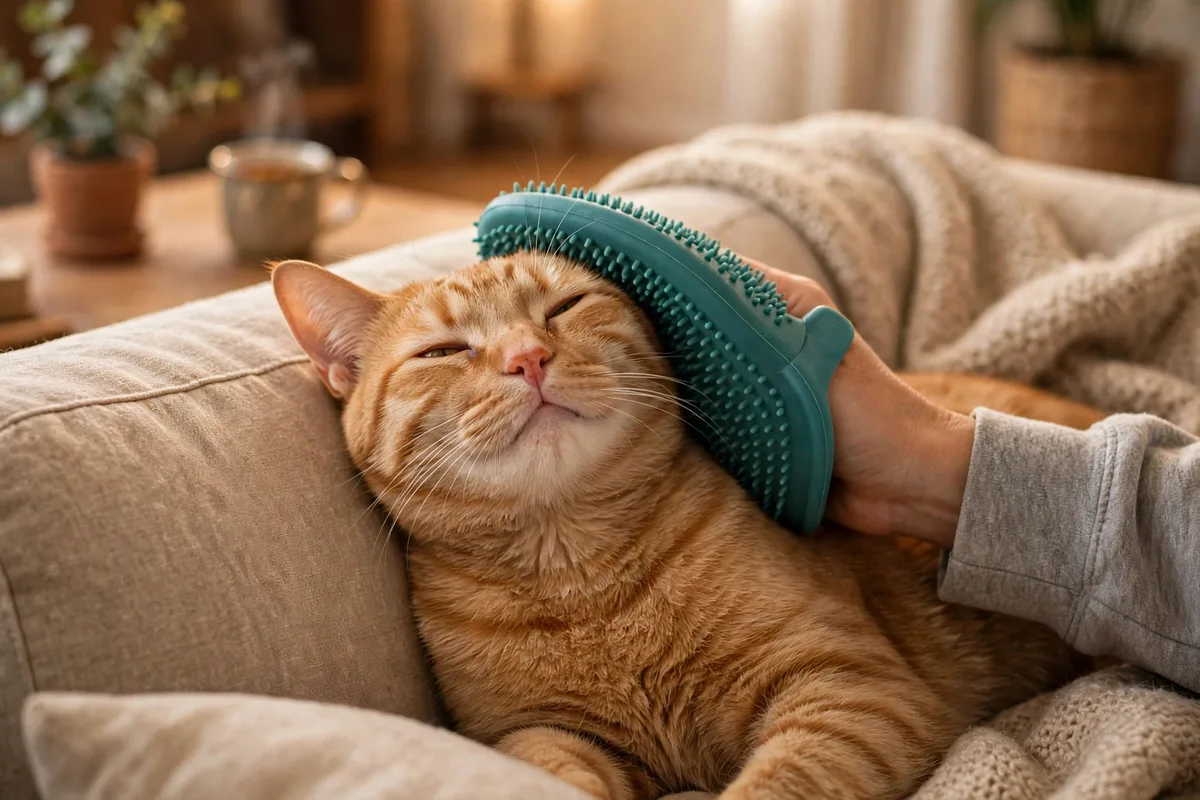
- Short-haired cats: a soft rubber curry brush or a silicone grooming mitt removes loose fur gently. Follow with a soft-bristle brush for a smooth finish.
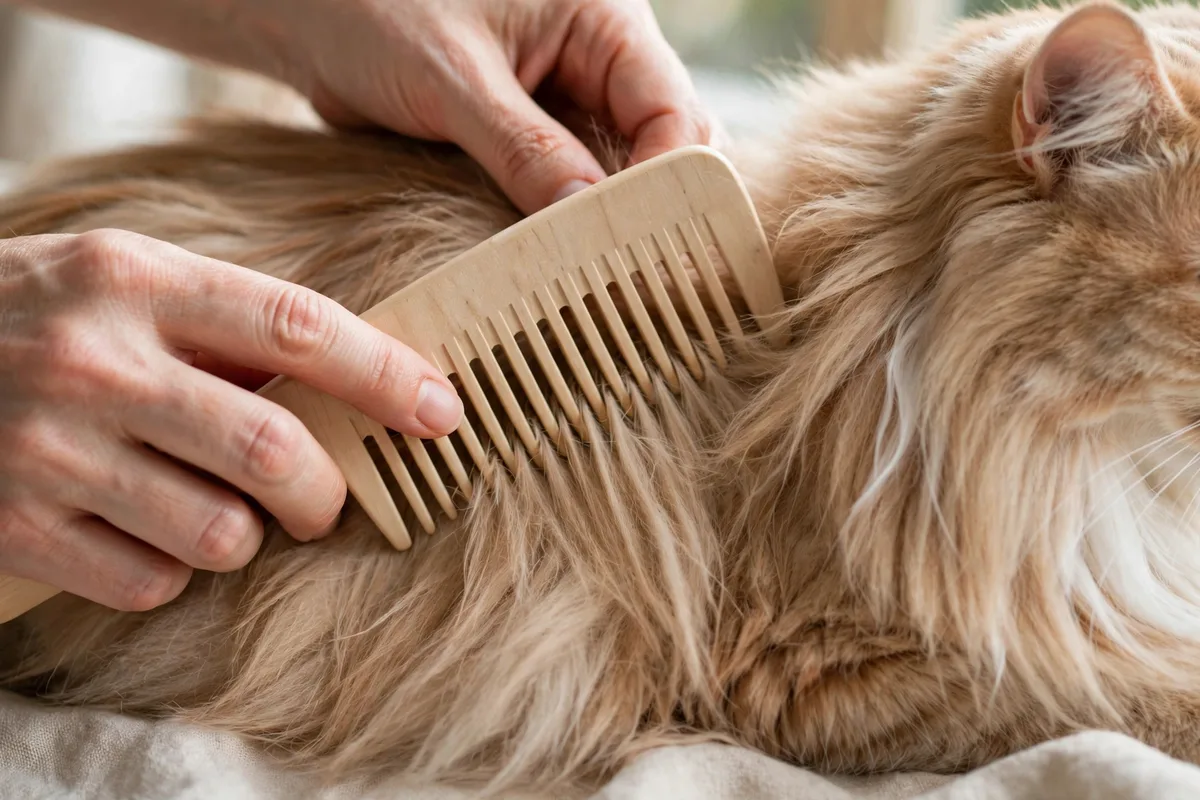
- Medium and long-haired cats: a wide-toothed metal comb is essential — it reaches the undercoat where mats begin. A slicker brush can help on the outer coat, but use it lightly; pressed too hard, slicker pins scratch the skin.
- All coats: keep a fine-toothed flea comb on hand for checking around the neck and tail base.
Avoid cheap brushes with sharp metal pins and no tip protection. Run the brush across the inside of your own wrist first — if it scratches you, it will scratch your cat.
Step 1: Choose the Right Moment
Brush a calm cat, not a wound-up one. The sweet spot is right after a nap or a gentle play session, when your cat is relaxed but not deeply asleep. Avoid post-meal times when they’re drowsy and grumpy about being disturbed, and avoid the evening zoomies entirely.
Step 2: Let the Cat Meet the Brush
New brush? New routine? Introduce the tool first. Set it on the floor and let your cat sniff and investigate it. Rub it gently against your cat’s cheek — many cats enjoy this and will “mark” the brush with their scent, which is a good sign. Offer a treat while the brush is nearby so the tool starts building positive associations before it ever touches the coat.
Step 3: Start Where It Feels Good
Begin where most cats like being touched: the cheeks, the chin, the top of the head, and along the back. Use short, gentle strokes in the direction the fur grows — never against the grain, which pulls at the roots and hurts. Light pressure is plenty; let the brush do the work.
Step 4: Work Through the Coat in Sections
Brush methodically rather than randomly:
- Back and sides first, in the direction of hair growth, from neck to tail.
- Chest and belly only if your cat allows it — the belly is a sensitive zone for most cats. If your cat tenses, skip it and try again another day.
- Legs and tail base with extra care, using the comb’s teeth to gently lift tangles.
- The “hot spots” — behind the ears, under the armpits, and around the collar — where mats love to form. Check these with your fingers every session.
Step 5: Handle Mats the Safe Way
If you find a mat, don’t yank it with the brush. Hold the mat firmly at its base, close to the skin, so you absorb the pulling force with your fingers, then gently tease it apart starting from the outer edge with a wide-toothed comb. For a tight mat pressed close to the skin, stop: cutting close to skin is how accidental injuries happen. Either work it loose gradually over several short sessions or ask a groomer or your vet to remove it. Never bathe a matted cat first — water tightens mats into felt-like clumps that are nearly impossible to untangle.
Step 6: Keep Sessions Short and End Well
Two to three minutes is plenty for a first session. The rule is simple: stop while your cat is still enjoying it, not after they’ve had enough. Gradually lengthen sessions over a few weeks as tolerance builds. Always end with a treat, a favorite play moment, or a chin scratch — something that makes “brushing is over” feel like a reward rather than an escape.
How often should you brush?
- Short-haired cats: once a week is usually enough; bump it up during spring and fall shedding seasons.
- Medium-haired cats: two to three times a week.
- Long-haired cats: daily or every other day — their coats mat fast, and a skipped week can mean a painful tangle.
Senior cats may need extra help, since stiff joints and arthritis can make self-grooming harder. If an older cat who used to groom well starts looking scruffy, add short assisted sessions and mention it at the next vet visit.
Reading Your Cat’s Body Language
Your cat will tell you exactly how the session is going. Learn the signals:
- All good: slow blinks, purring, leaning into the brush, kneading.
- Getting uncomfortable: skin twitching along the back, tail starting to flick, ears turning sideways, shifting away.
- Stop now: tail lashing, flattened ears, a sudden freeze, growling, or a quick turn of the head toward your hand. This is not defiance — it’s overstimulation, and pushing past it teaches your cat that the brush means bad things.
When you see the “getting uncomfortable” signs, calmly finish the stroke you’re on and end the session. Forcing a cat to stay teaches them to flee at the sight of the brush next time.
Troubleshooting Brushing Problems
| Problem | Try this |
|---|---|
| Cat runs when the brush appears | Go back to step 2: let them sniff the brush for treats for a few days without brushing |
| Fine with the brush but hates the comb | Try the comb only on the “hot spots” with a treat after each one; keep comb sessions to 30 seconds |
| Bites the brush mid-session | Usually play or overstimulation — end the session calmly, redirect with a toy next time before it starts |
| Mats keep forming despite brushing | Check your technique on the undercoat, increase frequency, and trim any areas you can’t keep clear (ask your vet for guidance first) |
| Cat won’t tolerate any grooming | Try a grooming mitt first — it feels more like petting; if nothing works, a cat-friendly groomer is a fair fallback |
| Skin looks flaky or red under the coat | Stop brushing that area and schedule a vet visit; don’t try to brush away a skin condition |
Frequently Asked Questions
Should I brush against the fur to get more loose hair out?
No. Brushing against the direction of growth pulls at the follicles and is uncomfortable for most cats. If your brush isn’t picking up enough loose fur going with the grain, the issue is usually the tool — switch to a rubber curry brush or grooming mitt, which lift dead fur without fighting the coat’s direction.
Can I use my dog’s brush on my cat?
Generally not. Dog brushes are often larger with stiffer pins suited to thicker coats, and they’re too aggressive for cat skin. A cat-specific brush is inexpensive and much kinder. The one exception is a fine-toothed flea comb, which works similarly for both.
What if my cat swallows hair during brushing?
Cats will occasionally lick at the loose fur you’re removing. This is normal, but you can minimize it by collecting the fur off the brush frequently during the session. If hairball vomiting is a regular problem despite brushing, bring it up with your vet — they can check whether the frequency or tools need adjusting.
Do indoor cats really need brushing?
Yes — arguably more than outdoor cats, since the fur they shed has nowhere to go but your floors and your cat’s stomach. Indoor cats also live in climate-controlled homes that can cause year-round shedding instead of a clean seasonal cycle. A weekly session keeps it manageable.
A Brush Is a Bond
Done patiently, brushing becomes less of a chore and more of a shared ritual — a few quiet minutes where your cat gets attention on their terms and you get a front-row view of their health. Start with the right tool, the right moment, and the shortest possible session, and let your cat’s body language set the pace. The cat that purrs through a brushing session didn’t start out that way; it was built, one calm minute at a time.


Pingback: Less Pet Hair at Home: Grooming & Cleaning Guide