
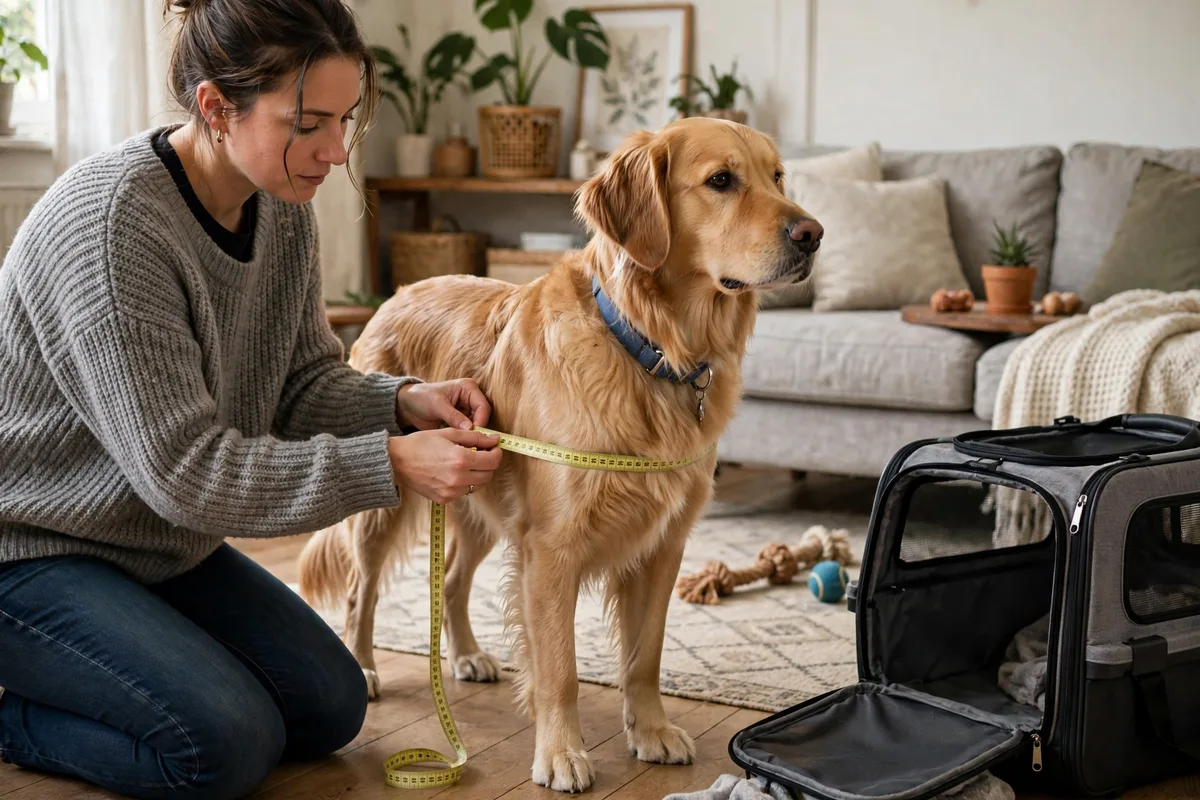
A pet carrier is one of those purchases people make twice: once in a hurry, and again after the first one turns out wrong. Too small and your pet panics; too big and they slide around every time you brake. The right size isn’t a guess — it’s three measurements of your actual pet, matched to the trip you’re taking. Here’s how to get it right the first time.
Why Carrier Size Matters More Than the Brand
Carriers all promise comfort, but comfort is geometry. A carrier that fits lets your pet stand without hunching, turn around without wedging, and lie down naturally. That freedom of movement is what keeps a pet calm — immobility reads as danger to an animal’s nervous system.
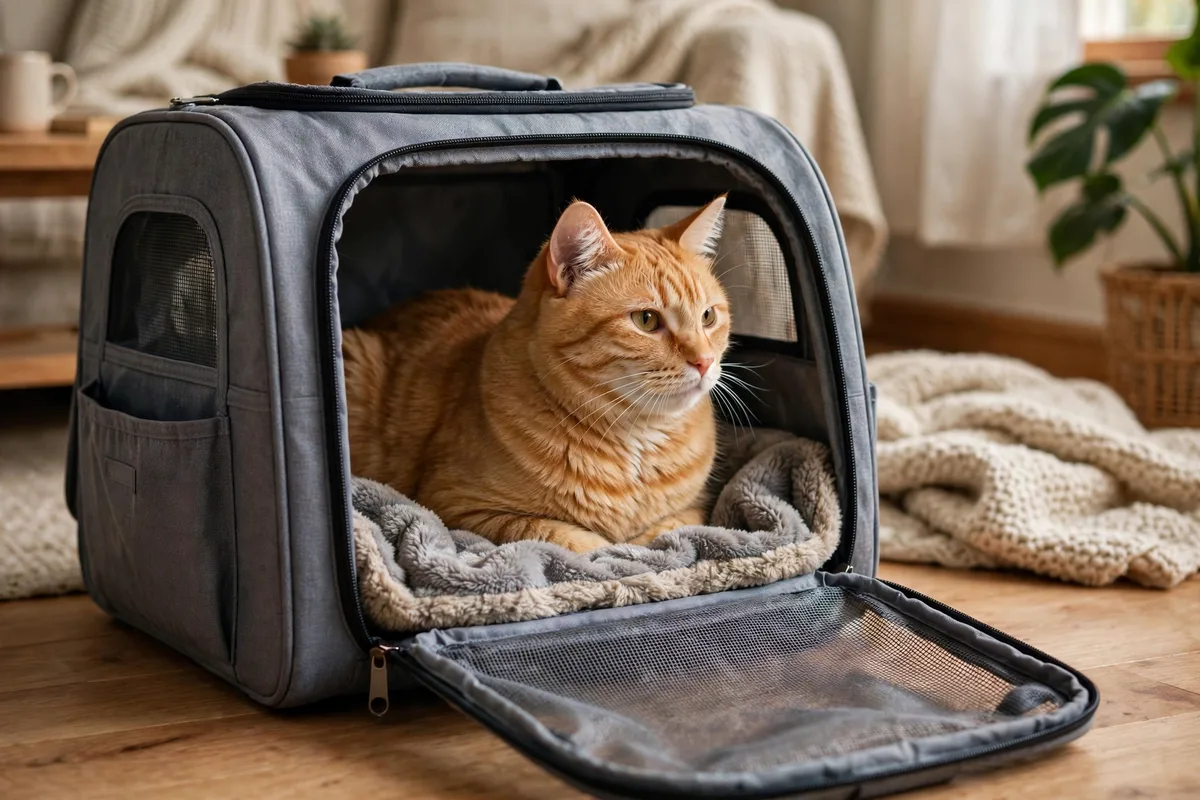
Size is also safety. In a sudden stop, an oversized carrier lets the pet build momentum before hitting a wall; an undersized one forces a posture that strains joints and breathing. And for air travel, the carrier is the thing an airline can refuse you for at the counter.
Step 1: Measure Your Pet (Not the Breed)
Breed charts are starting points, not answers. Two Labradors can differ by thirty pounds. Measure your actual pet, standing naturally, with a soft tape measure or a piece of string you measure afterward.
Take these three numbers and write them down:
- Length: tip of the nose to the base of the tail (where the tail meets the body, not the tail tip), measured while standing.
- Height: floor to the top of the head or the tip of the ears — whichever is taller — while standing.
- Width: across the widest part of the body, usually the chest or shoulders.
Now add a comfort margin: 2 to 4 inches to length and height. This is the difference between a carrier your pet fits into and one your pet fits comfortably into. Don’t add more — extra space beyond the margin doesn’t add comfort, it adds sliding.
Have someone help, or measure during a calm moment after a walk. A wiggly pet measured badly is worse than no measurement at all.
Step 2: Decide What the Carrier Is For
The trip decides the carrier, not the other way around. A carrier that’s perfect for vet visits may be illegal on a plane, and a cargo-grade crate is overkill for the back seat.
Soft-sided carriers are lightweight, flexible, and easier to squeeze under an airplane seat — the standard choice for in-cabin travel and for cats. Their weakness: flimsy ones sag inward, and a determined chewer can work through mesh.
Hard-sided crates hold their shape no matter what and are required for pets traveling as cargo. Their weakness: weight and bulk.
Backpack and sling carriers suit very small pets for short outings. They’re not travel carriers; no pet should ride for hours in one.
Ask yourself three questions before shopping:
- Is this for cabin air travel, cargo air travel, car travel, or vet visits?
- How long will the pet be inside at a stretch?
- Does my pet chew, scratch, or panic in enclosed spaces? (Be honest.)
Step 3: Match Your Measurements to Carrier Dimensions
This is where most people go wrong: they buy by the size name on the box (“Medium”) instead of the interior dimensions. Size names are not standardized — one brand’s Medium is another brand’s Large. Always shop by the printed length × width × height, and check whether those numbers are interior or exterior. Interior dimensions are what count.
The matching rule:
- Interior length ≥ your pet’s length + 2 to 4 inches
- Interior height ≥ your pet’s standing height + 2 to 4 inches
- Interior width ≥ your pet’s width + 2 inches
Then verify the posture test: stand fully upright, turn around in a circle, lie down stretched out — not just curled nose-to-tail.
Rough starting points by pet size (verify with your own measurements):
| Pet | Typical interior dimensions to look for |
|---|---|
| Small cat or toy dog (under ~10 lbs) | ~17″ L × 11″ W × 11″ H |
| Average adult cat or small dog (~10–16 lbs) | ~19″ L × 12″ W × 12″ H |
| Large cat or stocky small dog (~16–25 lbs) | ~21″ L × 14″ W × 14″ H |
| Medium dog (~25–45 lbs) | ~27″ L × 20″ W × 21″ H |
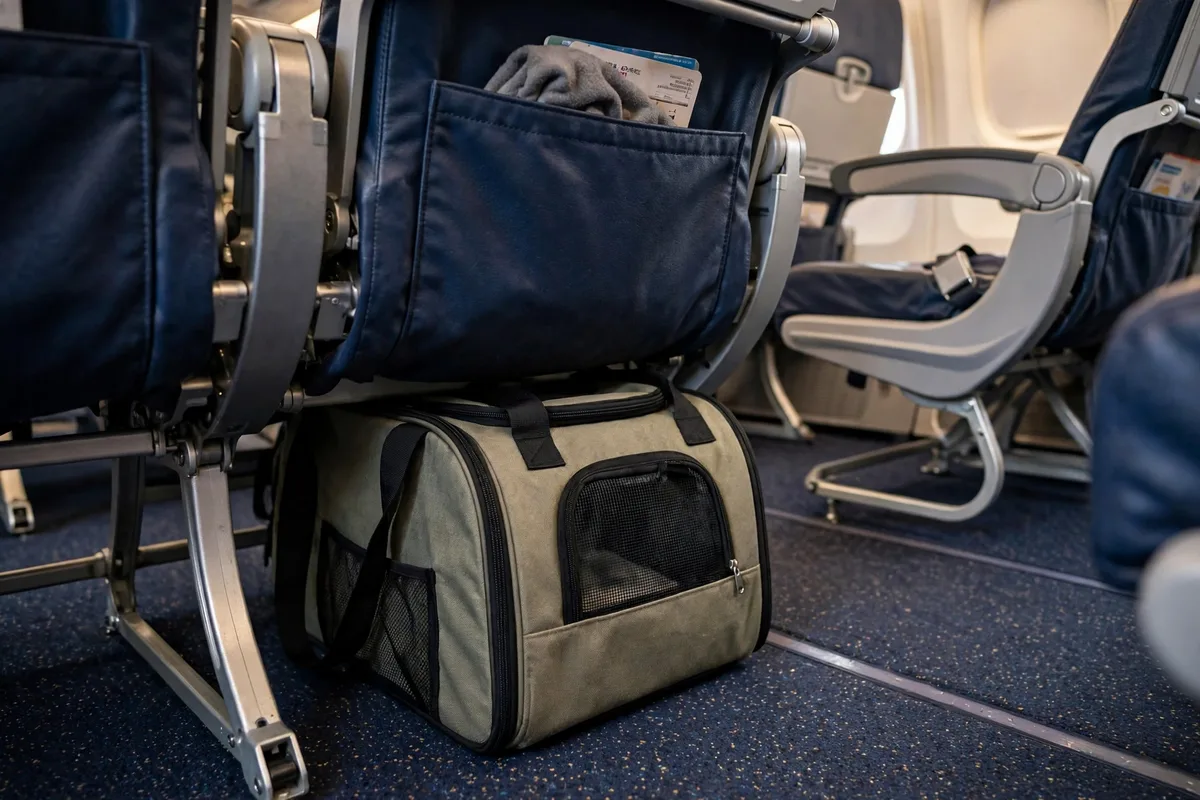
For in-cabin flights, there’s a second constraint: the carrier must fit under the seat in front of you. Most US airlines cap in-cabin carriers around 18–19 inches long, and under-seat space varies by aircraft, so check your specific airline and flight. Coastal Pet’s airline carrier guide notes the commonly accepted maximum around 19″ × 11″ × 13″ and stresses confirming with your airline — if the carrier doesn’t fit under the seat, it doesn’t fly.
Step 4: Check the Features That Affect Fit
Dimensions get you 80 percent of the way. These details cover the rest:
- Ventilation on at least two or three sides. Mesh panels keep airflow steady and let your pet see out, which calms many animals. For anxious pets, a carrier with a coverable panel lets you darken it.
- A rigid or reinforced base. Soft carriers with floppy bottoms sag and tilt when lifted. Look for a removable rigid board in the base.
- Secure, pet-proof closures. Locking or double zippers matter — cats can learn to nose open a single zipper. On hard crates, check that latches engage firmly.
- An interior tether clip. A short clip attaching to a harness (never a collar) stops a bolting pet from launching out the moment you unzip. Useful at security checkpoints.
- Washable bedding or liner. Accidents happen; a removable pad beats scrubbing carrier fabric in a hotel sink.
- Top and side openings. Top-loading carriers make placing a reluctant cat inside far easier.
Step 5: Test the Fit at Home Before You Commit
Keep the receipt and the tags on until the test is done. When the carrier arrives:
- Set it up fully — base board in, bedding in — and place it on the floor.
- Let your pet walk in on their own with treats. Don’t shove.
- Watch the posture test: standing without hunching, a full turn, lying down naturally. Film it on your phone if unsure — video is easier to judge.
- Close the door for ten minutes while you stay nearby. Some grumbling is normal; frantic scratching or panting is information.
- Lift and carry it around the house. The base should stay level and your pet shouldn’t slide.
If your pet is between sizes: choose the smaller only if it passes the posture test and the larger fails an airline limit; choose the larger for chewers, seniors who need padding room, or growing pets. Our guide to preparing pets for travel covers the carrier training routine that makes the new carrier feel like furniture instead of a trap.
Special Cases: Puppies, Seniors, and Flat-Faced Breeds
Growing puppies. Don’t buy for today’s size unless the trip is next week. Ask your vet for an estimated adult size, or buy the adult size now and pad the extra space temporarily with rolled towels. Our new puppy checklist covers the other gear you’ll be sizing.
Senior pets. Arthritis means seniors need the full comfort margin, not the minimum. Add extra padding, choose wide low doorways that don’t require climbing, and favor top-loading designs for cats who resent being maneuvered.
Flat-faced (brachycephalic) breeds — bulldogs, pugs, Persian cats. These breeds are prone to breathing difficulty, so ventilation and the height margin matter more. Size up one step, keep ventilation open on all sides, and discuss air travel with your vet first, since many airlines restrict these breeds.
Troubleshooting Sizing Problems
| Problem | Try this |
|---|---|
| Pet fits by the numbers but hunches inside | Recheck the height measurement — ear tips on upright ears are often missed. Size up, or switch to a carrier with a domed top. |
| Carrier fits the pet but not under the airplane seat | You need a shorter carrier. Soft-sided carriers with flexible tops compress a couple of inches. Verify your exact aircraft’s under-seat dimensions with the airline. |
| Cat escapes through the zipper | Switch to locking zippers and use the interior tether clipped to a harness. Replace mesh your cat has started chewing through. |
| Dog slides around in the car | The carrier is too big or unsecured. Size down to the proper margin and strap the carrier so it can’t shift — or switch to a crash-tested car harness. |
| Between sizes and the airline limit is tight | Choose the smaller only if your pet genuinely passes the posture test in it. A cramped pet may be denied boarding. |
| Puppy outgrew the carrier mid-trip planning | Re-measure before every flight. If the new size breaks the cabin limit, switch to cargo or a different plan — decide early, not at the airport. |
Frequently Asked Questions
Should I size up “just to be safe”?
No. A much larger carrier doesn’t add comfort — it lets the pet slide around during braking and turns, which increases stress and injury risk. Stick to the 2-to-4-inch comfort margin.
Are “airline-approved” labels trustworthy?
Treat them as a hint, not a guarantee. There’s no single official airline-approved carrier, and requirements differ between airlines and aircraft. Always compare the carrier’s dimensions against your airline’s published limits for your flight.
Can one carrier work for two small pets?
Airlines require one pet per carrier, and separate carriers are safer in the car too. Size and buy individually.
How do I measure a pet who won’t stand still?
Measure after exercise when they’re calm, have a helper offer treats, or measure them lying on their side against a wall: mark nose and tail-base positions on paper, then measure the distance. Take each measurement twice and use the larger number.
Is a bigger carrier better for a long flight?
Up to the margin, yes. Beyond it, no — an oversized carrier that doesn’t fit under the seat will get you refused at boarding.
Measure Twice, Buy Once
The whole job is three numbers, a comfort margin, and an honest check of what the trip requires. Measure your actual pet, shop by interior dimensions instead of size names, verify the airline’s limits for your flight, and test the fit at home with the tags still on. Then the carrier becomes what it should be: the boring, reliable gear nobody thinks about, because the pet inside is comfortable enough to sleep through the trip.