
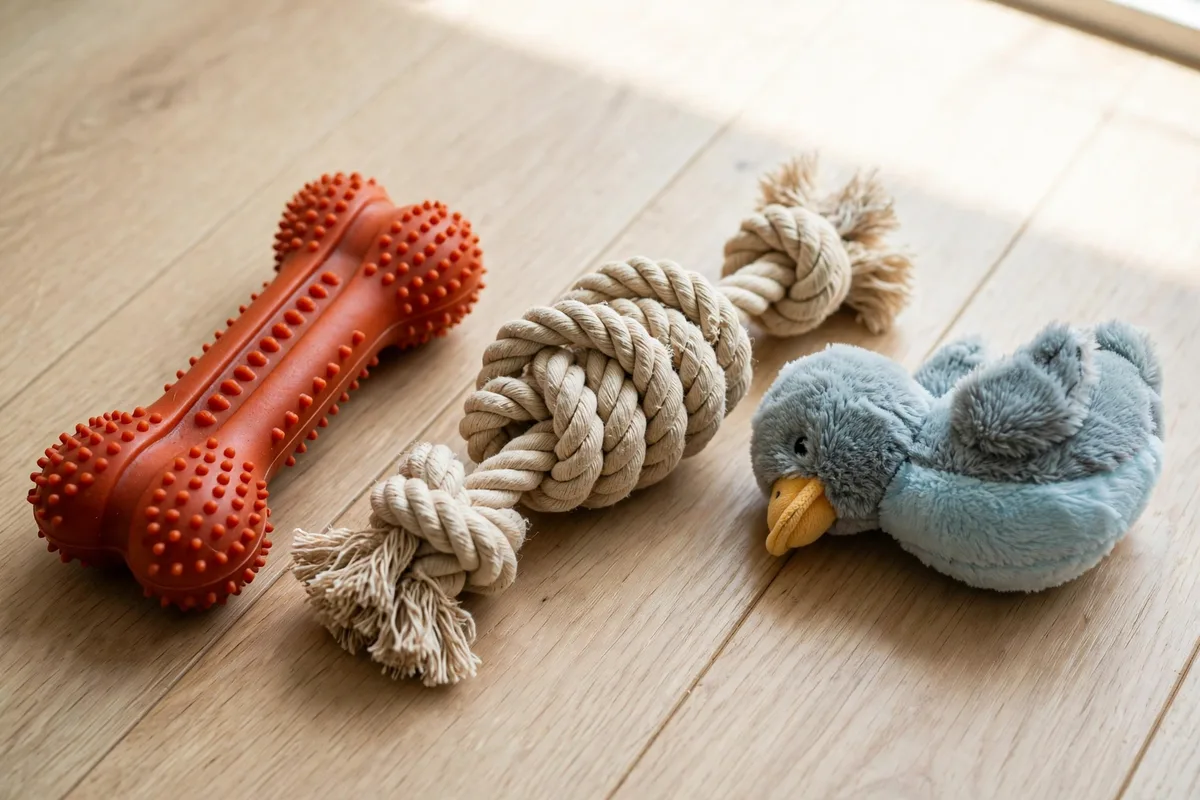
Dog toys look simple, but the wrong one can mean a choking scare, a cracked tooth, or an emergency vet visit. The right ones keep your dog busy, satisfied, and safe — and they don’t have to cost much. Choosing safe toys comes down to matching three things: your dog’s size, your dog’s chewing style, and how the toy is built.
This guide walks you through exactly what to check before a toy goes into your dog’s mouth: sizing rules, materials to trust and avoid, the right toy for how your dog actually plays, and when to throw a toy away.
Why Toy Safety Deserves Real Attention
None of this means you should be afraid of toys. Dogs need to chew, chase, tug, and solve puzzles — it’s how they’re wired. It just means choosing with your eyes open, supervising new toys, and retiring them before they fall apart.
Step 1: Size the Toy to the Dog, Not the Shelf
This is the rule that prevents the scariest accidents:
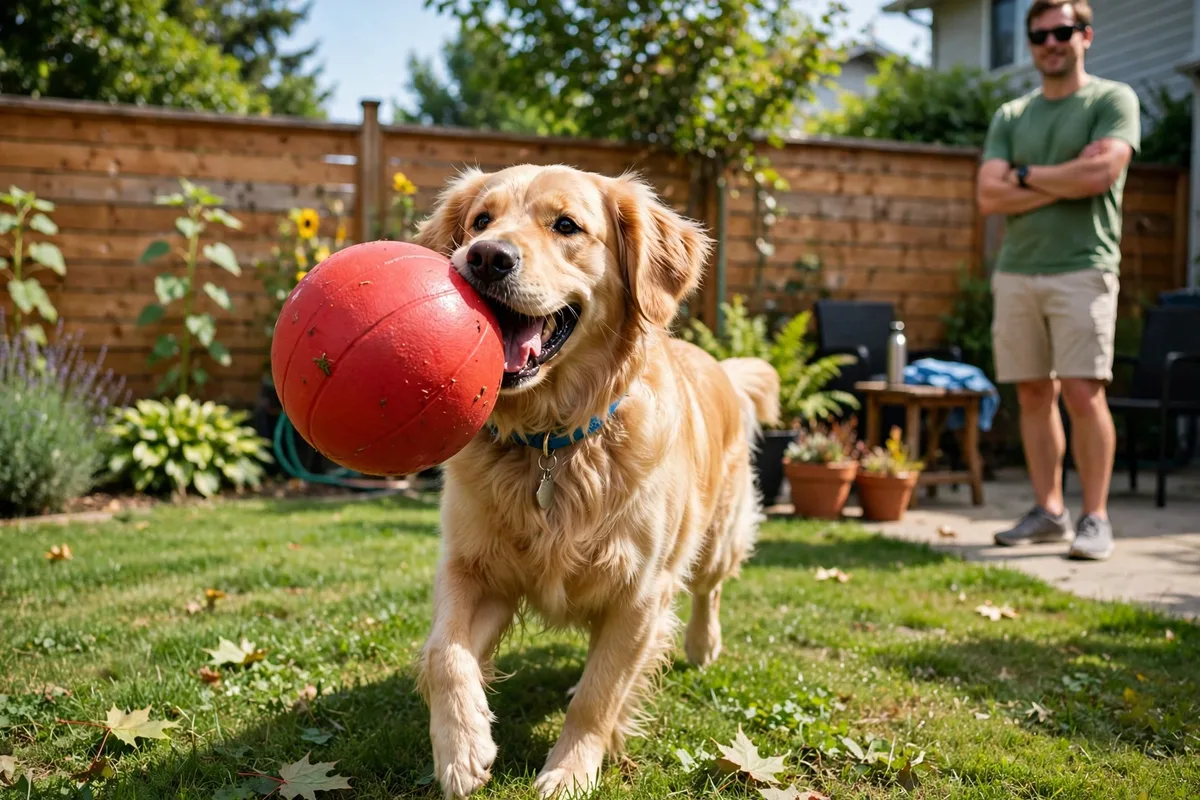
- The toy must be too large to fit entirely in your dog’s mouth. If it can all go in, it eventually will. Balls are the classic offender — a ball that fits behind the teeth can lodge in the throat.
- But not so large the dog can’t carry or enjoy it. A toy your dog can’t pick up is a decoration, not a toy.
- In multi-dog homes, size everything to the largest dog. The big dog will absolutely steal the small dog’s toys.
A practical test: hold the toy up to your dog’s open mouth. It should be clearly wider than the jaw. When in doubt, go one size up — a slightly-too-big toy is far safer than a slightly-too-small one.
Step 2: Match the Material to the Chewer
Dogs fall into rough chewing categories, and the right material depends on which one yours is:
| Chewing style | Best materials | Use with caution |
|---|---|---|
| Gentle chewer (carries toys, light mouthing) | Plush, soft rubber | Very hard chews |
| Moderate chewer (chews regularly, doesn’t destroy) | Natural rubber, rope | Unsupervised plush |
| Power chewer (destroys most toys) | Thick natural rubber, sturdy nylon | Plush, rope, thin plastic |
| Puppy (teething) | Soft flexible rubber, teething toys | Adult-strength hard chews |
| Senior dog | Softer rubber, plush, easy-grip shapes | Hard or heavy toys |
Two hands-on tests beat any packaging claim:
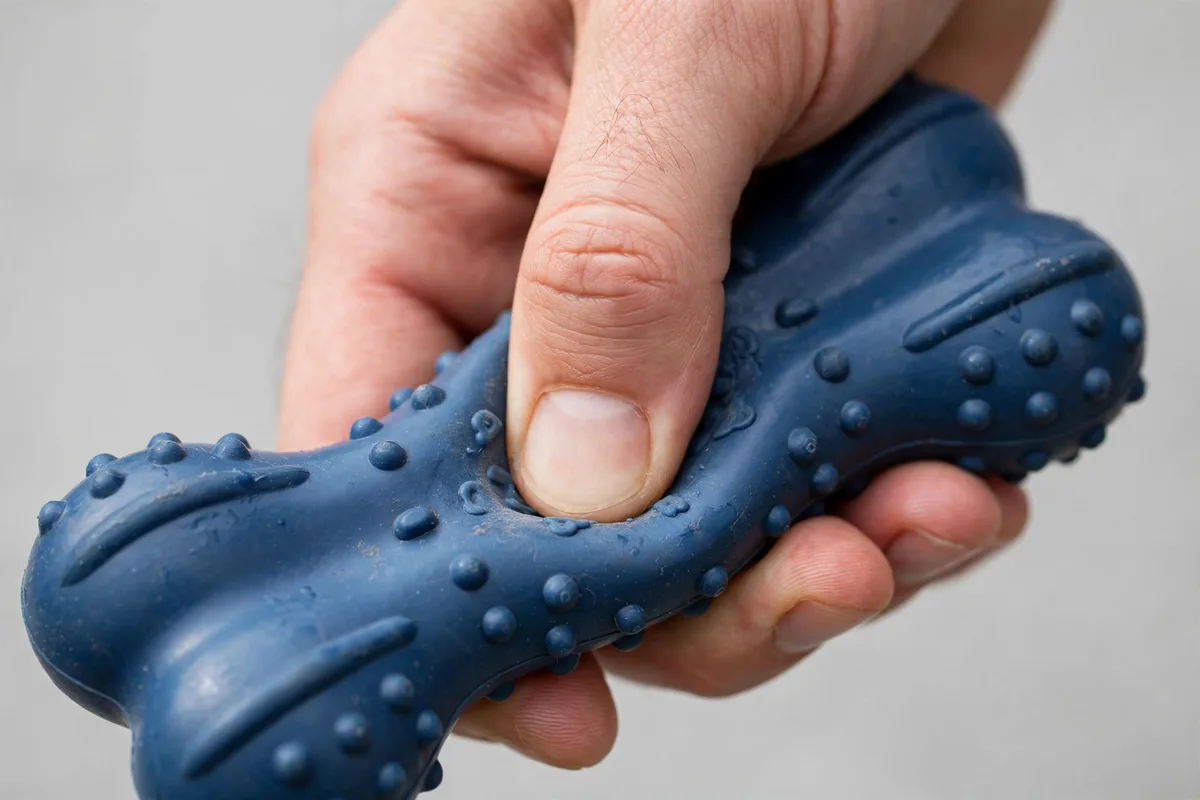
- The thumbnail test. Press your thumbnail into the toy. If you can’t dent it at all, it’s too hard for most dogs’ teeth — overly hard toys and chews can fracture teeth. There should be some give.
- The bend test. Try to bend the toy with your hands. If it has no flex and feels like it would snap rather than bend, think twice.
Materials generally worth trusting: natural rubber, food-grade silicone, sturdy nylon made for dogs, cotton rope. Materials to avoid: toys with a strong chemical smell, brittle hard plastic that can splinter, and anything with paint or coating that flakes off.
Step 3: Check the Construction Before You Buy
Pick the toy up and inspect it like it matters — because it does:
- No detachable small parts. Button eyes, plastic noses, ribbons, bells, glued-on decorations — a determined dog will remove all of them, and swallow most of them. If it can be chewed off, assume it will be.
- Squeakers secured inside. Dogs love squeaky toys, and that’s fine — but some dogs are obsessed with dissecting them to get the squeaker. If your dog is a dissector, squeaky toys are supervised-only toys, and the toy gets retired the moment the squeaker is reachable.
- Seams and stitching. On plush toys, weak seams are the first failure point. Double-stitched is better. And check the filling — avoid toys filled with nutshells or plastic beads; standard polyfill isn’t digestible either, so any exposed stuffing means the toy is done.
- No sharp edges. Run your hand over the whole toy. Mold lines, broken edges, or rough spots can cut gums.
For plush toys specifically, a useful rule from veterinary guidance: look for toys labeled safe for children under three. That standard screens out a lot of small-part and toxicity hazards.
Step 4: Match the Toy to How Your Dog Plays
Watch what your dog naturally does, then buy for that:
- Fetchers want balls and throwing toys. Size balls well above throat-lodge risk, and skip standard tennis balls for heavy chewers — the abrasive felt wears teeth down with obsessive chewing, and determined dogs peel them apart.
- Tuggers want rope toys and tug handles. Rope is great for interactive tug, but it’s not a chew toy — retire rope toys when they start unraveling and never leave them unsupervised.
- Chewers want durable rubber and nylon chews. This is where the thumbnail test matters most.
- Thinkers want puzzle feeders and treat-dispensing toys. These are among the safest categories — the dog works for food, stays busy, and the toy takes a beating without breaking into pieces. They’re also excellent for rainy days when the daily walk gets cut short.
- Snugglers want a soft plush to carry around. Totally fine for gentle dogs — just know your dog: if the “snuggling” turns into gutting within minutes, plush is a supervised-only category in your house.
Most dogs do well with four to six toys covering a few play styles. You don’t need a toy box overflowing — and rotating a small set every few days keeps old toys feeling new.
Step 5: Supervise the First Sessions
Every new toy gets an audition. Watch how your dog actually uses it for the first few play sessions — not how the packaging said it would be used. You’re looking for:
- Does the dog try to eat it rather than play with it?
- Are pieces coming off?
- Is the dog chewing much harder than you expected?
If the answer to any of these is yes, the toy gets recategorized (supervised only) or retired. Your dog’s real behavior with the toy is the only safety rating that matters.
Step 6: Inspect and Retire on a Schedule
Toys don’t last forever, and a toy’s safe life ends before it looks completely destroyed. Build a quick weekly check into your routine — say, Sunday evening:
- Retire immediately: cracked rubber, exposed stuffing, a reachable squeaker, fraying rope, sharp edges, missing chunks.
- Retire soon: thinning spots, loosening seams, toys that have become small enough to be a swallowing risk as pieces wore away.
- Clean regularly: most rubber and nylon toys can be washed with warm soapy water; many plush toys survive the washing machine on gentle. Check the label.
When in doubt, throw it out. A five-dollar toy is never worth a vet bill.
Toys and Chews to Be Careful With
A few popular items deserve special caution:
- Rawhide. It can swell in the stomach and large gulped pieces can cause blockages. If you use it, choose the right size, supervise always, and take it away when it gets small enough to swallow. Many owners skip it entirely in favor of safer chews.
- Cooked bones. Never. They splinter. This includes leftover rib and chicken bones from your plate.
- Small balls. Any ball that fits entirely in your dog’s mouth is a choking hazard, full stop — including for fetch, where excitement makes dogs gulp.
- Toys meant for children. Kids’ stuffed animals often have button eyes, bead filling, and materials never tested for chewing. Dog toys are built (or at least labeled) for the job.
If you’re ever unsure about a specific toy, ask your vet — they’d much rather answer a quick question than treat an obstruction.
Troubleshooting Common Toy Problems
| Problem | Fix |
|---|---|
| Dog destroys every toy in minutes | You’re buying below your dog’s chewing level — move up to thick rubber and sturdy nylon, and accept that power chewers go through toys |
| Dog ignores new toys | Try a different play style (your fetcher may be a thinker), or smear a little peanut butter on it to spark interest |
| Dog guards toys from people or other dogs | Trade up: offer a high-value treat in exchange for the toy, never just take it — and talk to a trainer if guarding escalates |
| Dog only wants one specific toy | That’s fine — buy a backup of that exact toy before it’s discontinued |
| Puppy chews furniture instead of toys | Redirect every time: furniture gets a calm “no,” then immediately offer the right toy with praise — and make sure teething puppies always have an appropriate chew available |
Frequently Asked Questions
How many toys does my dog need?
Four to six covering different play styles is plenty for most dogs: a chew, a fetch toy, something for tug, and a puzzle or treat toy. Rotate them every few days to keep things interesting without constantly buying new ones.
Are squeaky toys safe?
Yes, with a caveat: they’re safe for dogs that play with them normally, and supervised-only for dogs that dissect toys to extract the squeaker. Retire any squeaky toy the moment the squeaker becomes reachable.
Can puppies have the same toys as adult dogs?
Not the hard ones. Puppies need softer toys — teething gums and developing teeth don’t mix with adult-strength hard chews. Size rules still apply: bigger than the mouth, always.
My dog swallowed a piece of a toy. What should I do?
Don’t wait to see what happens. Call your vet right away and describe what was swallowed and when. They’ll advise whether to monitor, come in, or go to an emergency clinic. This is one situation where fast professional advice beats internet research — and our guide to recognizing when a pet needs veterinary care covers the warning signs to watch for.
Choose Once, Check Often
Safe toy shopping is a one-time skill: size it bigger than the mouth, match the material to the chewer, check the construction, and buy for how your dog actually plays. After that, it’s just maintenance — supervise new toys, inspect weekly, and retire anything that’s falling apart. Do that, and the toy box stays what it should be: a source of fun, not a source of worry.