

Bringing a new pet into a home that already has one is like arranging a roommate situation between two strangers who didn’t choose each other. Some pairs click in days. Most need weeks. A few need months — and a small number never become friends, only peaceful cohabitants. Introducing pets gradually is the single most important thing you can do to land in the best possible outcome, because first impressions between animals are hard to undo.
The Principles Behind Every Successful Introduction
Before the steps, the rules that make them work:
- Separate spaces first, always. The new pet gets its own room with everything it needs. The resident pet keeps its territory. Nobody is asked to share anything on day one.
- Scent before sight, sight before touch. Animals gather most of their information through smell. Letting them learn each other through scent first removes the pressure of face-to-face meetings.
- The most stressed animal sets the pace. If one pet is hiding, hissing, or freezing, you move slower — not the pet.
- Aim for calm coexistence, not instant friendship. Sleeping on the same couch is a wonderful goal for month three. For week one, “not fighting” is a win.
- Never force greetings. No carrying one pet up to the other, no cornering, no “they’ll work it out” unsupervised meetings. Forced contact creates fear, and fear creates aggression.
Step 1: Prepare Separate Territories
Before the new pet arrives, set up a dedicated room — a spare bedroom, an office — with food, water, bedding, toys, and (for cats) a litter box. This is the newcomer’s entire world for the first phase. Remove anything the resident pet would resource-guard from shared areas temporarily: special beds, high-value chews, favorite toys. You’re not taking them away forever; you’re removing flashpoints while everyone adjusts.
Give the resident pet something good at the same time — a new toy, extra play sessions. The household is changing for them too, and a little extra attention prevents the “new pet gets everything” resentment.
Step 2: Swap Scents
For the first few days, the pets should only know each other through smell:
- Exchange bedding. Put a blanket the new pet slept on in the resident pet’s area, and vice versa. Watch the reaction: curious sniffing is great, avoidance is fine, growling means you slow down.
- Swap rooms. Let the new pet explore the resident pet’s rooms while the resident is elsewhere, and let the resident investigate the newcomer’s room. They learn each other’s scent maps without the stress of a meeting.
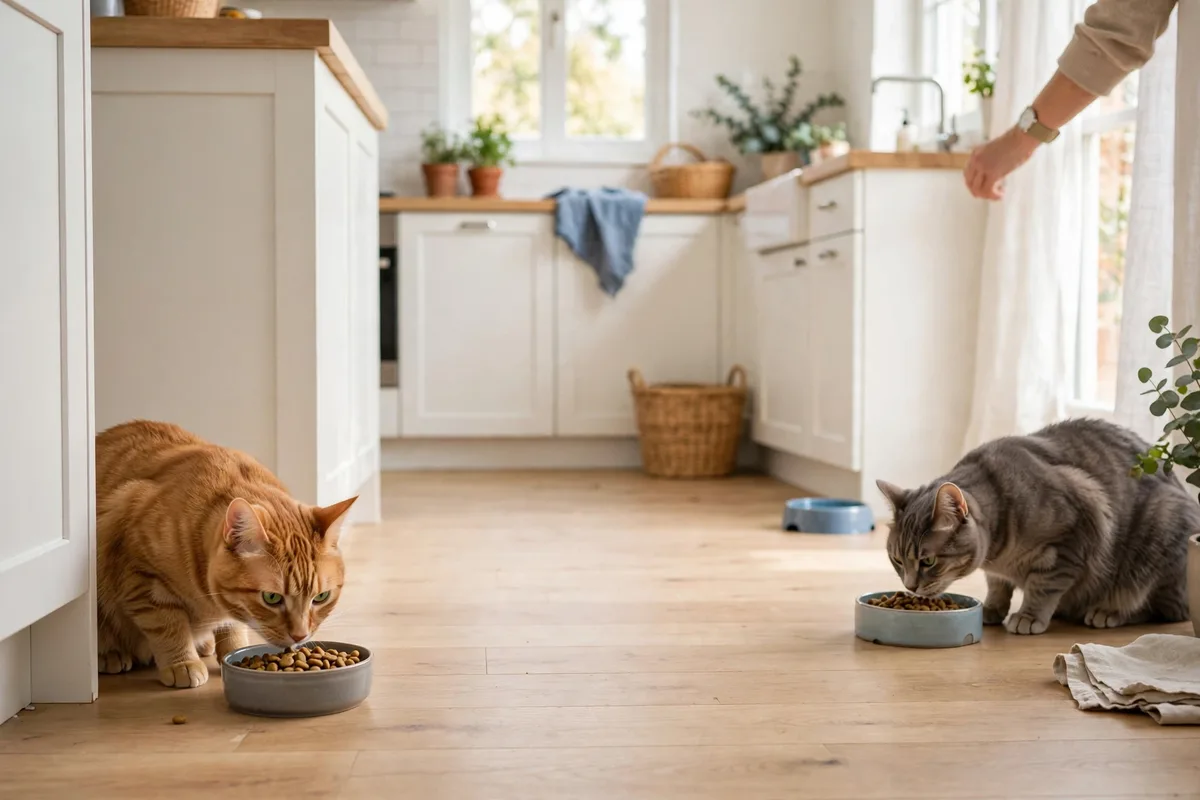
- Feed near the closed door. Place both pets’ food bowls on opposite sides of the closed door separating them. Eating near the other pet’s smell builds positive associations: that scent means good things happen.
Do this for at least three to five days, longer for cats. If either pet stops eating or starts hiding, extend the scent phase — those are stress signals, not stubbornness.
Step 3: Allow Visual Contact Through a Barrier
Once both pets are calm about the scent — eating normally, playing, relaxed body language — introduce sight without contact:
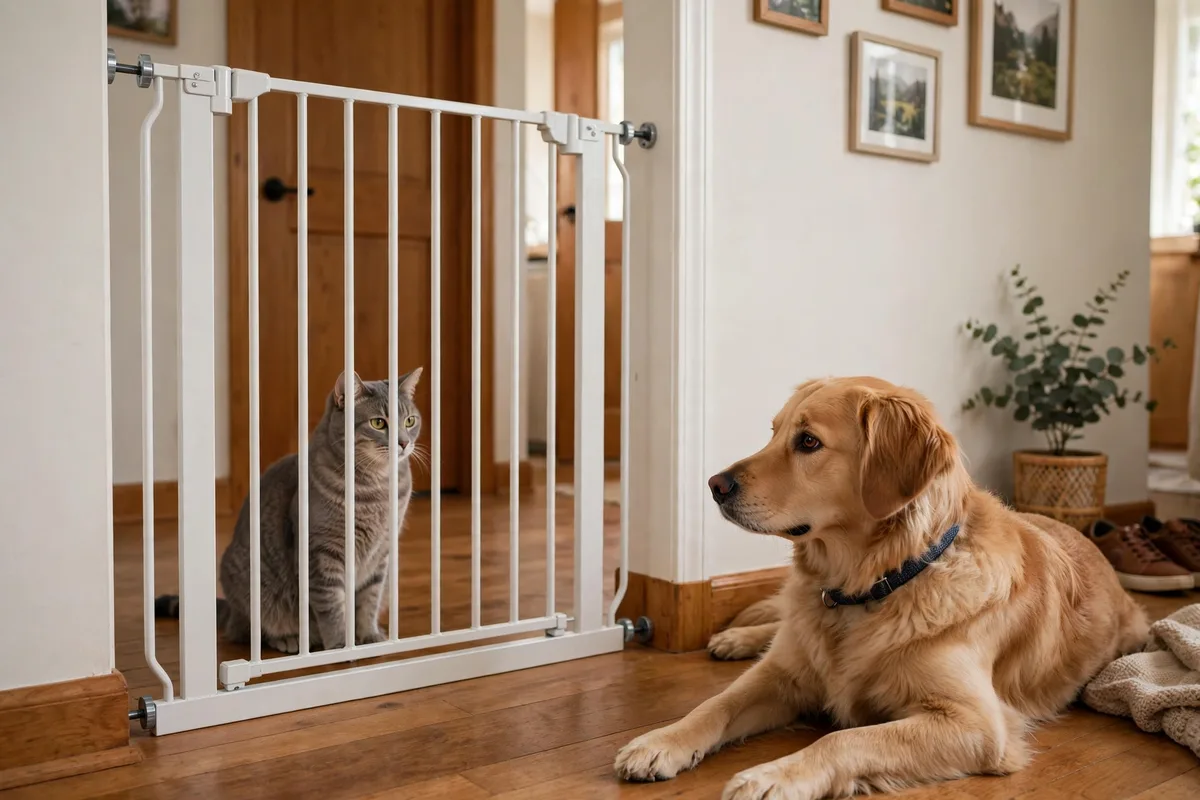
- Use a baby gate, a cracked door, or a screen. The pets can see and smell each other but can’t reach each other.
- Keep sessions short. Five to ten minutes, a few times a day. End on a calm note, before anyone gets tense.
- Pair it with good things. Treats, meals, or play during visual sessions teach both pets that the other’s presence predicts rewards.
- Watch the body language. Relaxed postures, curious approaches, and looking away calmly are green lights. Staring, freezing, stiff bodies, raised hackles, growling, or lunging mean the session ends — increase distance and try again tomorrow.
Step 4: Hold Short Supervised Meetings
When barrier sessions are consistently calm, try brief face-to-face meetings:
- Keep them short — two to five minutes. Better to end early with everyone relaxed than to push for ten minutes and get a fight.
- Have a handler per pet. Each person manages one animal with a leash or carrier nearby, treats ready, and an exit plan.
- Stay boring. Calm voices, no excited energy, treats for calm behavior. You’re teaching both pets that the other one is the most boring, treat-dispensing thing in the world.
- Separate around resources. Don’t let the first meetings happen near food bowls, favorite beds, or high-value toys. Neutral space, no competition.
After each session, return everyone to their separate spaces. The pets should still be living apart between sessions at this stage.
Step 5: Build Shared Positive Experiences
Gradually lengthen the together-time, always supervised:
- Parallel activities. Walk two dogs together (with a handler each), play with two cats in the same room with separate toys. Doing enjoyable things side by side builds a shared history of good moments.
- Feed at a distance in the same room. Start far apart, and over days, inch the bowls closer — only as long as both pets stay relaxed.
- Increase duration slowly. Add a few minutes per session. If tension appears, drop back to the last duration that worked.
Step 6: Supervise the Merge, Then Trust Gradually
When pets are consistently relaxed together for extended supervised periods — eating near each other, resting in the same room, ignoring each other peacefully — you can start leaving them together for short unsupervised stretches. Keep separate feeding stations and separate resting spots permanently; many conflicts that appear “out of nowhere” in month two are resource disputes, not personality clashes.
Keep the escape routes and safe spaces available indefinitely. Even bonded pairs have off days, and a pet that can walk away from tension never has to escalate.
Variations by Pairing
Dog and dog
Meet on neutral territory first — a quiet street or a friend’s yard — before anyone enters the house. Two handlers, loose leashes, and a parallel walk work better than a face-to-face greeting. Let the resident dog enter the house first when you arrive home, then bring the new dog in. Keep the “honeymoon” in mind: many new dogs are on their best behavior for the first two to three weeks, and their real personality — including any resource guarding — emerges later. Maintain separate feeding and separate spaces through that whole period.
Cat and cat
Cats are the slowest to introduce and the most punished by rushing. The scent phase may need one to two weeks, not days. The litter box rule matters: one box per cat plus one extra, spread around the house, so no cat can block another’s access. Vertical space — cat trees, shelves, clear tops of bookcases — gives cats a way to share a room without sharing the floor. If you’re also settling a cat into a new home generally, our guide to introducing a new cat to a home covers the solo adjustment side.
Dog and cat
The cat needs a dog-free sanctuary room and escape routes the dog can’t follow — baby gates with a cat-sized gap, or furniture the cat can get under. Keep the dog leashed or controlled around the cat for the first weeks, and never allow chasing, even “playful” chasing: to the cat it’s a predator, full stop. Reward the dog heavily for ignoring the cat. Many dog-cat pairs become genuine friends, but it happens on the cat’s timeline, which is measured in weeks.
Troubleshooting Setbacks
| Problem | What to try |
|---|---|
| Growling or hissing at the barrier | Go back to scent-only for several days; increase distance; make sure neither pet is cornered |
| One pet stops eating or hides constantly | That’s significant stress — return to full separation and restart the scent phase; consult your vet if it lasts more than a couple of days |
| Fighting during supervised meetings | Separate immediately and calmly; never reach between fighting animals with your hands; drop back two phases and progress more slowly |
| Resident pet guards food, beds, or you | Feed separately permanently if needed; give the resident pet dedicated one-on-one time; remove guardable items from shared spaces |
| Chasing (dog after cat) | Back to full separation; work on the dog’s impulse control separately; never allow unsupervised access until chasing is reliably interrupted by voice |
| Things were fine, then a fight in week three | The honeymoon ended — return to supervised-only time and separate resources; this is normal and fixable |
A genuine plateau — no progress for three to four weeks despite consistent work — is worth a professional opinion. A certified animal behaviorist or your vet can spot what’s stuck. That’s not failure; it’s using the right tool.
Frequently Asked Questions
How long does introducing pets usually take?
Anywhere from two weeks to three months, depending on the species, ages, and personalities. Cats typically take longer than dogs. Plan for the long end and be pleasantly surprised, not the reverse.
Should we get a second pet to keep the first one company?
Only if you want a second pet for its own sake. A second animal is not a cure for a bored or lonely pet — it often just doubles the management work. Solve the first pet’s needs (exercise, enrichment, training) first; our guide to enriching an indoor cat’s environment is a good starting point for cats.
What if they never become friends?
Peaceful coexistence is a complete success. Many pets live happily in the same house for years without cuddling — they just need their own spaces, separate resources, and humans who don’t force the issue.
Slow Is Fast
Every day you spend on scent swaps and barrier sessions is a week of conflict you don’t have to fix later. The pets don’t know your timeline; they only know whether they feel safe. Give them the slow introduction, follow the pace of the most worried animal in the room, and you’ll get the outcome every multi-pet household wants: two animals who chose, in their own time, to share a home.