
Dogs handle heat badly. They wear a fur coat year-round and can barely sweat — panting is their main cooling system, and it fails fast in high heat and humidity. Every summer, dogs end up in emergency vet clinics with heatstroke, and most of those cases were preventable with planning, not luck. This guide covers how to keep your dog genuinely cool through hot weather: daily habits, exercise timing, cooling gear that actually works, and how to recognize when heat is becoming dangerous.
How Dogs Overheat (and Why It’s Fast)
Understanding the mechanism makes every tip below make sense:
- Panting is the radiator. Dogs evaporate moisture from their tongues and airways. In humid air, evaporation slows — so humid heat is more dangerous than dry heat at the same temperature.
- Fur insulates both ways. A coat traps body heat in summer, which is why double-coated breeds suffer most. Shaving a double coat usually makes things worse, not better — it removes insulation against heat too.
- Some dogs are at much higher risk. Flat-faced (brachycephalic) breeds like bulldogs, pugs, and boxers; puppies and seniors; overweight dogs; and dogs with heart or respiratory conditions overheat faster and need stricter precautions.
- Heatstroke escalates quickly. A dog’s normal temperature is around 101–102.5°F. Once it climbs past about 104°F, organs start taking damage — and the jump from “panting hard” to emergency can happen in minutes, not hours.
Step 1: Rethink Exercise Timing
Exercise is the biggest heat risk most owners control:
- Walk early morning or late evening. Before 10 AM and after 6 PM are the usual safe windows; on extreme-heat days, skip the walk entirely.
- Shorten and slow down. Cut duration and intensity on hot days. A 20-minute sniff walk beats a 45-minute jog when it’s 90°F.
- Test the pavement. Press the back of your hand on the asphalt for seven seconds. If it’s too hot for you, it’s too hot for paw pads — stick to grass or shaded paths.
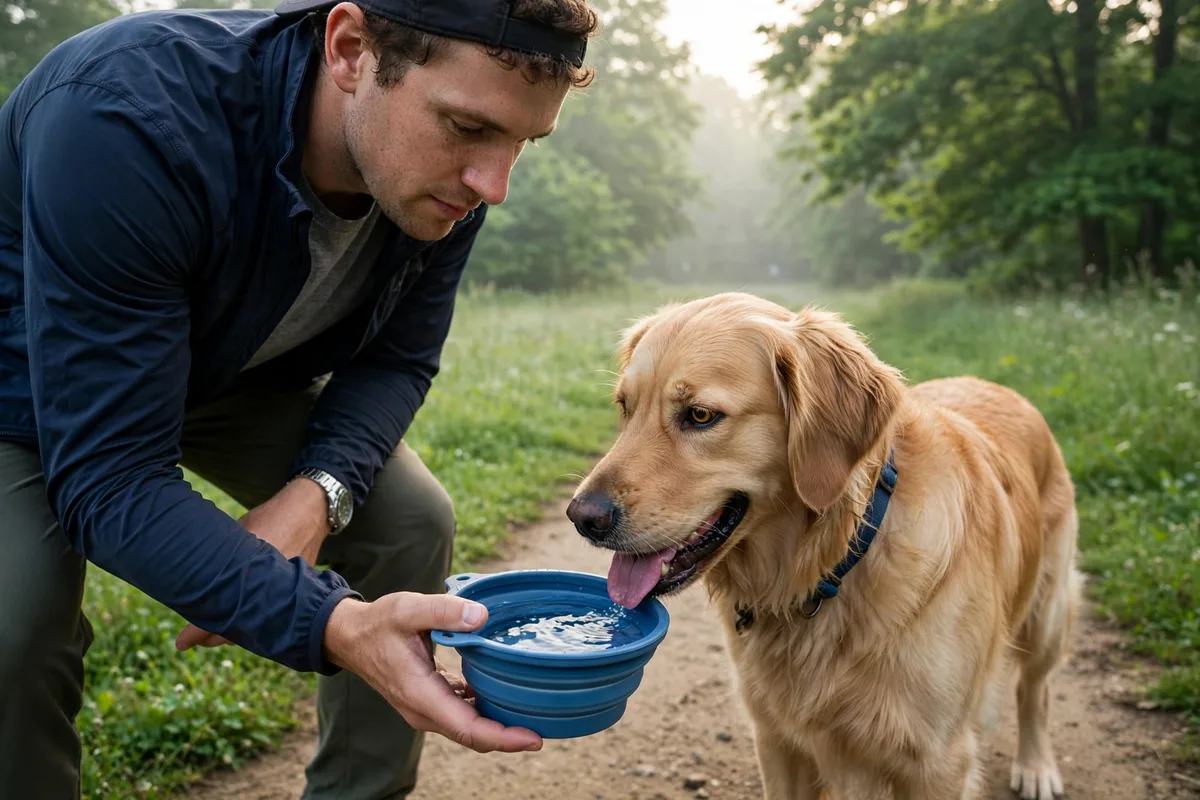
- Bring water on every walk. A collapsible bowl and a water bottle are non-negotiable summer gear.
- Watch the panting. Heavy panting with a wide, flat tongue and pulled-back lips means slow down now. Dogs often don’t self-regulate — an excited dog will run itself into heatstroke.
On days you skip outdoor exercise, swap in mental work: puzzle feeders, snuffle mats, and short indoor training sessions. A tired brain substitutes well for tired legs — and our guide to creating a daily dog walking routine can help you rebuild the rhythm when the heat breaks.
Step 2: Set Up Cool Zones at Home
Your dog needs somewhere to dump heat all day, not just after walks:
- Find the coolest room — usually a tiled bathroom, basement, or any room on the north side — and make it the dog’s daytime base.
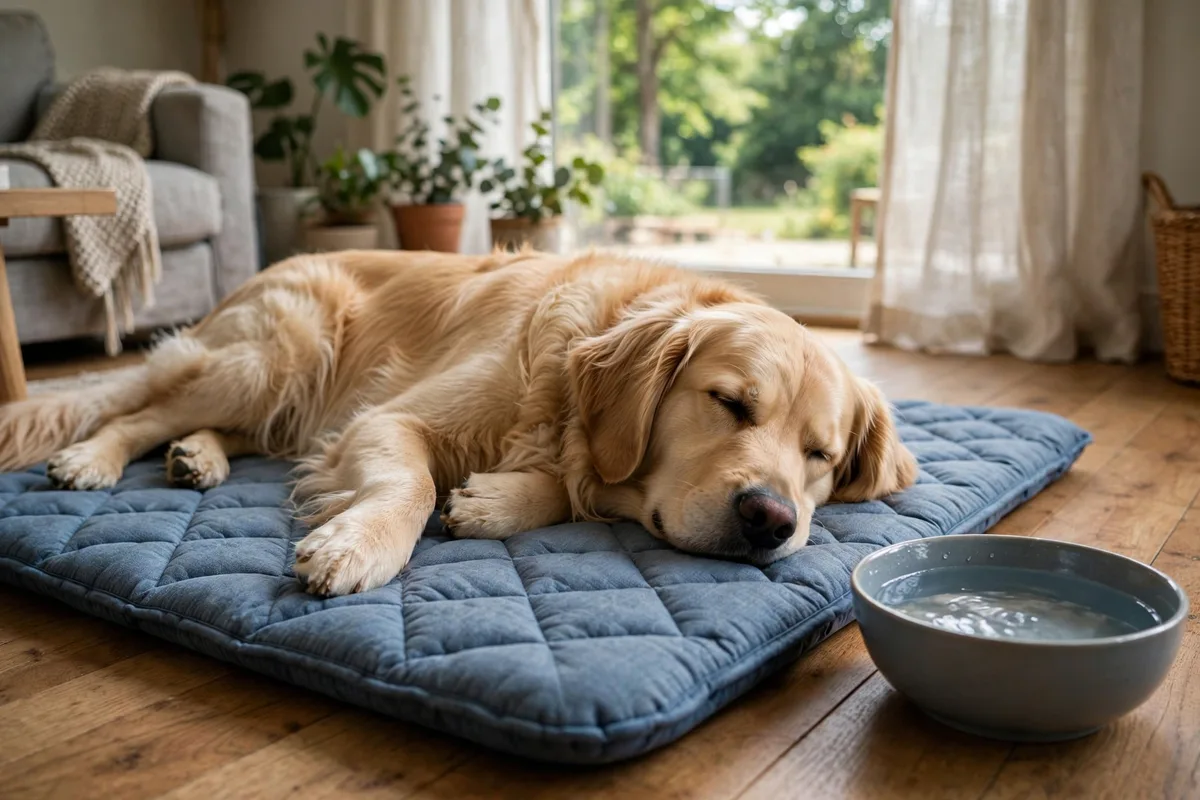
- Offer a cooling mat or a damp towel to lie on. Cooling mats work through pressure-activated gel; damp towels work through evaporation. Both need to stay damp or recharged to keep working.
- Run a fan or air conditioning, but let the dog choose. Some dogs love a fan; others move away from the draft. Provide the option, not the requirement.
- Keep water bowls full, fresh, and cool. Add ice cubes on the hottest days, and place a second bowl in the dog’s cool zone so water is always within reach.
- Close curtains on sun-facing windows during peak heat. A surprising amount of indoor heat comes through glass.
Never rely on a doghouse outdoors in summer — an unventilated doghouse traps heat like an oven.
Step 3: Use Cooling Gear and Water Wisely
A few tools genuinely help; a few are gimmicks:
- Cooling vests and bandanas work through evaporation — soak them, wring lightly, and put them on. They need re-wetting every hour or so in real heat.
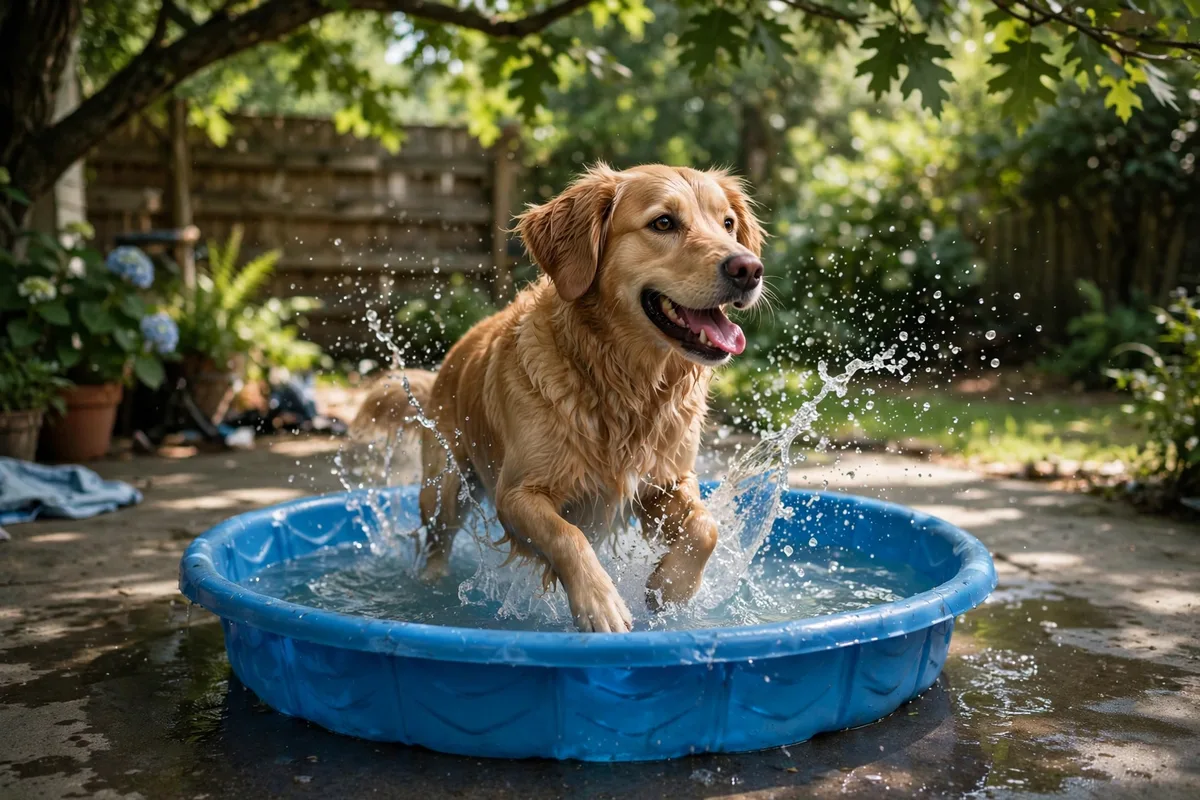
- A kiddie pool or sprinkler in the shade is excellent for water-loving dogs. Keep the water shallow and always supervise.
- Frozen treats — a Kong stuffed with peanut butter (xylitol-free) and frozen, or ice cubes with a blueberry inside — cool from the inside and keep a resting dog occupied. Offer them when the dog is calm and already relatively cool, not as emergency cooling.
- Mist paws and belly with a spray bottle on walks. Paws and the groin area shed heat fastest.
- Skip: ice-cold water baths as “shock” cooling (cool — not ice — water is the safe move), and any product that claims to replace shade, water, and rest.
Feed during cooler parts of the day — appetite often drops in heat, which is normal. Keep meals on their normal feeding schedule but don’t worry if portions go unfinished on the hottest afternoons.
Step 4: Never Leave a Dog in a Hot Car
This deserves its own step because it kills dogs every single year:
- A parked car becomes lethal in minutes, even with windows cracked and even in the shade. Interior temperatures can climb 20–30°F above the outside air in under half an hour.
- “Just a minute” is the trap. Errands run long. If the dog can’t come inside with you, leave the dog home.
- If you see a dog in distress in a hot car, note the car’s details and call local animal control or 911. Many US states have Good Samaritan laws protecting people who break a window to rescue an animal — know your state’s law before summer.
Step 5: Know the Warning Signs of Heatstroke
Learn these before you need them:
Early signs — act now:
– Excessive, continuous panting and drooling
– Bright red tongue and gums
– Thick, sticky saliva
– Restlessness or unwillingness to keep walking
Emergency signs — vet immediately:
– Dark red or pale/blue gums
– Vomiting or diarrhea
– Stumbling, dizziness, or confusion
– Collapse or seizures
If you suspect heatstroke: move the dog to shade or air conditioning immediately, offer small amounts of cool (not ice-cold) water, wet the body with cool water — especially the belly, neck, and paws — and get to a vet as fast as possible, even if the dog seems to recover. Organ damage can continue after cooling. Don’t wait to “see how it goes” with emergency signs.
Cooling Variations by Dog Type
Flat-faced breeds (bulldogs, pugs, boxers, shih tzus)
Highest risk group. Walk only in cool hours, keep exercise minimal in summer, maintain a healthy weight (extra weight makes breathing harder), and have an emergency vet plan ready before heat season.
Double-coated breeds (huskies, malamutes, chow chows, golden retrievers)
Brush out the undercoat regularly — a blown coat vents heat far better than a matted one. Never shave to the skin; the coat insulates against heat too. These dogs benefit most from cooling mats and AC.
Puppies and senior dogs
Both regulate temperature poorly. Puppies overheat during play because they don’t stop; enforce rest breaks. Seniors may need shorter outings, softer walking surfaces, and more frequent water.
Short-coated and dark-coated dogs
Less insulation means sun heats them faster. Light-colored cooling vests help, and shade breaks matter more. Dark coats absorb significantly more solar heat.
Troubleshooting Hot-Weather Problems
| Problem | Likely cause | Fix |
|---|---|---|
| Dog pants all evening after a walk | Walk was too hot or too long | Move walks earlier, shorten them, add rest breaks |
| Won’t drink water | Water too warm or bowl in the sun | Fresh cool water, ice cubes, bowl in the shade |
| Digging in the yard | Trying to reach cool soil | Provide a shaded digging spot or a cooling mat indoors |
| Refuses food on hot days | Normal appetite dip | Feed at cooler times; worry only if it lasts days |
| Restless at night | Room too warm | Fan or AC in the sleeping area, cooling mat in the bed |
| Burned paw pads | Hot pavement | Grass routes only; walk early/late; consider booties |
If hot weather coincides with travel plans, line up care in advance — our guide to preparing a pet sitter guide includes a heat-safety section worth handing over.
Frequently Asked Questions
What temperature is too hot for dogs?
As a rough guide, use extra caution above 85°F (29°C) and treat 90°F+ (32°C) as dangerous, especially for exercise. But humidity, sun, breed, and fitness matter as much as the number — 80°F and humid can be worse than 90°F and dry for a bulldog.
Should I shave my dog for summer?
For most breeds, no. A well-brushed coat insulates against heat; shaving removes that protection and risks sunburn. The exception is severely matted dogs, where a professional groomer may need to clip — that’s a matting fix, not a cooling strategy.
Are cooling mats safe to leave with my dog unsupervised?
Generally yes — most are non-toxic gel mats. Check the product’s safety info, inspect for chew damage (replace if punctured), and introduce it supervised first so you know your dog uses it as a bed, not a chew toy.
Can dogs get sunburned?
Yes, especially light-colored, short-coated, and shaved dogs — ears, nose, and belly are most vulnerable. Pet-safe sunscreen exists for high-risk dogs; ask your vet for a recommendation.
How long can my dog stay outside in the heat?
On genuinely hot days (90°F+), limit continuous outdoor time to short bathroom breaks — 10 to 20 minutes — with shade and water always available. Dogs should never be left outside for hours in extreme heat.
Plan for Heat Like You Plan for Cold
Nobody questions winter prep — coats, paw balm, shorter walks. Summer deserves the same respect: timed exercise, cool zones, constant water, and knowing the warning signs cold. Build the routine before the first heat wave, and hot weather becomes a season you manage instead of an emergency you react to.