

If you have spent any time in queer dating spaces, you have probably seen profiles that list a single word — top, bottom, or vers — and wondered what exactly that signals. The “am I top or bottom” quiz is a self-reflection tool designed to help you explore your own preferences around sexual roles, particularly in penetrative sex. The short answer up front: these quizzes don’t decide who you are. They walk you through questions about what appeals to you, what doesn’t, and where you are still figuring things out, then suggest a label that might fit — or tell you that none of them quite does.
What This Quiz Claims to Measure
Most top or bottom quizzes say they measure your preferred sexual role: whether you tend to prefer the penetrating role (top), the receptive role (bottom), both (vers), or something outside that framework entirely. Questions typically ask about your interests and comfort levels rather than your experience, which means they work even if you have never been sexually active. Typical quiz questions explore which acts you find appealing, whether you like initiating or being led, how you feel about control and surrender, and whether you prefer sex that doesn’t involve penetration at all.
The best versions are built on an honest premise: preference-reflection tools, not medical or psychological diagnostics. A result is a starting point for your own thinking and for conversations with a partner — not a verdict about your identity.
What “Top,” “Bottom,” “Vers,” and “Side” Actually Mean
Before taking the quiz, it helps to know the vocabulary. These terms are most common in gay and bisexual male communities, but they apply to anyone’s preferences around penetrative sex.
Top describes someone who prefers the penetrating role — being the partner whose body part or sex toy enters the other person’s body. Tops often enjoy directing the pace and intensity of a sexual encounter, though being a top says nothing about being dominant in any other area of life.
Bottom describes someone who prefers the receptive role — receiving penetration. Many people describe the appeal as pleasurable surrender: letting go of control and receiving sensation. Plenty of bottoms are assertive, take-charge people outside the bedroom.
Vers (versatile) describes someone who enjoys or is interested in both roles, either switching within a single encounter or preferring different roles with different partners or at different times.
Side is a term used in gay male communities for someone who prefers sex without anal penetration — for example, mutual masturbation, oral sex, kissing, frottage, and other non-penetrative intimacy. It is a legitimate preference, not an “unsure” answer.
Important nuance: dominance and submission are separate from top and bottom. A bottom can absolutely take charge — giving directions, setting the pace, choosing positions — and a top can prefer to follow a partner’s lead. Appearance, clothing, body type, and personality don’t reveal someone’s preferred role, either.
Sample Questions: What a Typical Quiz Asks
Here are eight original sample questions in the style of these quizzes. For each, imagine picking A, B, C, or D honestly.
1. When you picture yourself in a sexual situation, which thought is most appealing?
A. Taking the lead and being the one doing the penetrating
B. Relaxing into the experience as the receptive partner
C. Both appeal to me, depending on the mood
D. I’d rather not involve penetration at all
2. Which statement about control during sex resonates most?
A. I like being in control of what’s happening
B. I like handing control to my partner
C. I enjoy both, taking turns
D. Control isn’t the point for me — connection is
3. How do you feel about initiating sex?
A. I love making the first move
B. I prefer my partner to initiate
C. I’m comfortable with either
D. Initiating makes me nervous regardless of the role
4. When you watch or read about sex, you mostly imagine yourself as:
A. The active, giving partner
B. The receptive, receiving partner
C. Either one
D. The details of penetration don’t interest me much
5. A partner asks you to switch roles from what you usually do. You feel:
A. Excited — variety sounds good
B. Hesitant, but open to trying
C. Uninterested in switching from my usual role
D. Relieved, because my usual role never quite felt right
6. Which appeals to you more in a long-term relationship?
A. Being the consistent penetrating partner
B. Being the consistent receptive partner
C. Trading roles freely
D. Building a sex life centered on non-penetrative intimacy
7. How important is physical sensation “being inside” versus “being filled” to you?
A. The sensation of penetrating is what I want most
B. The sensation of receiving is what I want most
C. Both feel important
D. Neither matters much — other things drive my pleasure
8. If a friend asked you to describe your sexual role in one word right now, you’d say:
A. Definitely top
B. Definitely bottom
C. Honestly not sure yet
D. I don’t think one word fits me
How the Scoring Works
Most quizzes use a simple tally system. Each answer maps to a role category: A answers lean top, B answers lean bottom, C answers lean versatile, and D answers lean side or undecided. After you answer all the questions, the quiz counts which letter you picked most often.
- Mostly A’s → Top
- Mostly B’s → Bottom
- Mostly C’s → Versatile
- Mostly D’s → Side or exploring non-penetrative preferences
- A mix with no clear winner → Unsure / still figuring it out
More detailed quizzes weight some questions more heavily — for instance, the question about which sensation you actually want can count double, since it gets closest to the core of the label. A tie between two categories usually produces a “vers top” or “vers bottom” result rather than forcing you into one box.
What Your Result Means
Top. Your answers suggest you prefer the penetrating role. In practice, this can mean you enjoy taking the lead physically, but remember that the label says nothing about your personality, your gender expression, or whether you like to be dominant in other ways.
Bottom. Your answers suggest you prefer the receptive role. This is an active preference — choosing how you receive pleasure — not a passive one. Many people find their preferences here change over time.
Versatile. You showed interest in both roles. Vers people often switch depending on the partner, the mood, or the relationship stage. Versatility is very common and is considered the most flexible label.
Side. You lean toward sex without penetration. This can be a complete, satisfying sexual identity on its own, and many people find it frees them from pressure to perform roles that never fit.
Unsure. Your answers were mixed or you picked a lot of “not sure yet” options. This is a perfectly valid outcome. It may mean you need experience, reflection, or simply more time — there is no deadline for having this figured out.
Honest Limitations You Should Know
Online top-or-bottom quizzes are entertainment and self-reflection tools. They are not clinical or medical assessments, and no quiz can diagnose anything about you or predict your sexual identity. A few specific cautions are worth stating plainly.
First, preferences change. What sounds appealing at 20 may look different at 30. Quizzes capture a snapshot of how you feel right now, and a result that fits today may stop fitting later — that’s normal, not a sign something is wrong.
Second, these quizzes can’t tell you what your partner wants or what’s “correct.” Compatibility comes from honest conversation, not matching quiz labels. Two tops can still have a great sex life, and labels are starting points, not contracts.
Third, these quizzes are for adults. If you are under 18, this kind of content isn’t designed for you, and no quiz should pressure you to figure out sexual labels before you’re ready.
Finally, the label doesn’t define your worth or masculinity. Being a bottom doesn’t make anyone less masculine, being a top doesn’t make anyone more dominant, and choosing the side label doesn’t mean you’re broken or missing out. They’re just words people use to communicate what they like.
How to Use Your Result Well
If your result feels right, use it as language for honest conversations — especially with partners, where naming preferences early prevents misunderstandings. If it feels wrong, throw it out; your own sense of what appeals to you outweighs any quiz.
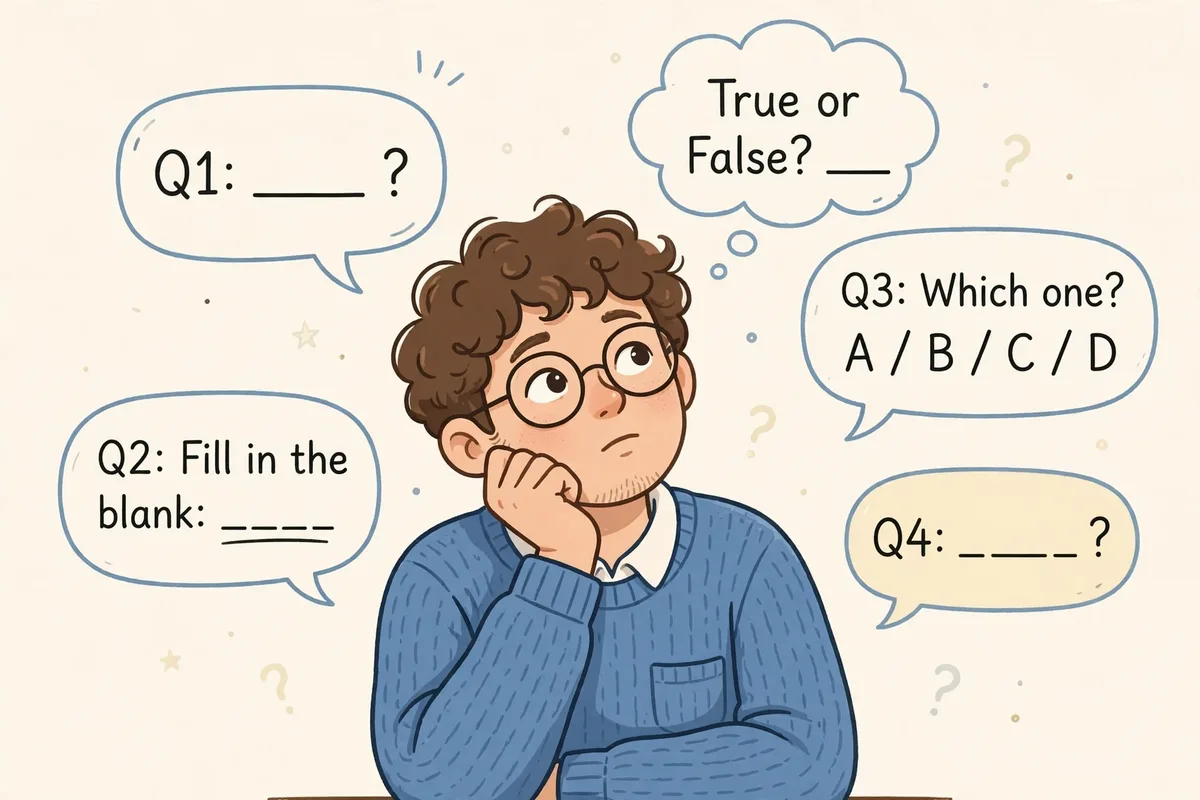
Consider journaling your answers rather than retaking quizzes endlessly — the insight is in the questions, not the score. If exploring these questions brings up heavy anxiety, an LGBTQ-affirming therapist is far more useful than any online quiz.
For more self-reflection tools, check out our guides to the freaky test, the sexuality test, the Kinsey scale test, and the rizz test.
FAQ
Is the top or bottom quiz accurate?
It can be a useful reflection tool, but “accuracy” is the wrong frame — there is no objectively correct answer for a quiz to find. Treat the result as a suggestion to consider, not a verdict.
Can I be both a top and a bottom?
Yes. The vers (versatile) label exists precisely for people who enjoy both roles. Many people also shift between roles across their lives.
Do I need sexual experience to take the quiz?
No. The better quizzes ask about interests and fantasies, not history. It’s fine to answer based on what appeals to you in theory.
Is being a side the same as being unsure?
No. Side is a distinct preference for sex without penetration. Unsure means you haven’t settled on a preference yet. They’re different, and good quizzes keep them separate.
Can my result change over time?
Absolutely. Preferences evolve with experience, relationships, and age. Retaking the quiz later and getting a different result is completely normal.