
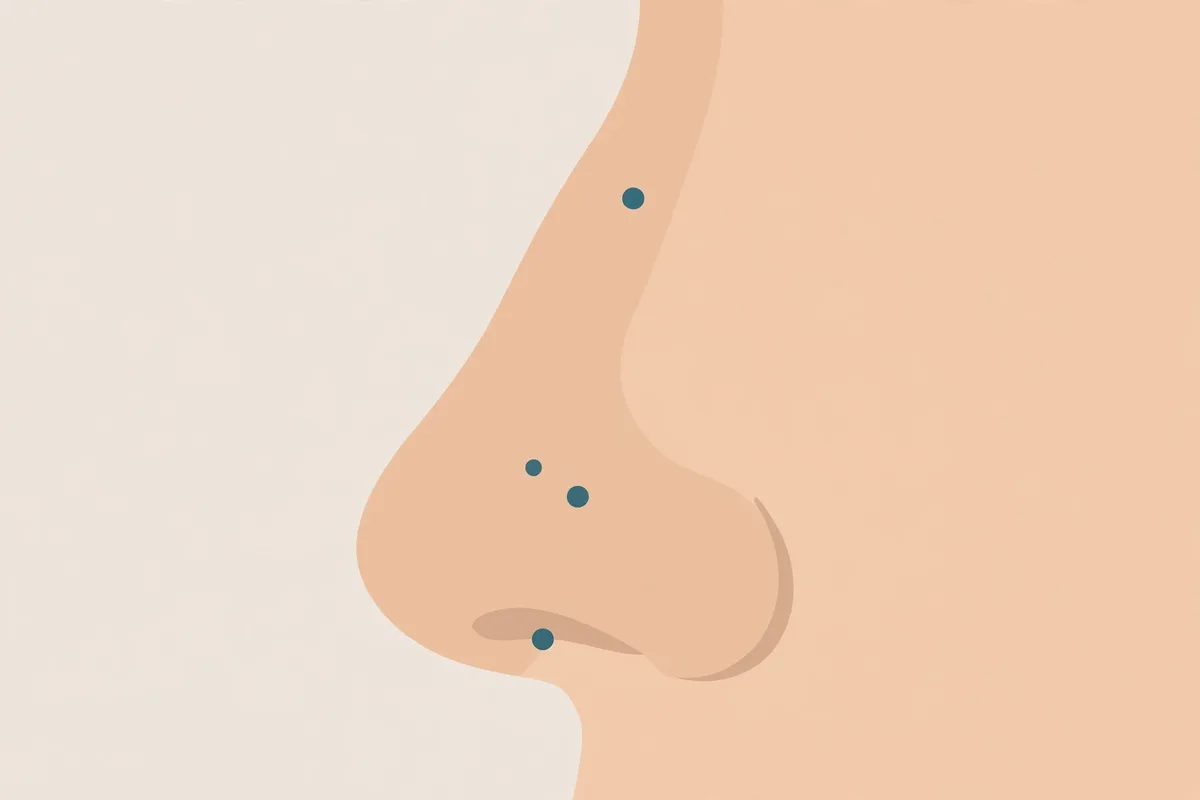
The short answer: a classic nostril stud flatters nearly every nose, but the placement and jewelry style should be matched to your nose shape. A wide nose benefits from a higher, more forward placement; a long nose looks balanced with a hoop or a stud worn closer to the tip; and a small or delicate nose shines with dainty, minimal jewelry rather than statement pieces. Getting this right is the difference between a piercing that looks like it was always meant to be there and one that fights your features.
How to Identify Your Nose Shape
Before you pick a piercing, figure out which category your nose falls into. Stand in front of a mirror in profile and straight-on, and look for the most dominant trait — most people have one primary shape with a hint of another.
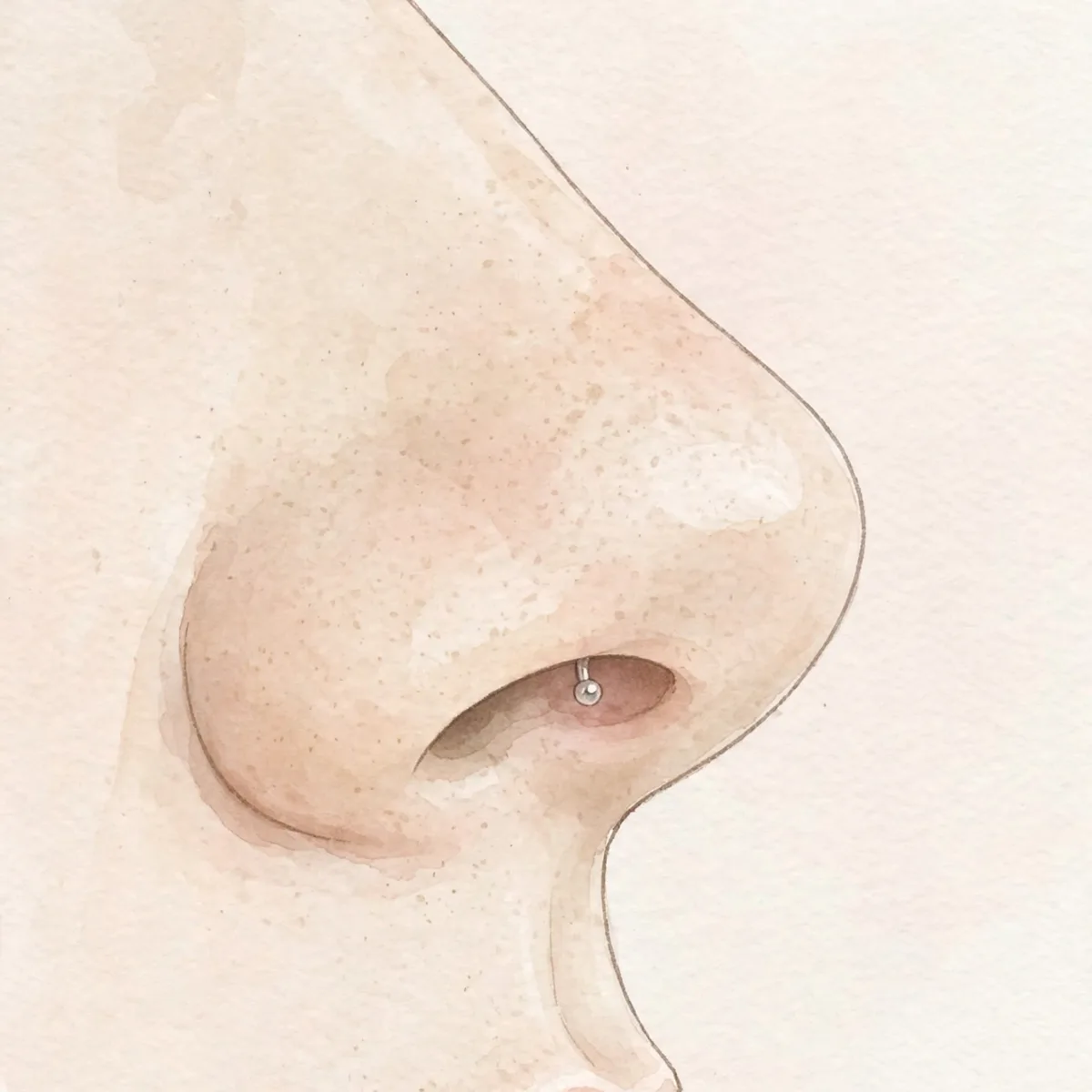
Upturned nose. The tip tilts upward, exposing the nostrils a bit more from the front. Shorter in appearance, often called a “button” nose when small.
Wide nose. Broader across the nostrils and bridge, with a wider base. Common and striking, with plenty of surface area for placement options.
Long nose. A longer bridge with more distance from the base to the tip. The goal is usually to visually break up that length.
Small or petite nose. A shorter, more delicate nose overall. Jewelry scale matters most here.
Crooked or asymmetrical nose. The bridge or tip leans slightly to one side, or one nostril sits a little higher. More common than people realize.
Bulbous or rounded tip. The tip is fuller and rounder, drawing the eye to the center of the nose.
Roman or hooked nose. A prominent bridge with a slight downward curve at the tip. Strong and distinctive.
You don’t need a precise label — just note your most noticeable feature, because that’s what placement works around.
The Main Nostril Piercing Placements
Knowing where a piercing can sit is half the decision. These are the standard placements a professional piercer works with.
Standard nostril piercing. Placed on the curve of the nostril, roughly where the nostril meets the cheek crease. This is the most common placement and suits almost everyone. It heals relatively quickly and accepts both studs and hoops once healed.
High nostril piercing. Sits higher up on the bridge of the nose, above the standard spot. It draws the eye upward and adds an edgy, modern feel. Better on noses with enough surface area — very petite noses can look crowded.
Forward nostril piercing. Placed closer to the front of the nostril, near the tip. Less common, and it emphasizes the tip of the nose — great for drawing attention forward, tricky on very long noses.
Double nostril piercing. Two piercings on one or both sides — a stud plus a hoop, or two studs. Adds symmetry and interest, and works well on wider noses that have room to spare.
Septum piercing. Through the thin tissue between the nostrils. Technically a different piercing, but it’s worth mentioning because a septum ring balances a long nose beautifully and is easy to flip up and hide while healing.
Best Piercings by Nose Shape
Here’s where shape-matching comes in. These are guidelines, not rules — personal style always gets the final vote.
For wide noses: A standard nostril stud in a medium size (not too dainty) looks proportional. Double nostril piercings — one on each side — create symmetry that flatters a wider base. High nostril placements also work well since there’s more surface to work with. Avoid very tiny studs that can look lost; choose something with a little presence, like a 2.5–3mm gem.
For long noses: Hoops are your best friend. A nostril hoop draws the eye sideways, visually shortening the nose. A forward-placed stud also breaks up length by adding a focal point near the tip. A septum ring can balance things beautifully. Avoid high nostril placements, which emphasize vertical length.
For upturned noses: The exposed nostrils make placement very visible, which is actually an advantage — almost any placement reads clearly. A standard nostril stud or a delicate hoop works well. A forward nostril can emphasize the perky tip in a charming way.
For small or petite noses: Scale down. A tiny stud (1.5–2mm gem or a small flat disc) in gold or silver looks intentional without overwhelming. A thin hoop can work too, but keep the diameter small. Avoid chunky statement jewelry — it will dominate a delicate nose.
For crooked or asymmetrical noses: Get pierced on the side that feels more balanced to you, or embrace the asymmetry with a piercing that follows your nose’s natural line. A good piercer will mark placement while you’re sitting upright and smiling, because expressions shift where jewelry lands. Hoops can visually exaggerate asymmetry, so studs are usually the safer first choice.
For bulbous or rounded tips: A standard nostril piercing on either side draws attention outward, away from the center, which many people find balancing. A septum ring also works by creating a horizontal focal point under the tip. Avoid forward nostril placements that spotlight the tip.
For Roman or hooked noses: You have a strong, distinctive profile — lean into it. A septum ring complements the bridge beautifully. A standard nostril stud on one side adds a classic accent. High nostrils can also look striking. Avoid overly delicate jewelry that gets visually drowned out.
Jewelry Types and How They Read
The same placement can look completely different depending on the jewelry.
L-bend and nose-bone studs. The classic starter jewelry. Low profile, office-friendly, and flattering on every shape. Best first choice while healing.
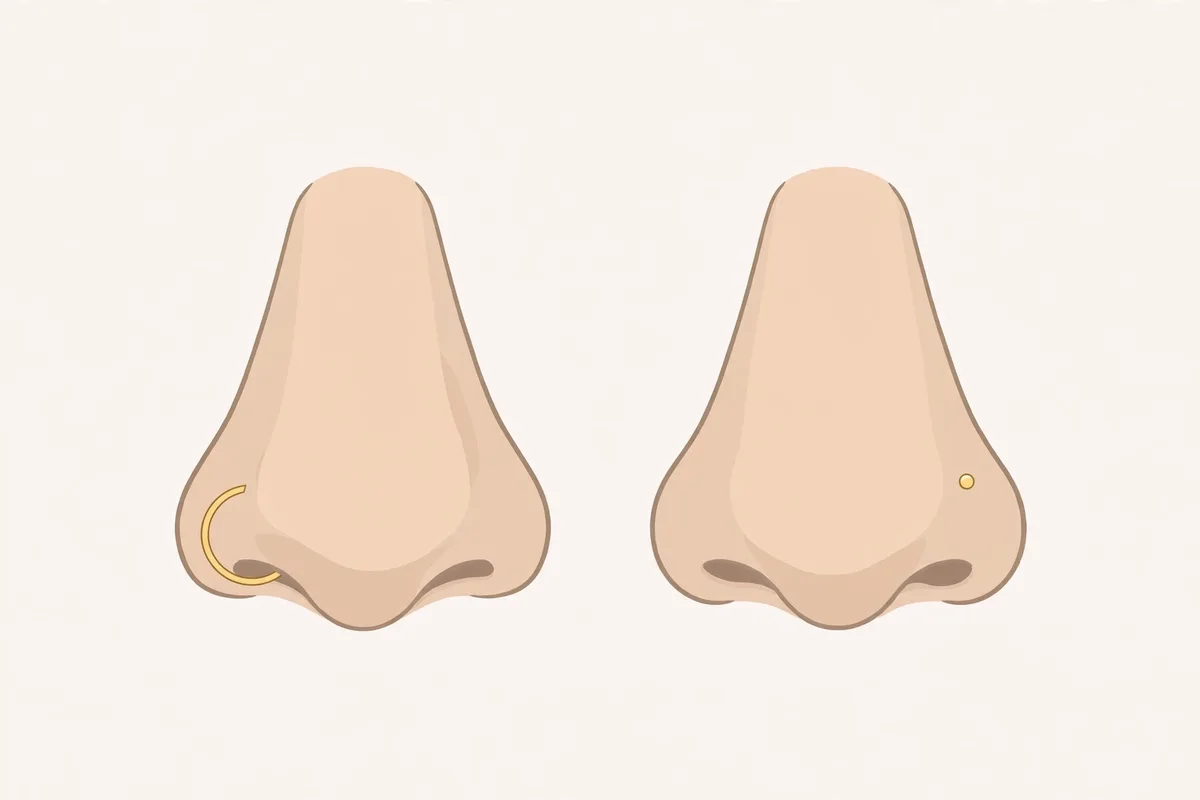
Hoops and seamless rings. More visible and expressive. They emphasize whatever line they follow — vertical hoops lengthen, wide hoops widen. Wait until healing is complete before switching to a hoop, since curved jewelry moves more in a fresh piercing.
Flat discs and tiny gems. Minimalist and modern. A small gold disc suits petite noses and professional settings. Gem studs add a bit of sparkle without size.
Septum clickers and horseshoes. From barely-there to bold. Septum jewelry is the easiest to hide — a horseshoe can be flipped up inside the nose during healing or for work.
What to Tell Your Piercer
Walk in with information and you’ll get better placement. Mention your nose shape as you see it, show reference photos of placements you like, and tell your piercer which side is your “photo side” if you have one — they’ll often pierce the side you prefer. Ask them to mark the placement and check it in the mirror before they pierce. Sit upright during marking; lying back changes how the face sits.
Also discuss jewelry: start with implant-grade titanium or 14k+ gold from a reputable studio. Cheaper mystery metals cause irritation that gets blamed on the placement.
Aftercare Basics
A nose piercing typically takes 2–4 months to heal on the outside, with full healing taking longer. Clean twice daily with sterile saline spray — no alcohol, no peroxide, no homemade salt soaks. Don’t twist or rotate the jewelry. Keep makeup, sunscreen, and skincare products off the fresh piercing. Expect some redness and tenderness the first week or two; that’s normal.
Common Mistakes to Avoid
Piercing with a hoop first. Hoops move more and irritate fresh piercings. Start with a stud, switch later.
Copying a placement from a photo without accounting for anatomy. A high nostril that looks perfect on a long bridge may not exist on a short one. Your piercer adapts placement to your anatomy — let them.
Choosing jewelry that’s too big or too small for the nose. Scale matters more than style. When in doubt, ask your piercer what’s proportional.
Piercing both sides at once as a first piercing. Healing two piercings doubles the aftercare load. Master one first unless you’re confident.
Skipping the downsizing appointment. Swelling goes down after the first week or two, and a too-long post starts snagging. Go back for a shorter post — it prevents irritation bumps.
Frequently Asked Questions
Which side should I pierce my nose on?
Traditionally the left is most common in Western culture and the right in some South Asian traditions, but there’s no rule. Pick the side you like looking at, or the side that photographs better for you. Some people match it to a part in their hair.
Does a nose piercing hurt?
It’s a quick pinch — most people rate it 3–4 out of 10, over in a second. The eyes watering is a reflex, not a sign something’s wrong.
Can I get a nose piercing if I have allergies or a cold?
Better to wait. A runny nose means constant tissue contact with a fresh piercing, which invites irritation and infection. Reschedule until you’re clear.
How do I know if my nose is too small for a piercing?
Almost no nose is truly too small for a standard nostril stud — piercers adjust gauge and jewelry size. Very petite noses just need smaller, well-placed jewelry. Ask for the piercer’s honest assessment.
Will a nose piercing leave a scar if I take it out?
Nostril piercings usually close to a tiny, barely visible dot. If the piercing was irritated or infected, scarring is more likely — another reason to follow aftercare properly.
Can I wear a hoop in a new nostril piercing?
Stud first, hoop later. Once fully healed (usually 4–6 months for a hoop-ready channel), your piercer can fit a hoop with the right diameter for your anatomy.
The right nose piercing for your nose shape is the one that feels like it belongs. Use these guidelines to narrow your options, then trust a reputable piercer to fine-tune placement to your actual anatomy. If you’re still weighing styles, our nose piercing types guide breaks down every placement in more detail, and if you’re considering a second facial piercing, the labret piercing guide covers what to expect below the nose.