
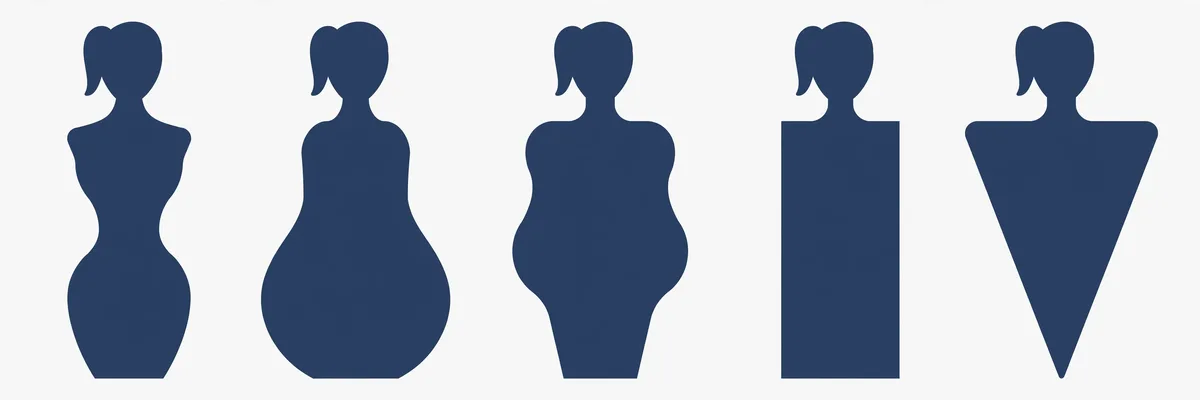
The short answer: your body shape is about proportion — the relationship between your shoulders, bust, waist, and hips — not your size or weight. The five main categories are hourglass, pear (triangle), apple (round), rectangle, and inverted triangle. Once you know which one describes your proportions, dressing becomes simpler: emphasize the features you like and create balance where you want it. These are guidelines for flattering your frame, not rules you have to follow.
How to Figure Out Your Body Shape
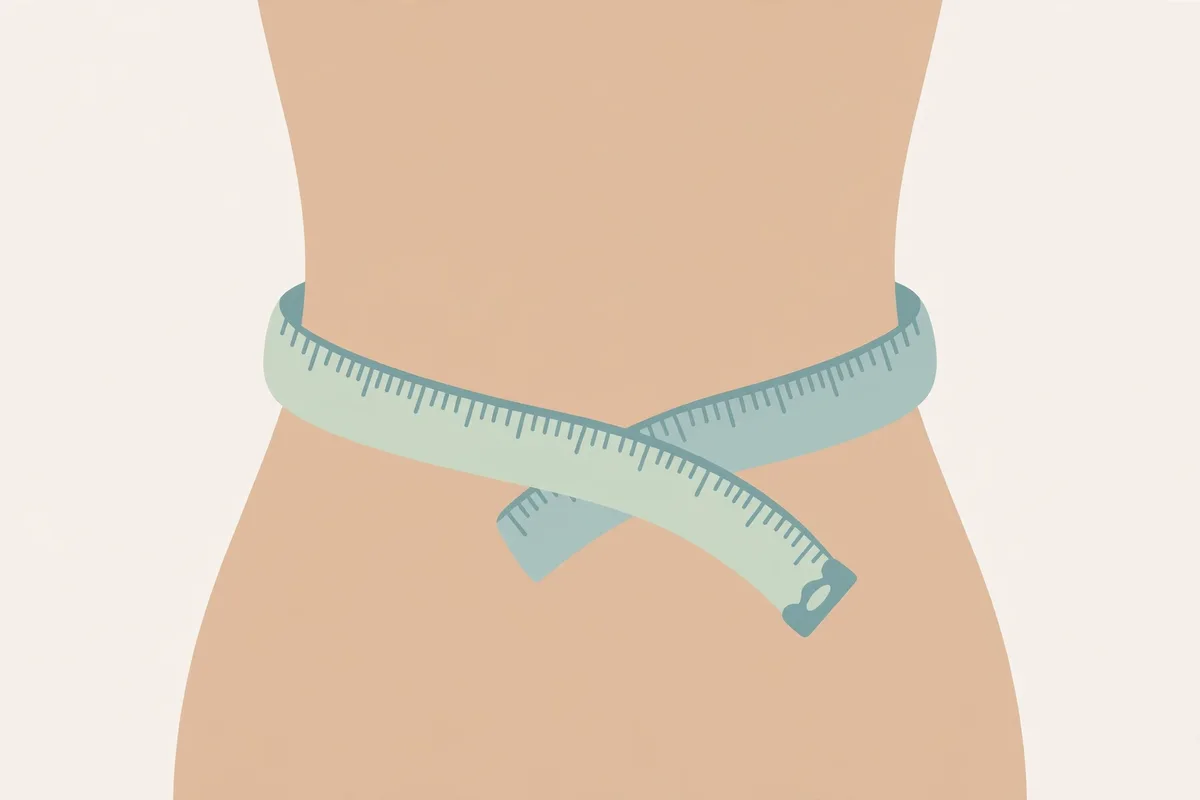
You need a soft tape measure and a mirror. Wear fitted clothing or undergarments, stand relaxed, and take four measurements.
Shoulders. Measure around the fullest part of your shoulders, tape over the shoulder blades.
Bust or chest. Measure around the fullest part, keeping the tape level.
Waist. Measure the narrowest point of your torso — usually an inch or two above the belly button. Don’t suck in.
Hips. Measure around the fullest part of your hips and rear.
Now compare:
- Hourglass: Bust and hips are similar in size, with a waist that’s noticeably smaller — roughly 8–10 inches less than bust and hips.
- Pear (triangle): Hips are the widest measurement, clearly wider than shoulders and bust.
- Apple (round): The waist is the widest point, or close to it, with less waist definition. Shoulders may be broader and legs often slimmer.
- Rectangle: Shoulders, bust, waist, and hips are all fairly close in size, with subtle waist definition.
- Inverted triangle: Shoulders (or bust) are the widest measurement, with narrower hips.
You don’t need to match a category perfectly. Most people are a blend — pick the closest fit and borrow tips from its neighbor. These formulas describe proportion, not size. Every shape exists at every size.
Hourglass: Balanced With a Defined Waist
What it looks like: Shoulders and hips are roughly equal, with a clearly defined waist. Curves are the defining feature.
The goal: Follow your natural lines rather than hiding them. Clothes that track the waist and skim the body look intentional.
What works: Wrap dresses and wrap tops that tie at the waist. Belted coats, jackets, and dresses. Fitted or tailored tops that don’t blouse out over the waist. High-waisted skirts, trousers, and jeans that sit at the natural waist. V-necks and scoop necks that flatter the bust without adding bulk. Pencil skirts that follow the hip line.
What to be careful with: Shapeless, boxy cuts that hide the waist — they can make an hourglass figure look larger than it is. Dropped waists and empire waists that skip over your best-defined feature. Very high necklines with lots of fabric can overwhelm the bust.
Fabrics: Medium-weight fabrics with some structure or stretch that follow curves. Avoid stiff fabrics that tent over the body and ultra-clingy fabrics that show every line unless that’s the look you want.
Pear (Triangle): Fuller Hips, Narrower Shoulders
What it looks like: Hips and thighs are the widest part of the body; shoulders and bust are narrower.
The goal: Draw the eye upward and balance the lower body. Add visual interest to the shoulders and keep the lower half streamlined.
What works: Boat necks, off-the-shoulder tops, and wide necklines that broaden the shoulder line. Statement sleeves — puff, bell, or ruffle — that add volume up top. Structured jackets with shoulder detail. A-line skirts and dresses that skim over the hips. Straight-leg, bootcut, or wide-leg trousers that balance the hip line. Darker, solid colors on the bottom half with brighter or patterned tops. Cropped jackets that end at the waist.
What to be careful with: Skinny jeans tucked into bulky boots that exaggerate the hip-to-ankle contrast. Tops that end right at the widest part of the hips. Heavy embellishment, cargo pockets, or loud patterns on the hips and thighs. Very short jackets that cut across the hip line.
The fit principle: Fit the larger measurement (the hips) and tailor the waist. This applies to trousers and skirts especially — buying to fit the hips and taking in the waist is almost always better than squeezing into something too small below.
Apple (Round): Fuller Midsection, Slimmer Legs
What it looks like: Weight carries around the midsection, with a less defined waist. Shoulders can be broad, and legs and arms are often comparatively slim.
The goal: Elongate the torso, create the impression of a waist, and show off the legs.
What works: Empire-waist tops and dresses that gather just under the bust and flow over the midsection. A-line dresses and tunics that skim rather than cling. V-necks and open necklines that lengthen the torso. Structured jackets worn open to create long vertical lines. Straight-leg or wide-leg trousers in a single dark color. Wrap-style tops that create diagonal lines across the torso. Shorter hemlines that show off the legs.
What to be careful with: Belts cinched at the natural waist over fitted tops — they emphasize the widest point. Clingy fabrics around the midsection. Tops that end at the waistband, creating a hard horizontal line. Very high-waisted bottoms that dig in.
A note on layering: Open cardigans, blazers, and long vests are an apple shape’s best friend. The vertical lines they create do more for the silhouette than any single garment.
Rectangle: Even Proportions, Subtle Waist
What it looks like: Shoulders, waist, and hips are similar in width — an athletic, straight-up-and-down silhouette.
The goal: Create the illusion of curves. Add definition at the waist and volume where you want it.
What works: Peplum tops that flare at the waist. Belts — worn at the waist over dresses, coats, and tunics. Wrap dresses that create diagonal lines and a faux waist. Ruffled or embellished tops that add dimension to the bust. Full skirts, A-line skirts, and wide-leg trousers that add volume below. Layered outfits that build shape. Sweetheart and scoop necklines that soften the upper body.
What to be careful with: Boxy, shapeless cuts that confirm the straight line instead of breaking it. Shift dresses with no waist shaping. Tops and bottoms in one unbroken column of the same color and fabric — fine as a look, but it won’t create curves.
The trick that always works: The “third piece” — a structured jacket, belted cardigan, or vest worn over a simple base. It adds structure and lets you define the waist exactly where you want it.
Inverted Triangle: Broader Shoulders, Narrower Hips
What it looks like: Shoulders or bust are the widest point; hips are narrower. Common in athletic builds and swimmers.
The goal: Soften the shoulder line and add volume below the waist for balance.
What works: V-necks, scoop necks, and U-necks that break up the shoulder line. Dark, solid colors on top with lighter or patterned bottoms. A-line skirts, pleated skirts, and wide-leg trousers that add volume to the lower half. Wrap dresses that add softness. Soft, draping fabrics up top rather than stiff structured ones. Longer necklaces that draw the eye down.
What to be careful with: Shoulder pads, puff sleeves, and boat necks that widen the shoulders further. Halter tops that emphasize the shoulder line. Skinny, tapered bottoms that exaggerate the narrow hips. Heavy statement necklaces that sit at the collarbone.
Color, Pattern, and Fabric — The Quiet Multipliers
Cuts do the heavy lifting, but color and pattern fine-tune the result.
Dark colors recede; light colors advance. Wear darker tones on areas you’d like to minimize and lighter or brighter tones where you want the eye to land.
Large patterns add volume; small patterns and solids streamline. A bold floral on top balances fuller hips; a solid dark bottom slims them.
Vertical lines elongate. Pinstripes, vertical seams, open jackets, long necklaces — all create length. Horizontal lines widen, which you can use deliberately (stripes across the shoulders for a pear shape, for instance).
The Universal Rules That Work for Every Shape
Fit beats everything. A well-fitting garment in the “wrong” category beats a poorly fitting one in the “right” category every time. Tailoring is the cheapest upgrade in fashion — hemming trousers, taking in a waist, or shortening sleeves transforms off-the-rack clothes.
Dress the body you have now. Buying aspirational sizes doesn’t motivate; it just means nothing fits. Clothes that fit today’s body always look better.
One focal point per outfit. If the top is embellished, keep the bottom simple, and vice versa. Competing focal points create visual noise.
Confidence is the actual finish. People rate outfits higher when the wearer looks comfortable. If you love something the “rules” say to skip, wear it anyway — these are guidelines, not laws.
Frequently Asked Questions
Can my body shape change?
Yes. Weight changes, muscle gain, pregnancy, and aging all shift proportions. Re-measure every year or two, or whenever your clothes start fitting differently.
What if I’m between two shapes?
Take tips from both. A “pear-hourglass” can wear fitted waists from the hourglass playbook and shoulder-broadening tops from the pear one. Blends are normal.
Do these rules apply to men too?
The same proportion principles apply — balance shoulders against hips, define the waist where it exists, use vertical lines to elongate. The specific garments differ, but the geometry doesn’t.
Are body shape categories outdated or body-shaming?
They’re descriptive tools, not value judgments. Every shape has flattering options and none is better than another. The point is making informed choices, not ranking bodies.
I hate belts. Do I have to wear one?
No. Waist definition can come from wrap silhouettes, seaming, peplum shapes, tucked-in tops, or color blocking. Belts are a tool, not a requirement.
Knowing your body shape won’t change your body — but it changes how you shop, which means fewer fitting-room disappointments and a closet where everything actually works together. For related style guidance, see our colors that go with brown guide for building outfits around a versatile neutral, and our head shapes guide if you’re balancing accessories like hats and glasses with your proportions.


Pingback: Colors That Go With Brown: The Complete Pairing Guide
Pingback: Cowboy Hat Size Chart: Find Your Perfect Fit