The doorbell rings, and your dog loses its mind — barking, jumping, racing in circles while you try to greet an actual human being. It’s one of the most common complaints dog owners have, and one of the most fixable. Your dog isn’t being bad. It’s either overexcited, anxious, or both, and it has never been taught what to do instead.
This guide gives you a two-track plan: what to do right now when guests are coming over tonight, and how to train a calmer greeting over the next few weeks. Both matter. Management gets you through the visit; training changes the pattern.
First, Figure Out Which Dog You Have
Dogs react to visitors for different reasons, and the fix depends on the cause:
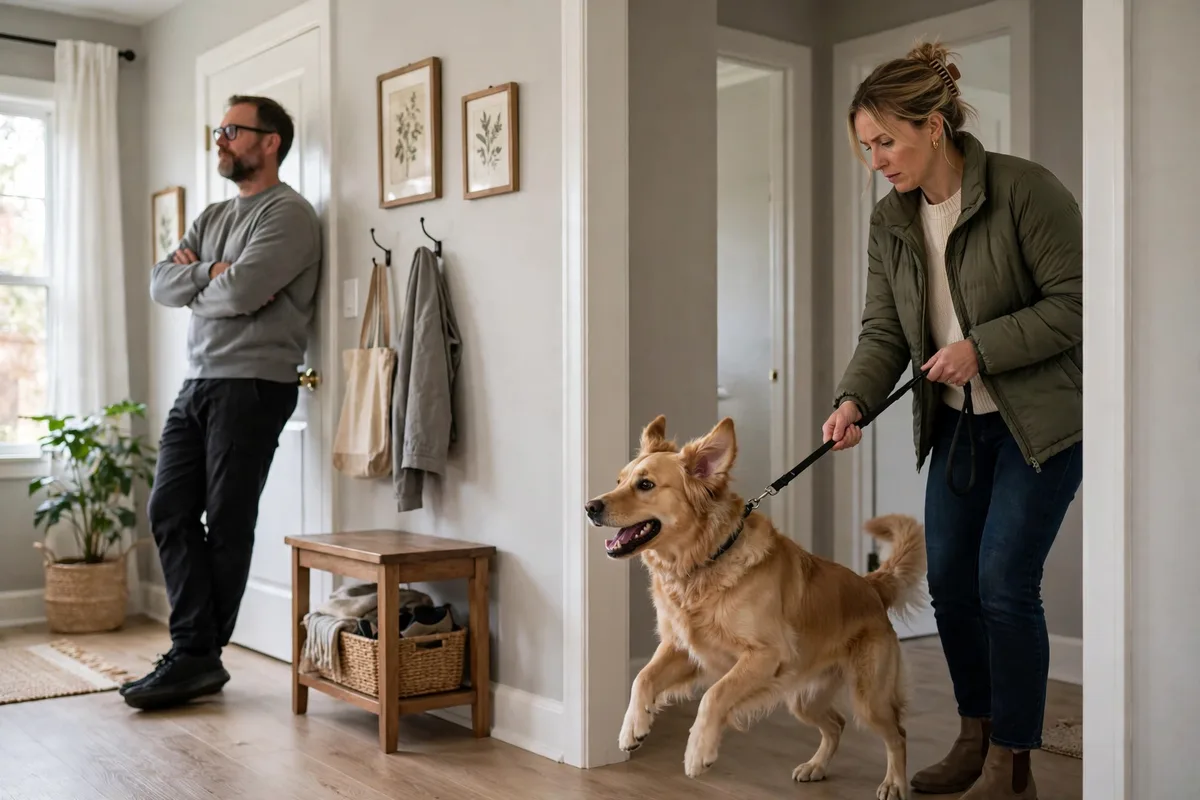
- The overexcited greeter. Barking, jumping, spinning, can’t contain itself. This dog loves people and has no off switch. The fix is impulse control and a clear job to do instead.
- The anxious guarder. Barking from behind you, retreating, growling, stiff body. This dog is scared, and the barking is saying “stay away.” The fix is distance, choice, and slow positive associations — never punishment.
- The overstimulated mixer. Fine for the first ten minutes, then increasingly wild. This dog gets flooded by sustained excitement. The fix is breaks and a calm-down plan built into the visit.
If your dog has ever snapped at or bitten a visitor, skip the DIY plan and talk to your vet and a certified professional trainer or behaviorist first. That’s not a training project — it’s a safety project.
The Tonight Plan: Management for Guests Arriving Soon
Training takes weeks. Guests are coming in three hours. Here’s how to survive the visit:
- Exercise first. A good walk or play session an hour before guests arrive takes the edge off. Follow it with something calming — a stuffed food toy or a chew — so your dog arrives at the doorbell already winding down. This pairs well with your daily dog walking routine.
- Set up a station. Before anyone knocks, put your dog behind a baby gate, in a crate with a long-lasting chew, or on a leash with you — away from the front door. The doorway is the highest-arousal zone in the house; simply not being in it changes everything.
- Brief your guests. Text them ahead: “Please ignore the dog when you come in — no eye contact, no petting until she’s calm. We’ll let you know when.” Most people are happy to help once they know the rule. Calm guests make calm dogs.
- Greet first, dog second. Let your guests in, get them seated with a drink, and let the initial excitement pass. Only then bring the dog out — on leash — for a controlled greeting.
- Reward calm, remove chaos. Treat and praise any calm behavior: four paws on the floor, a sit, quiet lying down. If the dog gets too wild, calmly lead it back behind the gate for a few minutes. Not as punishment — as a reset. Wild dogs don’t get access to guests; calm dogs do.
This won’t fix the underlying pattern, but it will get you through the evening without apologizing every five minutes.
The Real Fix: Train a Greeting Routine
Dogs thrive on predictability. A dog that knows exactly what happens when the doorbell rings doesn’t need to improvise with barking and jumping. Build this routine over two to three weeks of short practice sessions.
Teach “Place”
“Place” means go to a specific spot — a mat, a dog bed — and stay there until released. It’s the single most useful visitor skill because it gives your dog a job.
- Put the mat on the floor. The moment your dog steps on it, mark (“yes”) and treat. Repeat until the dog is running to the mat.
- Add the word “place” right before the dog steps on.
- Build duration: reward for staying one second, then three, then ten. Release with “okay” and toss a treat off the mat.
- Add distance: send the dog to place from across the room.
Practice daily for a week before you add any visitor element. The mat should feel like the best spot in the house.
Desensitize the Doorbell
For many dogs, the doorbell itself is the trigger — it predicts exciting chaos. Break that prediction:
- Ring the doorbell (or knock) at random times during the day. When it sounds, toss your dog a treat. Repeat ten times. You’re teaching: doorbell sound means treats appear, nothing else happens.
- After a few days, ring the bell and cue “place.” Reward generously for going to the mat instead of charging the door.
- Have a friend help: they knock, you cue place, the friend enters calmly while the dog holds position. Start with boring friends before trying it with the exciting ones.
Practice Fake Arrivals
Set up rehearsals with a willing helper. They knock, enter, ignore the dog completely (no eye contact, no talking to the dog), and sit down. You reward your dog for staying on place. After a few minutes of calm, release the dog for a controlled greeting: the guest stays seated and still, you keep the leash loose, and the dog gets treats for four paws on the floor.
Repeat with different helpers. Dogs don’t generalize well — “calm with Sarah” doesn’t automatically mean “calm with Mike” — so practice with several people.
Teach Guests Their Part
This is half the battle. Most visitor chaos is co-created by well-meaning guests who squeal, crouch down, and wind the dog up. Give every guest the same three rules:
- Ignore the dog until it’s calm. No eye contact, no talking to it, no reaching for it.
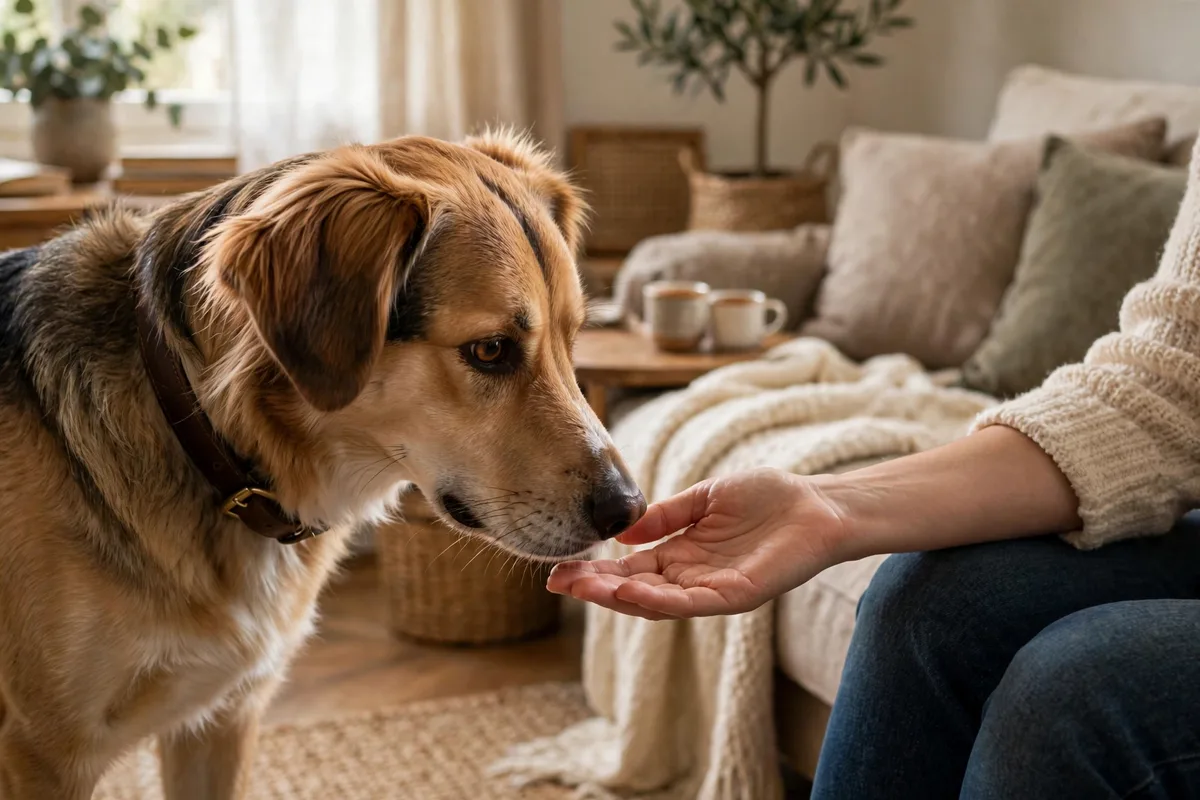
- Let the dog come to you. Once the dog is settled, the guest can offer a hand to sniff — palm down, still — and pet the chest or side, not the top of the head.
- Stop if the dog gets wild. Attention ends the moment jumping starts. Calm behavior restarts it.
Put it in the invitation text if you need to. Good guests will follow the script; the dog does the rest.
Visitors Who Stay Overnight
Overnight guests add a new layer: a stranger sleeping in the house. Make it easier:
- Let the dog investigate the guest room beforehand. New smells in a familiar house are unsettling. Give your dog access to sniff around before the guest arrives.
- Keep the first evening structured. Same routine as any visit: exercise, station, controlled greeting.
- Protect the dog’s sleep space. Don’t make the dog give up its usual sleeping spot for the guest. A displaced dog is a stressed dog.
- Supervise mornings. The first morning encounter — guest emerging from the bedroom — can trigger a fresh round of barking. Be present, have treats ready, and reward calm.
Kids Visiting
Children are unpredictable in ways that rattle dogs: sudden movements, high-pitched voices, direct approaches. If kids are coming over:
- Brief the kids like you brief adults: ignore the dog at first, no chasing, no hugging, no taking toys or food.
- Keep the dog’s safe space (crate or gated room) available the whole visit, and teach kids that a dog in its space is off-limits.
- Supervise every interaction. No exceptions, no matter how “good” the dog is.
Troubleshooting Common Sticking Points
| Problem | Fix |
|---|---|
| Dog barks nonstop at the door | Go back to doorbell desensitization without guests; the trigger needs work before the full scenario |
| Dog is fine until the guest stands up or moves | Movement restarts excitement — practice with the helper standing, sitting, and walking around while you reward place |
| One family member lets the dog jump “because it’s cute” | Mixed rules stall training completely — everyone follows the same script, every time |
| Dog was improving, then regressed after a chaotic visit | One bad rehearsal doesn’t erase progress — go back one step in difficulty and rebuild for a few days |
| Dog guards the owner from guests (positions between, growls) | This is resource guarding of a person — manage with distance and talk to a professional; don’t punish the growl |
Frequently Asked Questions
How long before my dog is calm with visitors?
With consistent practice, most overexcited greeters show real improvement in three to four weeks. Anxious dogs take longer — think months, not weeks — because you’re changing an emotional response, not just a habit. Celebrate small wins: settling two minutes faster than last time is genuine progress.
Should I let my dog greet guests at the door?
Not until the greeting is trained. The doorway is the hardest possible place to be calm — excitement is at its peak and space is tight. Earn doorway greetings by first mastering calm greetings in the living room, then the hallway, then the door.
My dog is fine with regular visitors but barks at strangers. Is that normal?
Completely. Dogs categorize people, and unfamiliar people are a separate category that needs its own training reps. Ask a few different friends to play stranger for practice sessions — the more “new” people your dog practices calm greetings with, the faster the category fills in.
Can I use a bark collar or spray bottle to stop the barking?
Don’t. Punishing barking at visitors usually makes things worse: the dog is already aroused or scared, and adding something unpleasant confirms that visitors predict bad things. For anxious dogs especially, punishment can turn barking into biting by removing the warning. Train an alternative behavior instead.
Calm Greetings Are Trained, Not Hoped For
No dog figures out visitor manners on its own — the doorbell is exciting, guests are exciting, and excitement without guidance becomes chaos. But the fix is straightforward: manage the situation tonight, train “place” and calm greetings over the next few weeks, and teach your guests the three rules. Do that consistently, and the dog that used to lose its mind at the doorbell becomes the dog that trots to its mat when it hears a knock. That’s not just better visits — it’s a calmer dog overall, and it starts with the same foundation as teaching sit: reward the calm behavior you want, and it shows up more often.