
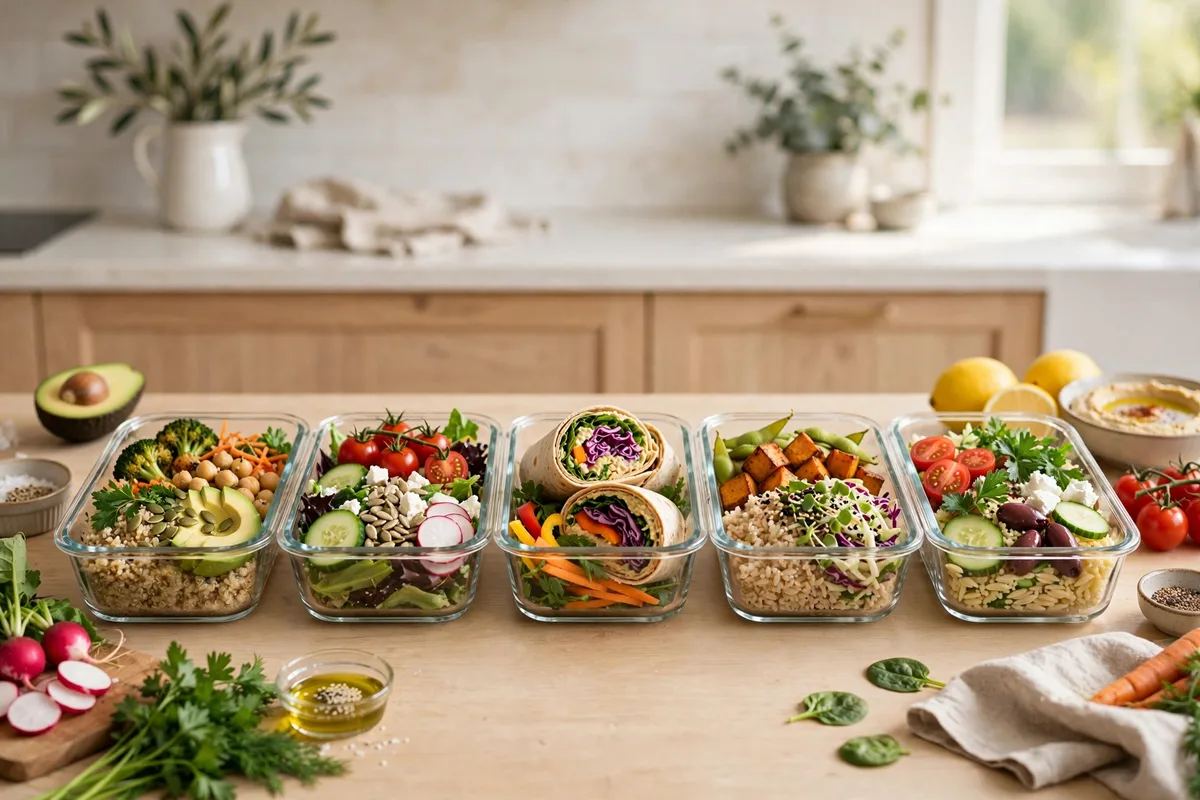
Lunch is the meal that catches most families off guard. Mornings are busy, dinner gets the planning attention, and noon arrives with everyone staring into the fridge. A weekly lunch plan fixes that: one short planning session, one grocery list, and one prep hour turn five weekdays of lunch into a grab-and-go routine.
Why Lunch Plans Save More Than You’d Expect
Planning lunches for a week delivers three concrete wins:

- Less daily stress. No more 11 a.m. “what’s for lunch” scramble.
- Less food waste. Every ingredient on the list has a job, so produce actually gets used.
- Better nutrition. Planned lunches are built around balance instead of whatever’s easiest at the last minute.
Step 1: Build Your Weekly Template
Don’t plan five unique lunches from scratch — use a repeatable template and rotate the details. A template that works for most families:
| Day | Theme |
|---|---|
| Monday | Grain bowl (batch-cooked rice/quinoa + protein + veg) |
| Tuesday | Soup or stew (cooked double — half for dinner, half for lunch) |
| Wednesday | Fridge-clear meal (frittata, stir-fry, or pasta with leftover veg) |
| Thursday | Fast protein (eggs, beans, tuna, or leftover roasted chicken) |
| Friday | Wrap or sandwich day (a “treat” version of a family favorite) |
This template borrows its structure from family meal planning — if you already prepare easy family meal plans, treat lunch as dinner’s second act: plan dinners with lunch-friendly leftovers in mind.
Step 2: Make One Grocery List
Translate the template into one shopping list, grouped by store section. A few principles keep the list tight:
- Build around 3–4 versatile proteins. Chicken thighs, eggs, canned beans, and tuna cover most of the template.
- Pick sturdy bases. Rice, quinoa, pasta, wraps, and bread hold up well through the week.
- Choose long-lasting produce. Cabbage, carrots, apples, cucumbers, and frozen vegetables survive until Thursday and Friday without fading.
- Plan the sauces. A vinaigrette, a yogurt dip, and one seasoning blend turn the same base into different meals.
Write the list once, shop once. That single trip is the biggest time saver in the whole system.
Step 3: Run a One-Hour Prep Session
Pick a time that fits your week — Sunday afternoon works for most families. A 60-minute session might look like this:
- Minutes 0–10: Wash produce, preheat the oven, cook a pot of rice or quinoa.
- Minutes 10–30: Batch-cook proteins (bake chicken thighs, hard-boil eggs, simmer a pot of soup or beans).
- Minutes 30–45: Chop sturdy veg and portion snacks and sauces into small containers.
- Minutes 45–55: Assemble Monday and Tuesday’s lunches into containers.
- Minutes 55–60: Label everything, clean up, done.
Wednesday through Friday assemble in 5–10 minutes each, because the components are ready.
Step 4: Pack Smart (School Lunchboxes and Work Lunches)
If you’re packing lunches to leave the house, two rules matter:
- Keep cold foods cold and hot foods hot. Use a thermos for soups and ice packs or frozen drink boxes for cold items. KidsHealth’s school lunch guide has a practical rundown of food-safety basics for packed lunches — including washing lunchboxes daily.
- Involve the kids. Let children pick from two or three options per category (one protein, one fruit, one veg). Kids eat what they helped choose, and a little autonomy cuts down on uneaten lunches.
Check school rules for restrictions (many schools are nut-free) and keep a “yes list” of allowed brands.
Step 5: Balance Without Perfection
You don’t need a nutrition degree — use the simple plate formula: protein anchor + slow carb + fruit or veg + small snack. Examples:
- Chicken and rice bowl with cucumber and an apple
- Bean quesadilla with cherry tomatoes and a yogurt
- Tuna pasta salad with carrots and a banana
Swap proteins, breads, and produce week to week while keeping the skeleton intact, so meals stay varied without new planning.
Sample Week (Two Adults + Two Kids)
| Monday | Tuesday | Wednesday | Thursday | Friday | |
|---|---|---|---|---|---|
| Adults | Chicken rice bowl | Leftover soup + bread | Veggie frittata | Tuna wrap | Turkey sandwich |
| Kids | Rice bowl (mild) | Soup in thermos | Pasta with veg | Tuna crackers + fruit | Ham wrap |
| Prep note | Batch Sunday | Cook double Sunday | Fridge-clear | 10-min assembly | 10-min assembly |
Troubleshooting
- “We get bored by Thursday.” Change the sauce, not the whole meal. The same chicken tastes new with barbecue sauce, teriyaki, or a yogurt-herb dip.
- “Fresh produce goes bad.” Buy heartier veg for later in the week and use delicate greens on Monday and Tuesday. Frozen vegetables are a legitimate backup, not a failure.
- “The kids won’t eat leftovers.” Repackage them. Leftover chicken becomes “chicken wraps,” leftover pasta becomes “pasta salad.” Presentation matters to kids.
- “We don’t have an hour on Sunday.” Split the prep: cook grains one evening, proteins another. Even 30 minutes of prep beats zero.
Frequently Asked Questions
How far ahead can I safely prep lunches?
Most cooked components keep 3–4 days refrigerated in airtight containers. Cook Sunday for Monday–Wednesday; a quick Wednesday-evening top-up covers Thursday–Friday. Keep cold lunches below 40°F with ice packs.

What if one family member has allergies or dietary restrictions?
Build the template around the restricted eater’s needs first, then let others customize at assembly time. A “base + toppings” system — bowls, wraps, frittatas — makes this nearly effortless.
Is meal prepping lunches cheaper?
Most families find it reduces spending, mainly by cutting unplanned grocery runs and food waste. The biggest savings come from “sales-based shopping”: build the week’s template around what’s on sale and in season.
Your First Week
Today: Fill in the five-day template with meals your family already likes. No new recipes required.
This weekend: Make one grocery list from the template and run your first 60-minute prep session.
Next week: Eat grab-and-go lunches all week. Note what ran out, what got boring, and what the kids ignored — that’s your input for week two.
Start simple, repeat the skeleton, and rotate the details. Within three weeks, lunch will be the easiest meal of your day.


Pingback: How to Prepare Easy Family Meal Plans: 6 Steps for Busy Weeks