
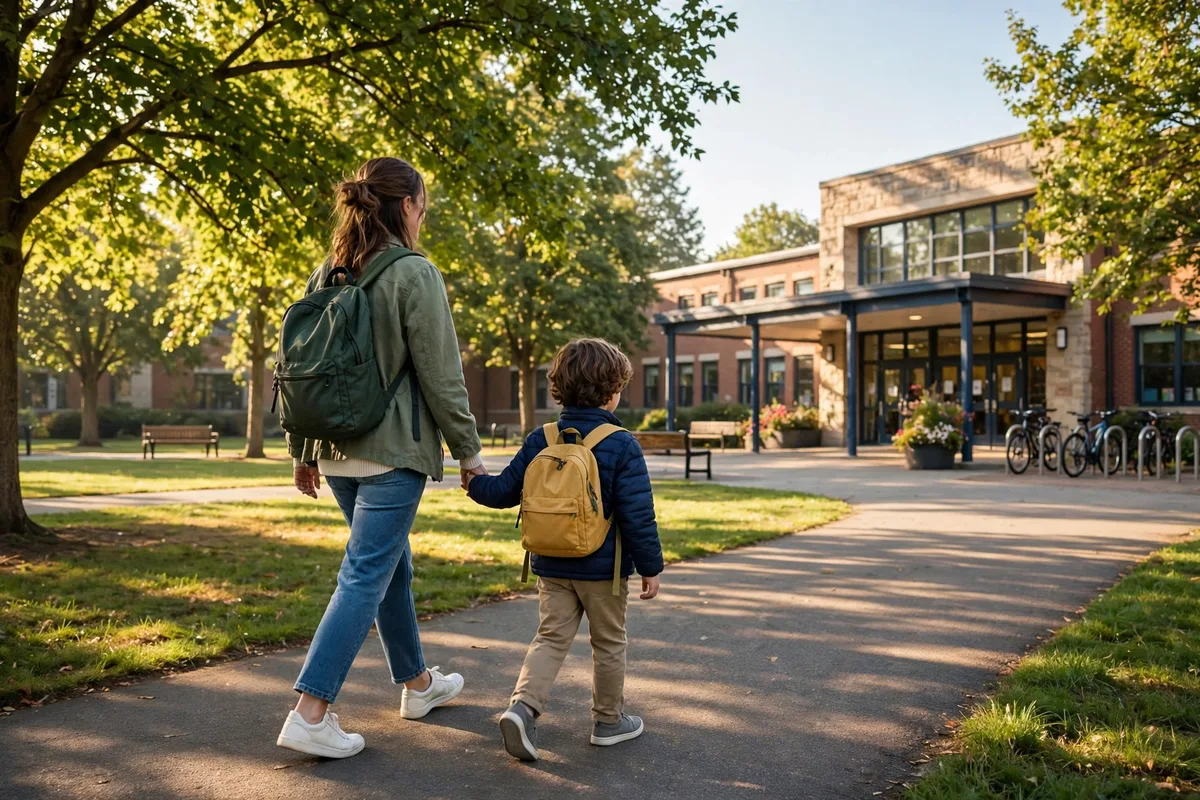
Starting a new school is one of the biggest transitions a child can face — new building, new teachers, new friends, new rules, all at once. Some kids bounce; others quietly struggle. As a parent, you can’t remove the uncertainty, but you can shrink it. This guide gives you a timeline: what to do in the weeks before, how to handle the first day, and how to support your child through the weeks that follow.
2–4 Weeks Before: Make the Unknown Known
Anxiety feeds on the unknown. Your job right now is to replace “what if” with “here’s what I know.”

- Visit the school if possible. Walk the halls, find the classroom, locate the bathrooms and cafeteria, play on the playground. A building they’ve already seen is half as scary.
- Meet the teacher. Many schools arrange meet-the-teacher visits. If yours doesn’t, a brief introductory email works — share anything the teacher should know (strengths, worries, learning needs).
- Learn the logistics together. Where’s the bus stop? What time does the day start? Where do kids line up? What does lunch look like? Practice the route — drive it, walk it, time it.
- Gather the paperwork early. Enrollment forms, immunization records, previous school transcripts. Pulling it together now avoids first-week chaos — our guide to organizing school paperwork has a system that survives school changes.
- Start shifting routines. Begin moving bedtimes and wake-ups toward the school schedule a week or two early. Practice the family morning routine a few times so the first day isn’t the first rehearsal.
The Emotional Work: Validate Before You Reassure
Resist the urge to open with “You’ll be fine!” or “You’ll make tons of friends!” Dismissing the worry makes kids feel unheard — and alone with it. Instead:
- Name what they’re feeling. “Starting something new can feel exciting and a little scary at the same time.”
- Let them grieve the old school. “It’s sad to leave your friends. You don’t have to be over it yet.”
- Normalize the timeline. “Most kids feel weird for the first couple of weeks. That doesn’t mean something’s wrong — it means you’re adjusting.”
- Share your own story. If you ever changed schools, tell them what your first days were like and what helped. It makes their feelings normal and models resilience.
- Give them things they can control. Let them pick their backpack, choose their first-day outfit, organize their supplies. Small choices build confidence when big things feel out of control.
Keep these conversations casual — the car, a walk, while cooking. Kids open up sideways, not in sit-down summits.
The Week Before: Practical Preparation
Turn nervous energy into readiness:
- Lay out the first-day kit together — clothes, packed bag, lunch supplies — the night before. One less morning decision.
- Talk through the first day, step by step. “You’ll get dropped off here, line up with your class there, Mrs. Alvarez will show you your desk…” A mental movie replaces a blank.
- Plan the goodbye. Agree on a quick, warm ritual — a special handshake, a phrase, a hug at the gate. Then keep it brief and confident on the day.
- Set up homework expectations now. Where will homework happen? When — right after school or after a break? Decide together before day one.
If your child will need to meet the teacher one-on-one early in the term, see our guide on preparing for a parent-teacher meeting for how to make that first conversation count.
The First Day: Calm, Brief, Confident
- Keep the morning normal. Same breakfast, same routine, no rushing if you can help it.
- Model calm confidence. Kids read your face. If you’re anxious, they’ll be anxious. Project warmth and certainty: “You’re going to have a good day.”
- Keep goodbyes short. Lingering makes it harder. A warm, quick goodbye — “I love you, I’ll see you after school” — then go. Most children settle within minutes of a parent leaving.
- Have something to look forward to after. A favorite snack, a trip to the park, their favorite dinner. It gives the day a finish line.
The First Few Weeks: Steady Support
The transition isn’t over on day two. Here’s how to carry them through:
- Debrief daily, briefly. “What was the best part of today? What was the hardest?” Listen more than you fix. If they report a problem, ask “What do you think you could try?” before jumping in — building self-advocacy matters.
- Watch for the delayed dip. Some kids are fine week one and crash week three, when the novelty wears off. That’s normal.
- Help friendships form. Arrange a playdate, encourage joining one club or activity, volunteer at a school event so you meet other families. For younger kids, ask the teacher about a classroom buddy.
- Stay in touch with the old. Let them text or video-call old friends. Keeping old connections doesn’t slow new ones — it gives them a secure base to branch from.
- Keep routines rock-solid. Sleep, meals, and after-school rhythms are anchors when everything else is new.
- Praise effort, not outcomes. “You went up to someone new at lunch — that took guts” beats “Did you make friends?” Celebrate bravery, not results.
Signs Your Child May Need More Support
Most adjustment anxiety fades within a few weeks as routines become familiar. But seek help — from the school counselor, your pediatrician, or a mental health professional — if you notice:
- Anxiety that intensifies rather than eases after 3–4 weeks
- Refusing to go to school, frequent stomachaches or headaches with no medical cause
- Withdrawing from activities they used to enjoy
- Major changes in sleep, appetite, or mood that don’t lift
- Talk of hurting themselves — take this seriously and get help immediately
Needing support isn’t failure — yours or theirs. Getting it early makes everything easier.
Frequently Asked Questions
Should I walk my child into the classroom on the first day?
Follow the school’s policy and your child’s age. Young children usually benefit from a brief walk-in; older kids often prefer the independence of the gate goodbye. Ask your child what they’d like.

What if my child cries at drop-off?
Keep it warm and brief, then leave. Most children calm down quickly once the parent is gone — you can discreetly check with the teacher later. Lingering almost always prolongs the tears.
How long until my child feels settled?
There’s no fixed timeline, but most kids turn a corner within 2–6 weeks. Friendships, routines, and knowing the building all compound. If it’s getting worse instead of better after a month, talk to the school.
My teen says they hate the new school and wants to go back. What do I do?
Validate first (“I hear you, this is really hard”), then stay steady. Don’t promise a move; do promise support. Give it time, help them find one anchor (a club, a sport, one friend), and keep checking in.
The Bottom Line
You can’t make a new school familiar overnight — but you can make it predictable, and you can make your child feel heard through every wobble. Visit early, validate feelings before rushing to fix them, keep routines steady, and give friendships time to grow. Most kids don’t just adjust — they thrive. Your steady presence is what gets them there.
For more on recognizing and responding to school-related anxiety, the Children’s Health Council’s guide to back-to-school jitters and Mayo Clinic Health System’s tips on helping students adjust are both worth reading.