

Between 3 p.m. and bedtime, many families fit homework, practices, music lessons, dinner, and a semblance of family life into a few crowded hours. When those hours feel chaotic, the problem is rarely effort — it is usually a schedule built on hope rather than on reality.
This guide helps you audit your after-school hours honestly, trim what is not working, and build a framework that keeps homework, activities, meals, and downtime in balance.
Step 1: Map the Real After-School Hours
Before changing anything, record a typical week as it actually happens — not as you wish it happened. For five school days, note:
- When everyone gets home and when they are actually settled
- Homework time: when it starts, how long it takes, where friction happens
- Activities: practice, lessons, clubs — including travel time, which people always underestimate
- Dinner: when it is cooked, when it is eaten
- Downtime: what remains (if anything)
- Bedtime and wake-up time
Most families discover two surprises: travel time eats more of the evening than they thought, and there is almost no genuine downtime. That baseline is your most valuable information. You cannot fix a schedule you have not measured.
Step 2: Audit and Trim the Activity Load
With the week mapped, look at the activities with a critical eye. For each activity, ask:
- Does my child actually enjoy it, or are they doing it out of habit or pressure?
- Does it fit the schedule without stealing sleep, meals, or homework time?
- What would we gain — and lose — by pausing it for a season?
It is normal to want your child to try many things, but too many commitments leave no room to breathe. Many families find that one or two regular activities are plenty, especially for younger children. Saying no to an activity is not closing a door forever; seasons change, and something else will come along. When you do cut, involve your child in the decision and frame it as a pause, not a punishment.
Warning sign to watch for: frequent headaches or stomachaches before activities, trouble falling asleep, emotional outbursts over small things, or losing interest in things they used to love. These can signal genuine overwhelm, not laziness. If you see them, treat them as data and scale back.
Step 3: Build a Flexible After-School Framework
You do not need a minute-by-minute schedule. You need a reliable order of events that can flex on busy nights. A framework that works for many families:
- Transition ritual (15–20 minutes): snack, change into comfy clothes, unpack the backpack, quick chat about the day. Tired kids who jump straight into tasks melt down more often — this buffer pays for itself.
- Homework block: a set start time and a set spot. Experiment with timing — some kids focus best immediately after school, others need the break first. Break big assignments into timed sprints (for example, 20 minutes on, 5 minutes off) with a visible timer.
- Activity or free time: whatever the day holds.
- Dinner: same time whenever possible; eat together when you can.
- Wind-down: screens off at a fixed time, then the evening routine leading to bed.
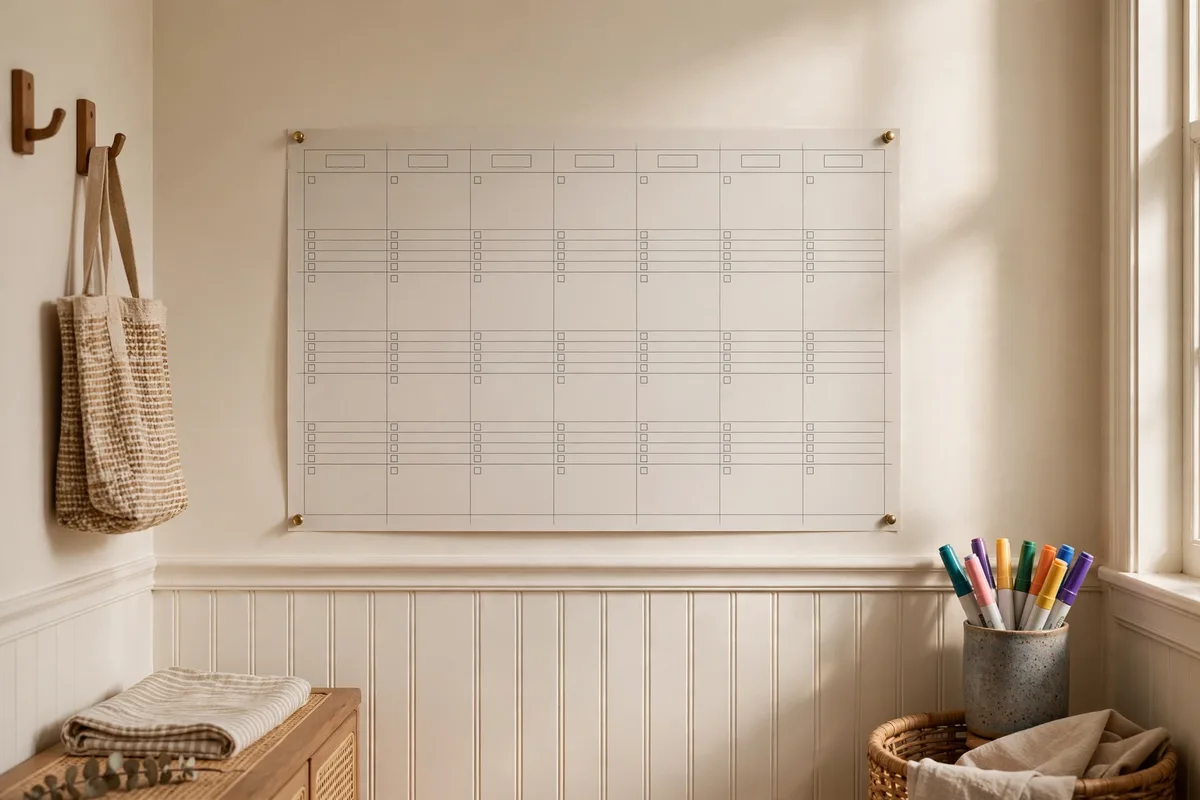
On heavy activity days, simplify: drop the full homework block to the essentials, move some homework to the next morning, or shrink the wind-down. The framework bends; it does not break. Posting the daily order on your family command board means nobody has to ask “what’s next?” a dozen times.
Step 4: Solve the Homework Bottleneck
Homework is where most after-school evenings unravel. A few practical fixes:
- Create a homework zone — one spot with supplies, good lighting, and minimal distractions. A portable caddy works if space is tight. For encouraging independent homework habits, consistency of place matters more than the perfection of the setup.
- Start early on busy days: getting a jump on homework right after school shrinks the evening pile.
- Batch it: all homework happens at the same time for everyone, even across different ages. Older children can serve as “homework buddies” for younger ones, and non-homework kids get quiet activities during the block.
- Audit, don’t hover: you do not need to check every assignment nightly. Do a random audit a few times a week — glance at the assignments list, confirm the important ones, and praise completed work.
- Know when to pause: when a tired child is melting down over homework, the kindest move is often a five-minute break, a cuddle, or moving the work to after dinner. Flexibility is not failure.
Step 5: Fix the Dinner Crunch
Dinner collides with everything between 5 and 7 p.m. Tactics that actually help:
- Simplify weeknight meals: a rotation of 5–7 easy dinners your family likes, planned on the weekend. See our guide on preparing easy family meal plans for a full walkthrough.
- Prep ahead: batch-cook on weekends, use slow cooker meals on heavy days, or chop snack vegetables that double as dinner prep.
- Involve the kids: age-appropriate prep turns dinner into time together instead of time apart. For ideas on age-appropriate household tasks, start with washing vegetables, setting the table, or stirring.
- Accept the occasional shortcut: a sandwich night or takeout on the busiest day of the week is a strategy, not a failure.
Step 6: Protect Downtime Like an Appointment
Downtime is not leftover time — it is a requirement. Children who move straight from school to homework to practice to bed get no time to play, daydream, or just exist, and that deficit shows up as crankiness, poor sleep, and lost motivation. Block at least 30 minutes of genuine unstructured time into the framework and defend it the way you defend bedtime.
This includes your downtime. A parent who is constantly in logistics mode cannot bring patience to the evening. Build one small break for yourself into the plan too.
A Sample After-School Framework
| Time | Block | Notes |
|---|---|---|
| 3:30–3:50 | Transition | Snack, clothes change, backpack unpacked |
| 3:50–4:30 | Homework sprint | Timer on, quiet zone, batch all kids |
| 4:30–5:30 | Activity / free play | Travel time included in activity days |
| 5:30–6:15 | Dinner prep + dinner | Simple rotation, kids help |
| 6:15–7:30 | Second activity or downtime | Wind-down starts here on light days |
| 7:30–8:00 | Wind-down | Screens off, bedtime routine begins |
Adjust the times to your family’s real wake-up and bedtime — the order matters more than the exact minutes.

The Bottom Line
Busy after-school hours feel chaotic when they run on autopilot. Map the week honestly, trim activities to what truly fits, build a flexible framework with transition time and buffers, fix the homework and dinner bottlenecks, and protect downtime on purpose. Then give the new rhythm two weeks before judging it — most families need the adjustment period before the calm kicks in.
For another take on building a routine that bends with real life, see MagicMum’s guide to a no-fuss after-school routine.