
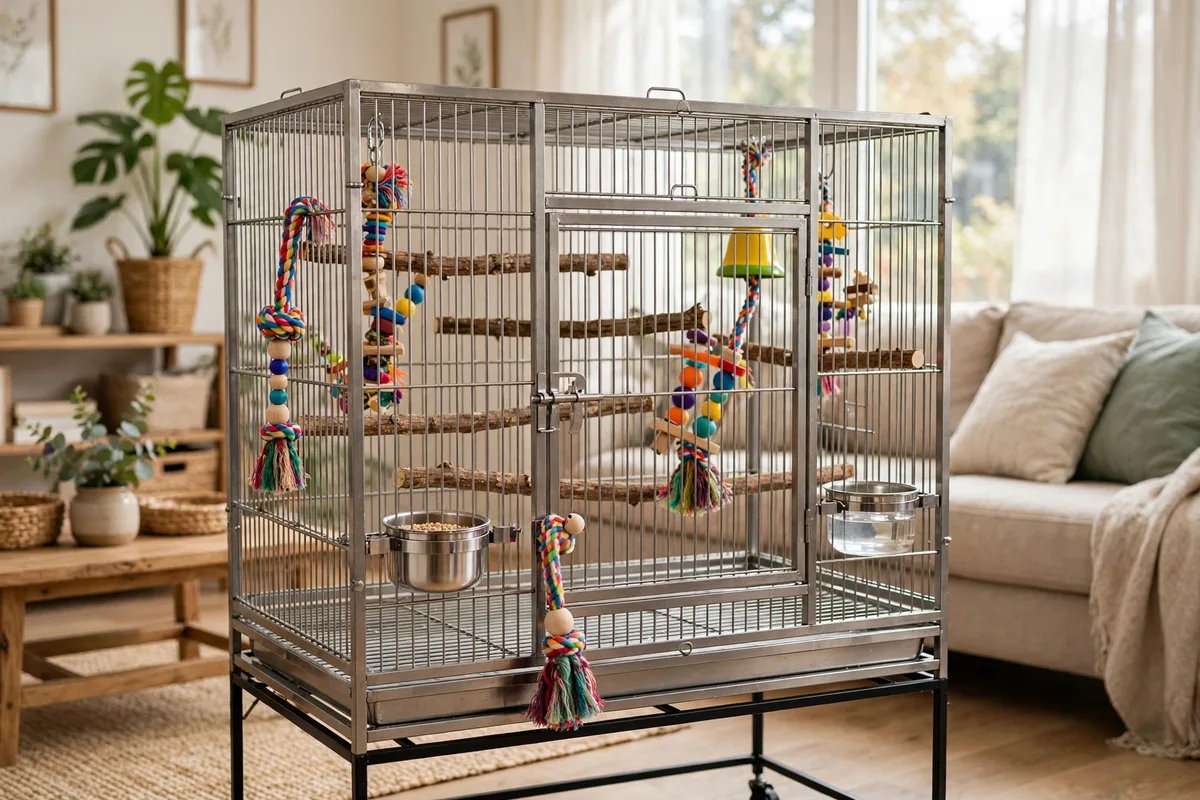
A pet bird spends most of its life inside its cage — often decades, since parrots can live 20 to 60 years. That cage isn’t furniture; it’s the bird’s entire world. A well-set-up cage keeps your bird physically safe, mentally engaged, and healthy for the long haul. A poorly set one causes the problems bird owners complain about most: feather plucking, screaming, bitten toes, and respiratory illness. Here’s how to build a cage setup that’s safe from day one.
What “Safe” Actually Means for a Bird Cage
Three non-negotiables decide whether a cage is safe:
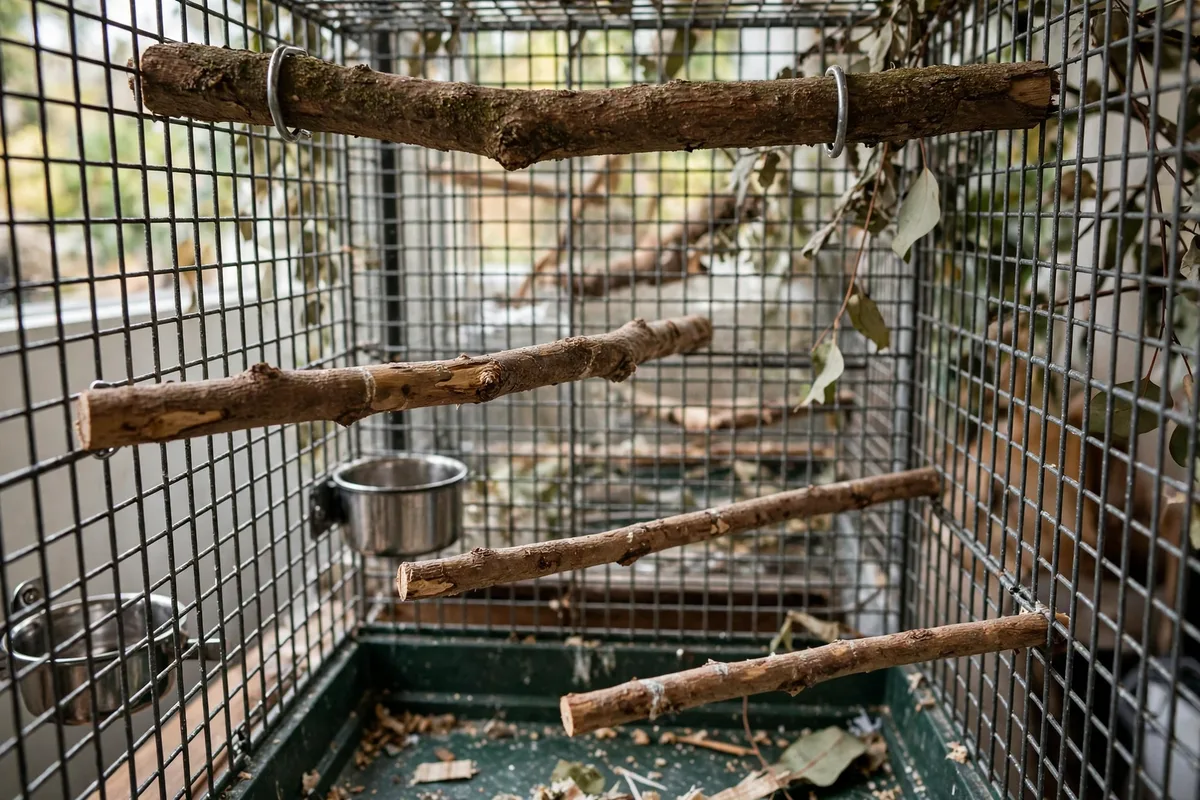
- The right size. Bigger is always better. The cage should let the bird stretch its wings fully in every direction — most avian vets suggest the width be at least twice the wingspan. A cramped cage breeds stress behaviors like feather destruction.
- The right bar spacing. Bars too wide let heads get stuck; bars too narrow feel claustrophobic and limit climbing. Budgies and parrotlets do well with roughly 1/2-inch spacing; cockatiels and small conures around 1/2 to 5/8 inch; large parrots up to about 1 inch. Check spacing for your species before buying.
- Non-toxic materials. Stainless steel is the gold standard. Powder-coated cages are fine as long as the coating is intact — birds chew, and chipped coating can expose zinc or lead underneath. Avoid antique or decorative cages, galvanized wire (zinc risk), and round cages, which disorient many parrots because they remove the security of a corner.
Step 1: Choose the Cage
Shop with your species in mind, not your decor:
- Pick rectangular, not round. Birds feel secure with at least one solid wall or corner to retreat to.
- Go bigger than you think. If you’re choosing between two sizes, take the larger one. Flight cages (wide, not tall) suit finches and canaries, who fly horizontally; parrots climb, so taller cages with horizontal bars work well for them.
- Check the doors and latches. Doors should be large enough for your hand plus a perched bird, and latches must be bird-proof — cockatoos and macaws learn to open simple slide latches.
- Look for a removable tray and seed skirt. A pull-out bottom tray makes daily cleaning painless, and a skirt around the base contains the inevitable mess.
- Inspect for sharp edges, loose welds, and rust. Run your hand along every edge before the bird goes in.
Step 2: Place the Cage in the Right Spot
Location shapes your bird’s stress levels more than most owners realize:
- Put the cage in a lived-in room, like a family room or home office. Birds are flock animals — isolation in a spare bedroom causes loneliness and behavioral problems. One side of the cage against a wall gives the bird a sense of security.
- Keep it out of the kitchen. Heated nonstick cookware (PTFE/Teflon), self-cleaning ovens, and cooking smoke release fumes that can kill birds within minutes. This is the single most important placement rule.
- Avoid direct sun, drafts, and exterior doors. Bright indirect light is ideal. Don’t place the cage where air-conditioning blows directly on it.
- Plan for sleep. Birds need roughly 10–12 hours of uninterrupted darkness. If the room stays lit late, use a cage cover at night — and make sure it still allows airflow.
Step 3: Set Up Safe Perches
Perches are where your bird spends most of its day, and bad perches cause foot sores (bumblefoot):
- Use natural wood branches of varying diameters — manzanita, java wood, and dragonwood are popular. Varying thickness exercises the feet the way a single uniform dowel never will.
- Add one rope perch or platform perch for variety, but check rope for fraying weekly — loose threads can tangle toes.
- Skip sandpaper perch covers. They don’t trim nails meaningfully and they irritate feet.
- Place perches at multiple heights, with the highest perch as the favorite roosting spot. Keep perches away from food and water dishes so droppings don’t contaminate them.
Step 4: Add Food and Water Dishes
- Use stainless steel or ceramic dishes — they don’t harbor bacteria the way scratched plastic does, and they survive the dishwasher.
- Provide at least two dishes: one for the main diet (pellets plus seed, per your species’ needs) and one for fresh water. A third dish for chopped vegetables encourages foraging variety.
- Position dishes where droppings can’t fall in — not under perches.
- Change water daily and wash dishes with hot water. Slimy dishes grow bacteria fast.
Ask your avian vet about the right diet balance for your species; many pet birds do best on a pellet-based diet with fresh vegetables, rather than seed-only.
Step 5: Enrich With Toys and Foraging
A bare cage is a boredom machine, and bored parrots pluck. Stock the cage like a playground:
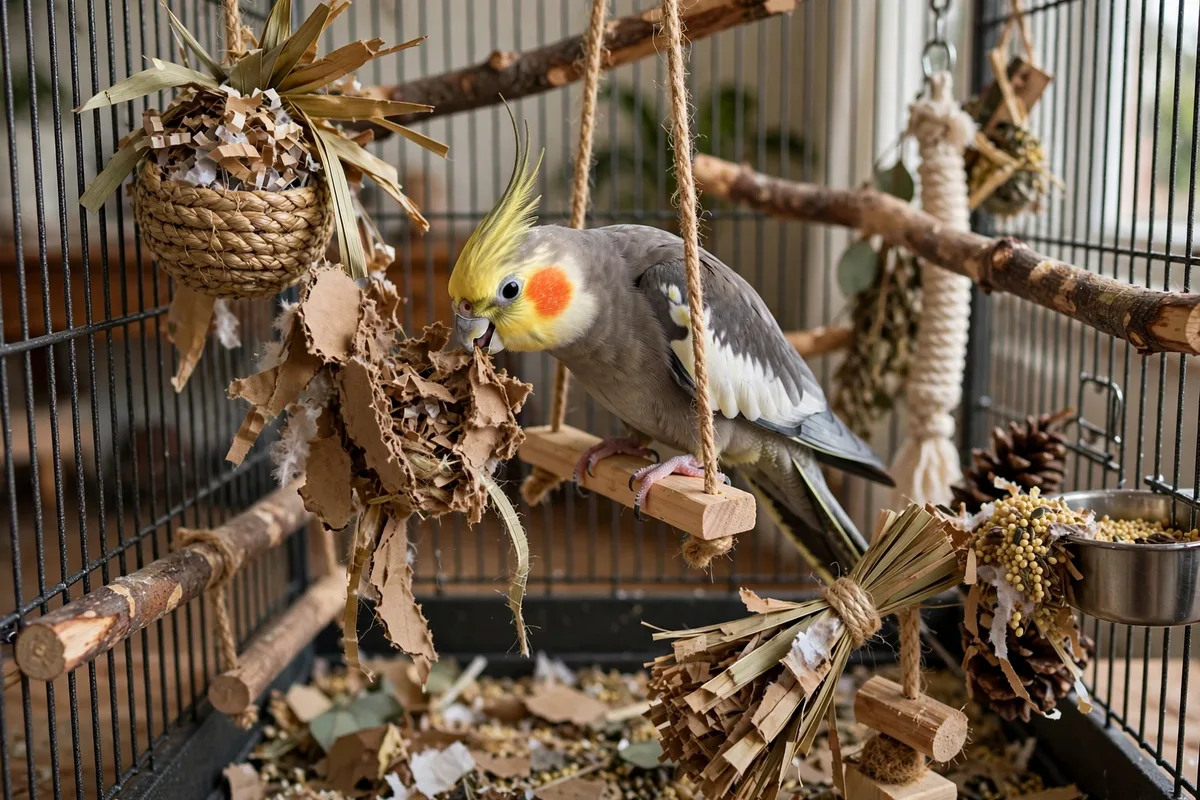
- Offer a mix: shreddable toys (paper, palm leaf, soft wood), puzzle/foraging toys that make the bird work for treats, a swing, and something noisy like a stainless steel bell (avoid bells with lead clappers or small parts that detach).
- Rotate toys weekly. Swap a few toys in and out — a “new” toy from the closet is free enrichment.
- Add foraging opportunities. Hide treats in crumpled paper, weave leafy greens through the bars, or use a foraging tray. Wild birds spend hours searching for food; captive birds should too.
- Avoid: toys with zinc or lead components, frayed rope, mirrors that encourage obsessive behavior in some species, and anything small enough to swallow.
Step 6: Line the Bottom and Set a Cleaning Routine
- Line the tray with plain newspaper or paper towels. They’re cheap, safe, and let you monitor droppings — changes in droppings are often the first sign of illness. Avoid corn-cob bedding, walnut shell, and scented litters, which can harbor mold or be ingested.
- Daily: change the liner, refresh water, remove spoiled fresh food.
- Weekly: wash perches, dishes, and toys with hot water (no harsh chemicals); scrub the tray.
- Monthly: deep-clean the whole cage, inspect bars and latches for wear, and check toys for damage.
If your bird ever needs a sitter, write all of this down — our guide to preparing a pet sitter guide includes a template that works perfectly for birds.
Step 7: Proof the Surrounding Area
Cage safety doesn’t end at the bars — the room matters too:
- No nonstick cookware, scented candles, air fresheners, or aerosol sprays near the bird. Avian respiratory systems are extraordinarily sensitive.
- Keep other pets away. Even a friendly cat’s saliva carries bacteria dangerous to birds, and a dog’s curiosity can be fatal. Supervise all out-of-cage time.
- Check houseplants. Many common houseplants (philodendron, pothos, lilies) are toxic to birds. Move them out of beak reach.
- Watch the windows and mirrors during out-of-cage time — birds fly into glass. Keep wings appropriately managed per your vet’s advice.
Use only bird-safe cleaning products around the cage; our notes on pet-safe household cleaning habits cover what to use and what to avoid.
Setup Variations by Species
Budgies and parrotlets
An 18×18×24-inch cage minimum, 1/2-inch bar spacing, and lots of small toys. These little birds are active — prioritize horizontal space and multiple perches.
Cockatiels
At least 24×24×30 inches with 1/2- to 5/8-inch spacing. Cockatiels are dusty (they produce powder down), so place the cage where dust is easy to manage and clean more often.
Small conures and quakers
Minimum 24×24×36 inches, sturdy construction — these are strong chewers. Stainless steel or heavy powder-coated bars; rotate foraging toys aggressively.
Finches and canaries
A wide flight cage (30+ inches long) with 1/2-inch spacing. These birds fly rather than climb, so width beats height. Multiple perches at the same level, plus a bath dish — most finches love bathing.
Troubleshooting Common Problems
| Problem | Likely cause | Fix |
|---|---|---|
| Feather plucking | Boredom, stress, or illness | Add foraging toys, increase out-of-cage time, vet check |
| Bird won’t touch new toys | Neophobia (fear of new things) | Place toy near (not in) the cage for a few days first |
| Droppings in food/water | Dishes under perches | Move dishes to the side walls, away from perches |
| Night frights (thrashing) | Sudden noises or lights in the dark | Night light near the cage, cover that allows airflow |
| Chewing cage bars | Boredom or mineral craving | More chew toys, cuttlebone/mineral block, vet check |
| Escaping through doors | Learned the latch | Upgrade to bird-proof locks; add a secondary clip |
Persistent lethargy, fluffed feathers, changes in droppings, or loss of appetite are health red flags — review our guide on recognizing when a pet needs veterinary care and call an avian vet promptly.
Frequently Asked Questions
Should the cage be covered at night?
If the room isn’t dark and quiet for 10–12 hours, yes. Use a breathable cover and uncover at a consistent time each morning. Some birds prefer partial covering so they don’t feel trapped — watch your bird’s reaction.
Can two birds share one cage?
Only if they’re compatible, bonded, and the cage is large enough for both to have personal space. Never house different-sized species together, and always quarantine a new bird for 30+ days before any introduction.
How often should I replace perches and toys?
When they’re worn, chewed through, or fraying. Natural wood perches last months; shreddable toys are meant to be destroyed — that’s the point. Inspect everything weekly.
Is a used cage safe?
It can be, after a thorough scrub with hot water and bird-safe disinfectant, plus a full inspection for rust, chipped coating, and correct bar spacing. Skip cages of unknown history with flaking paint — lead and zinc exposure isn’t worth the savings.
My bird screams when I leave the room. Is the cage the problem?
Probably not the cage itself — it’s flock-calling, which is normal. But a well-enriched cage with foraging toys makes alone time much easier. If screaming is constant, evaluate sleep, diet, and out-of-cage time too.
A Cage Is a Home, Not a Box
Safe setup is mostly decisions you make once: the right cage, the right spot, perches that protect feet, toys that keep a clever mind busy. After that, it’s just the daily rhythm — fresh water, clean liner, a toy rotation — that keeps the whole system working. Build it right at the start, and your bird gets the decades of comfort it deserves.