
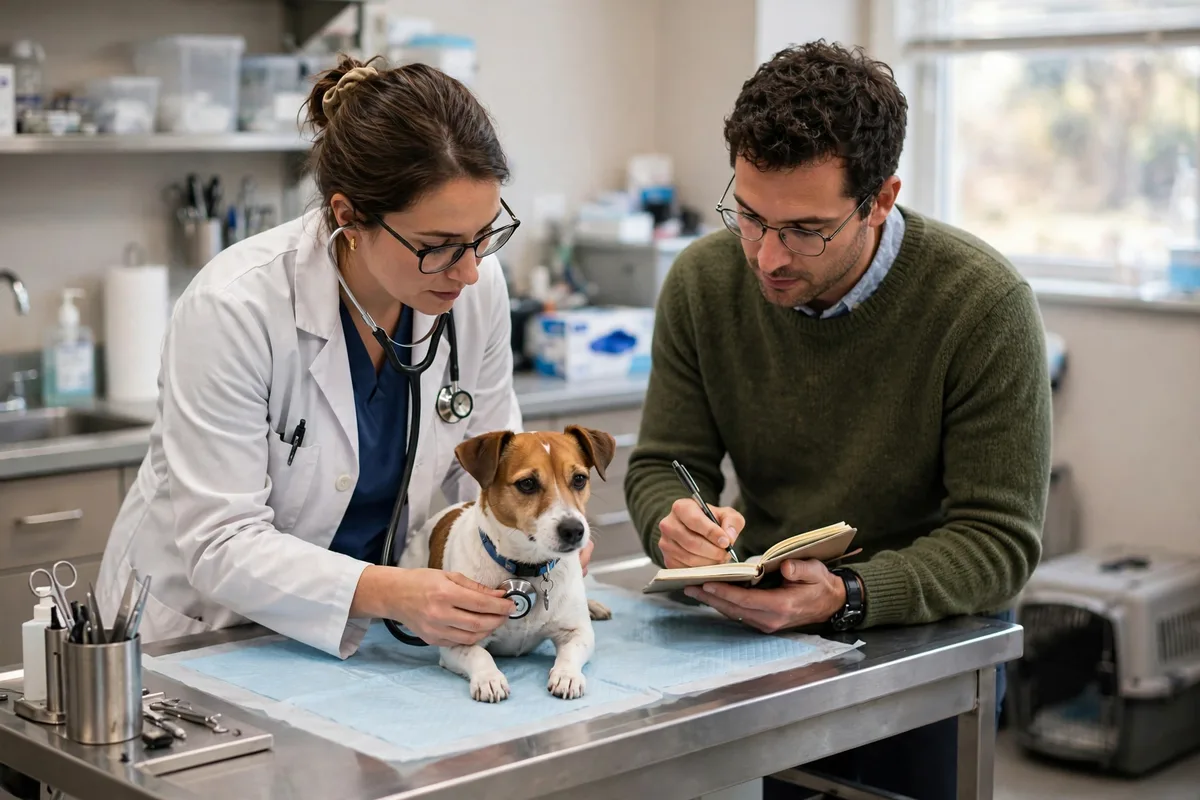
The visit itself is only fifteen or twenty minutes, and your pet can’t describe what’s been going on — you are the medical history. Understanding which questions are coming, and which questions you should ask in return, turns a routine checkup from a formality into the most useful twenty minutes of your pet’s year.
Why the Questions Matter More Than the Exam
Here’s the open secret of veterinary medicine: the physical exam confirms or refutes what the history suggests. Your vet can listen to a heart and feel a belly, but they can’t tell that the water bowl has been emptying twice as fast or that the dog hesitates at the stairs. Those observations — yours — are what steer the exam.
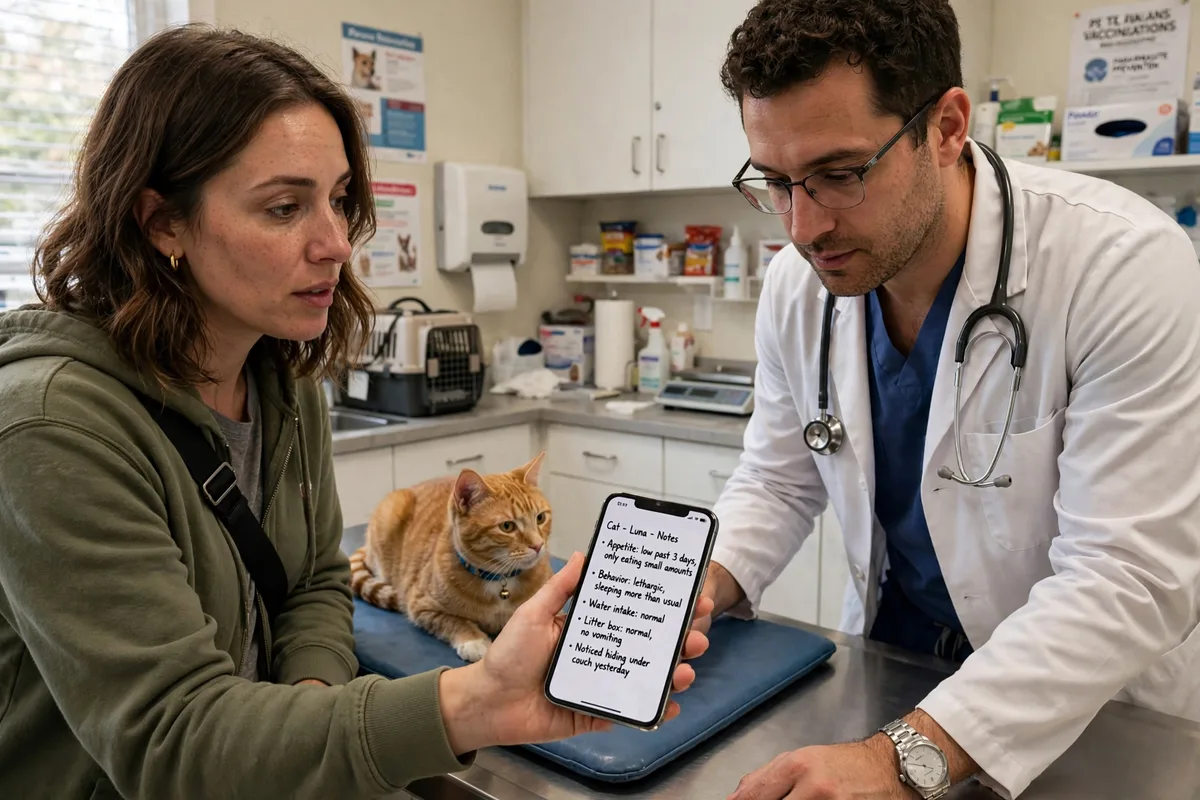
This means “I don’t know” is an acceptable answer, but “I didn’t notice” is a missed opportunity. The week before a visit, you can gather better information than you think. None of this replaces your veterinarian’s judgment — think of it as doing your half of the partnership well.
Step 1: Know the Questions Your Vet Will Ask You
Routine visits follow a pattern. Expect questions in these areas, and prepare like this:
History and background:
– When and where did you get your pet? Any known history before that?
– What vaccinations has your pet received, and when? (Bring records — see our guide to keeping pet records organized.)
– Any past surgeries, serious illnesses, or ongoing conditions?
– Is your pet on any medications or supplements, including flea, tick, and heartworm preventives? Bring the actual products or a list with exact names and doses.
Appetite, thirst, and weight:
– What food does your pet eat — brand, flavor, amount, how many times a day? (If you’ve built a pet feeding schedule, bring it.)
– Any changes in appetite — eating more, eating less, pickier than usual?
– Drinking more or less water than usual?
– Any weight gain or loss you’ve noticed?
Bathroom habits:
– Any changes in urination — frequency, accidents, straining, color?
– Any changes in stool — diarrhea, constipation, blood, mucus?
– For cats: any changes in litter box use, including going outside the box?
Behavior and lifestyle:
– Energy level — any lethargy, or the opposite, restlessness?
– Exercise: what does a normal day look like, and has stamina changed?
– Behavioral changes: new anxiety, aggression, excessive vocalizing, scratching, or hiding?
– Any coughing, sneezing, vomiting, limping, or head shaking?
A practical way to prepare: for the three or four days before the visit, jot quick notes on your phone — appetite, water, energy, anything odd. You won’t remember “how much is he drinking, really?” under pressure, but a note that says “refilled bowl 3x Tuesday, normally 2x” is gold. Alaska Dog Works has a solid rundown of the 13 questions your vet will ask if you want a checklist to rehearse against.
Step 2: Understand What Happens During the Exam
Knowing the sequence helps you follow along and ask better questions in the moment. A routine wellness exam typically runs:
- History review — the questions from Step 1, while your vet observes your pet’s general demeanor.
- Weight and vitals — weighed, temperature taken if needed, heart and lungs listened to.
- Head to tail — eyes, ears, mouth and teeth, lymph nodes, skin and coat checked.
- Belly and body — abdomen palpated for organ size and tenderness, joints and muscles assessed, gait observed.
- Discussion and plan — vaccines due, preventive care, any findings, and recommended next steps like bloodwork or dental assessment.
Your vet narrates some of this and not all of it. When they go quiet and focused, they’re concentrating — save your questions for the discussion phase unless something worries you in the moment. If your vet uses terms you don’t know, ask. “Can you say that in plain language?” is always a fair question, and good vets welcome it.
Step 3: Ask Your Own Questions
The visit is your appointment too. Bring a short written list — three to five questions is realistic for the time available. Prioritize anything you’ve observed over general curiosity. Strong questions for a routine visit:
- “Is my pet’s weight healthy, and should we adjust food or exercise?” Weight is the single most common preventable health issue vets see. Ask for a target, not just a verdict.
- “Are vaccinations and parasite preventives current and appropriate for our lifestyle?” An indoor cat and a hiking dog need different protection. Mention travel plans or new environments.
- “How do the teeth look, and what should I be doing at home?” Dental disease is common and easy to miss. Ask what home care realistically helps.
- “Is there anything about my pet’s age or breed I should be watching for?” Breed and life-stage tendencies are worth knowing about early, when monitoring is cheap and options are open.
- “Do you recommend any screening tests this year?” For adults, this might be annual bloodwork; for seniors, more frequent checks. Ask what each test looks for and what it costs before agreeing.
- “What should I monitor at home between now and the next visit?” This turns vague worry into a concrete watch list.
- “What’s the best way to reach you if something comes up?” Phone, portal, email — know the channel before you need it.
On costs: it’s fine to ask “what does that cost?” and “is this urgent or can it wait until next visit?” Vets expect budget conversations. Asking doesn’t mean you love your pet less; it means you’re planning to afford their care for years.
Step 4: Capture the Visit Before You Leave
The last five minutes determine how useful the visit was six months later.
- Repeat back the plan. “So we’re switching to the new food gradually over a week, rechecking weight in three months, and you’ll call with the bloodwork results?” This catches misunderstandings instantly.
- Get instructions in writing. Medication schedules, food transition plans, recheck timing — ask for a printed or emailed summary. Memory fades; paper doesn’t.
- Ask what would warrant a call before the next visit. Every pet has a different threshold. Knowing yours means you won’t second-guess yourself later. (Our guide on recognizing when a pet needs veterinary care covers the general signs, but your vet can personalize them.)
- File everything. Add the visit summary to your pet’s records the same day, while it’s fresh.
Variations: First Visits and Senior Pets
Puppies and kittens: First visits are about baselines and schedules — vaccine series timing, spay/neuter timing, microchipping, and socialization guidance. Ask what to expect at each upcoming visit so the series doesn’t surprise you. Bring a list of everything the breeder or shelter told you, including the food they’re currently eating.
Senior pets (roughly 7+ for dogs, 10+ for cats, varying by breed): Visits often shift to twice a year. The questions tilt toward subtle decline: slower on walks, sleeping more, stiffness after rest, changes in appetite or thirst, litter box misses. Don’t dismiss changes as “just old age” — many are manageable conditions that look like aging. Ask specifically about screening appropriate for your pet’s age, and about comfort: pain management, joint support, and home adjustments.
Troubleshooting Visit Problems
| Problem | Try this |
|---|---|
| You blank on the vet’s questions | Bring your phone notes from Step 1. Reading from notes isn’t embarrassing — vets prefer precise answers over confident guesses. |
| Your pet is too stressed to be examined | Say so upfront. Ask about low-stress handling options or whether a brief calming plan before the next visit makes sense. Don’t skip visits over it — talk it through. |
| The vet recommends tests you don’t understand | Ask: “What will this tell us, and what would we do differently based on the result?” If the answer is “probably nothing,” it’s reasonable to ask whether it can wait. |
| You disagree with a recommendation | Say so respectfully and ask about alternatives. A good vet will explain the reasoning and work within your constraints. A second opinion is always your right. |
| Costs are higher than expected | Ask for an itemized estimate and ask what can be staged over time. Many clinics offer payment plans — ask before you decline care. |
| You forgot to ask your main question | Call back or message through the clinic portal. Clinics answer follow-up questions routinely; you don’t need another appointment for a forgotten question. |
Frequently Asked Questions
How often does a healthy adult pet need a routine visit?
Once a year is the standard for healthy adult dogs and cats. Puppies, kittens, seniors, and pets with chronic conditions usually need more frequent visits — your vet will set the interval. The annual visit is also when vaccines, preventives, and screening stay on schedule.
Should I fast my pet before a routine visit?
Only if your vet tells you to. Fasting is sometimes needed before bloodwork, but an uninstructed fast just gives you a hungry, cranky pet. Ask when you book the appointment whether any preparation is needed.
What if I can’t answer a question about my pet’s history?
Say so honestly, especially with rescues or rehomed pets. “We adopted him six months ago and don’t know his vaccine history” is useful information — it tells your vet to build the preventive plan from scratch rather than assume coverage.
Is it okay to bring my kids to the vet visit?
Usually yes, and it can be a good learning experience, but manage expectations: the exam room is small, the pet may be stressed, and your attention needs to be on the vet’s questions. One calm child is fine; three wound-up ones will derail the visit.
What records should I bring to a first visit with a new vet?
Vaccination history, medication list with doses, prior lab work or summaries if you have them, and the pet’s microchip number. If you’re switching vets, ask your old clinic to send records ahead — and keep your own copies too.
The Best Question Is the One You Ask
Routine visits work when both sides come prepared: your vet brings the medical expertise, you bring the observations only a daily companion can make. Track the small stuff for a few days beforehand, bring a short list of your own questions, repeat the plan back before you leave, and file the summary the same day. Do that consistently, and the annual checkup stops being a box to check — it becomes the early-warning system that keeps small issues small. When in doubt about anything health-related, your veterinarian is the authority; this guide just helps you make the most of their time.